At seven twenty one on the morning of November twenty eighth, nineteen seventy nine, Air New Zealand Flight Nine Hundred One lifted off from Auckland International Airport. It carried two hundred thirty seven passengers and twenty crew members. They were bound for an eleven hour round trip to the most remote environment on earth. It was a luxury excursion, a chance to see the ice of Antarctica from the comfort of a McDonnell Douglas DC ten. The passengers drank champagne and prepared their cameras for the sight of the Great Ice Barrier. None of them knew that while they slept the night before, a single sequence of digits in a computer navigation file had been changed. That change ensured that the aircraft was no longer flying where the pilots believed it was.
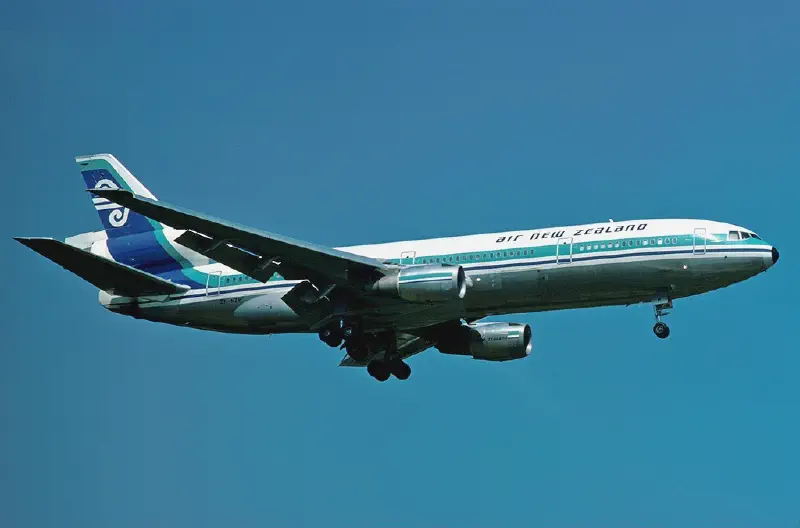
The Antarctic flights were a prestigious centerpiece for Air New Zealand. They had begun two years earlier as a way to utilize aircraft during the quiet mid week period. These flights were not typical commercial transport. They were sightseeing loops that flew thousands of miles south, spent a few hours circling points of interest, and returned to New Zealand the same evening. Because there were no landing strips for a wide body jet in the Antarctic interior, the entire operation relied on visual navigation supplemented by the state of the art Inertial Navigation System. This system used gyroscopes and accelerometers to track the position of the plane relative to a series of programmed coordinates.
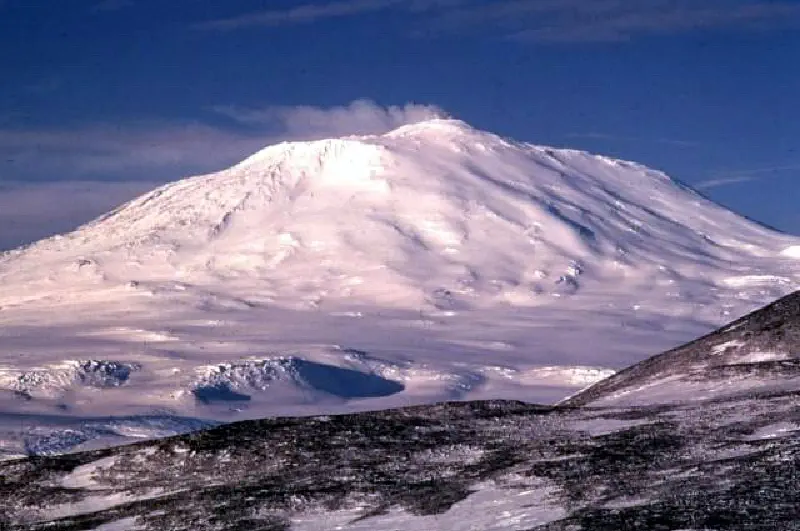
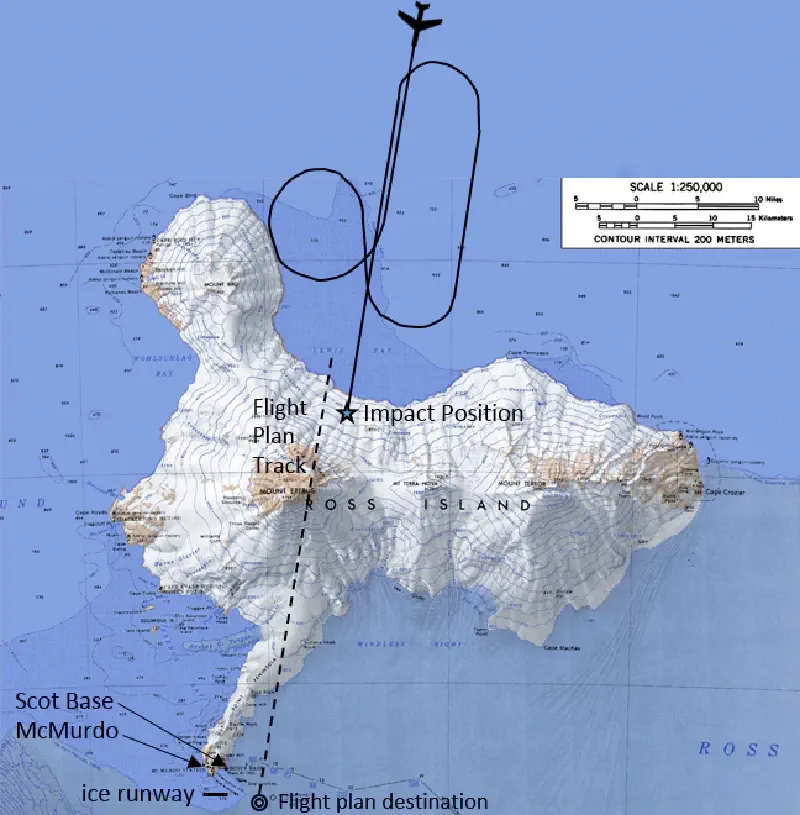
Captain Jim Collins and First Officer Greg Cassin were highly experienced pilots. Collins had over eleven thousand flying hours. However, neither man had flown the Antarctic route before. In the days leading up to the flight, they attended a mandatory briefing. They were shown the flight path used by previous crews. This path took the aircraft down the center of McMurdo Sound, a wide expanse of flat sea ice. To the east of this path lay Ross Island, dominated by the thirteen thousand foot peak of Mount Erebus, an active volcano. To the west lay the high peaks of Victoria Land. The path between them was nearly forty miles wide. It was a safe, unobstructed corridor that allowed the pilots to descend below the clouds to give their passengers a closer look at the ice.
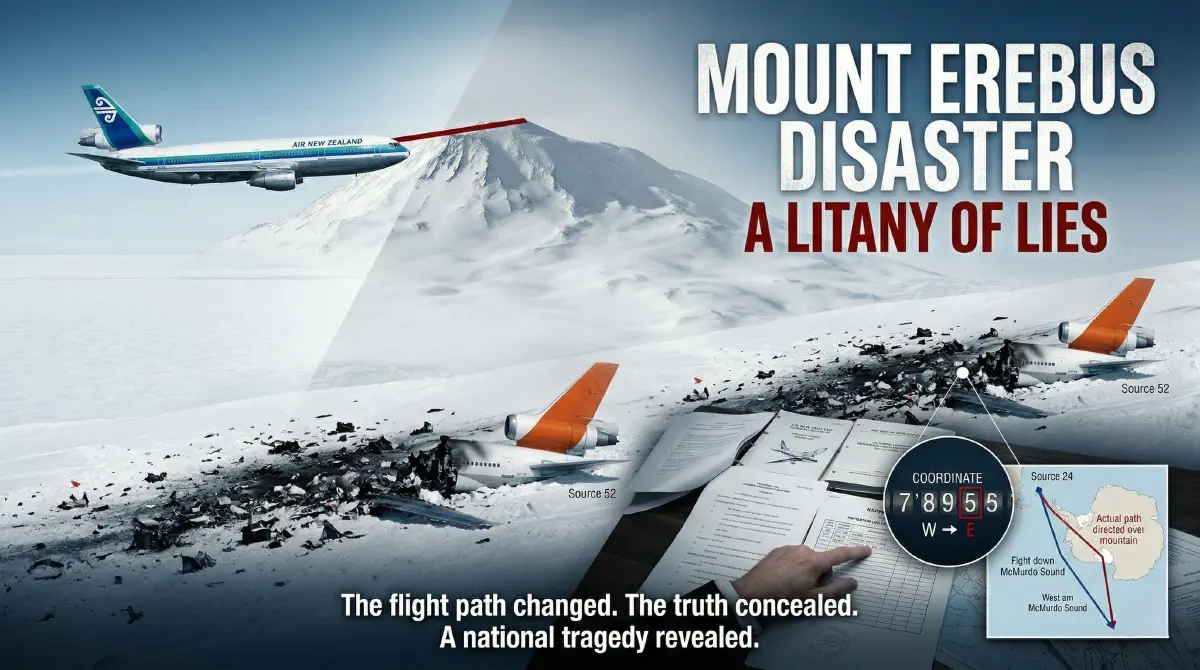
The coordinates for this flight path were stored in the Air New Zealand ground computer system. On the night before the flight, a technician in the navigation department noticed a discrepancy. He found that the coordinates for the final waypoint near McMurdo Station were slightly different from the ones used in previous flights. He decided to update the flight plan to match the precise location of the radio beacon at McMurdo. In doing so, he shifted the entire flight path approximately twenty seven miles to the east. He did not notify Captain Collins or the crew of this change.
When Collins and Cassin entered the cockpit on the morning of the twenty eighth, they downloaded the flight plan into the aircraft computer. They assumed it was the same path they had studied in the briefing. They believed their track would take them safely down the middle of the open water in McMurdo Sound. In reality, the new coordinates put their flight path directly over the summit of Mount Erebus.
As Flight Nine Hundred One approached the Antarctic coast, the weather began to deteriorate. A thick layer of cloud sat at about two thousand feet. Collins was eager to give his passengers the views they had paid for. He contacted the air traffic controllers at McMurdo Station, who were members of the United States Navy. He requested permission to descend to two thousand feet. The controllers granted the request, believing the aircraft was where its radar signature suggested: over the flat sea ice of the sound.
The pilots looked out the cockpit window and saw what they expected to see. Beneath the cloud layer, the world was a brilliant, uniform white. They saw an expanse of white reaching toward the horizon. They believed they were looking at the frozen surface of McMurdo Sound. In fact, they were looking at the snowy slopes of Mount Erebus. They were victims of a rare and deadly optical illusion known as sector whiteout.
In a sector whiteout, the light from the sun reflects back and forth between the white clouds above and the white snow below. This eliminates shadows and erases the horizon line. To the human eye, a vertical cliff of snow looks identical to a flat plain of ice. There is no depth perception and no sense of scale. The pilots were flying at four hundred eighty feet per second toward a mountain that had become invisible against the sky.
At twelve forty nine in the afternoon, the ground proximity warning system began to scream. The automated voice yelled for the pilots to pull up. Collins immediately applied full power to the engines, but a DC ten requires time to climb. Six seconds later, the aircraft slammed into the side of Mount Erebus at an elevation of one thousand four hundred sixty five feet. The impact was instantaneous. All two hundred fifty seven people on board were killed.
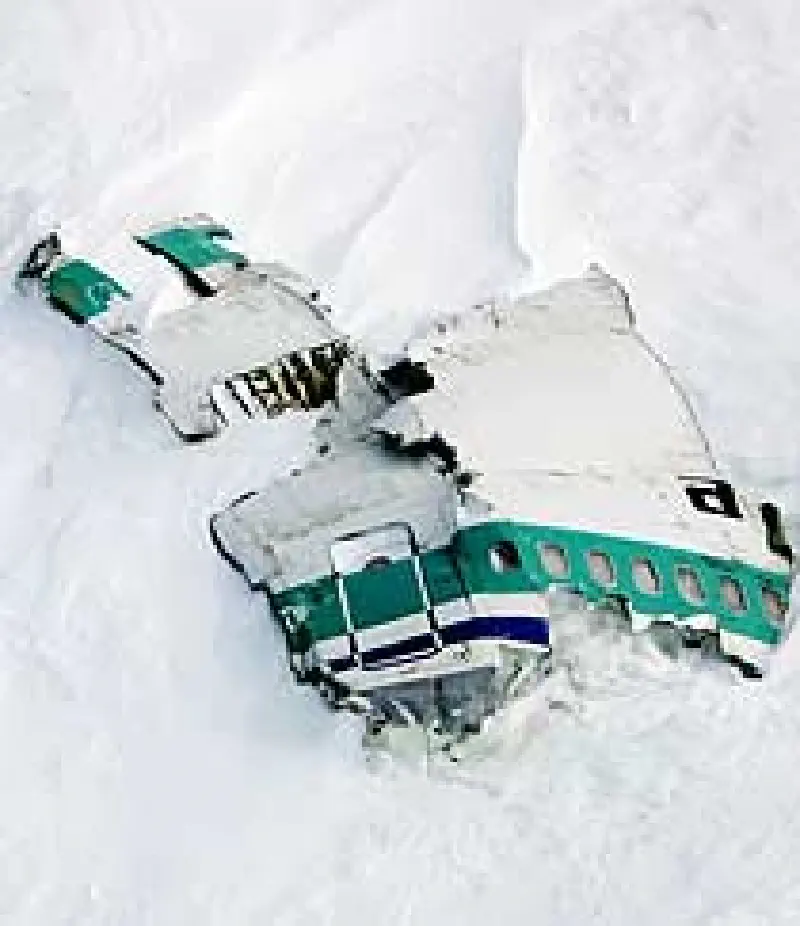
The wreckage was located hours later by search aircraft from McMurdo Station. It was a dark smear of debris scattered across the white mountainside. The tail section sat relatively intact, but the rest of the aircraft had been pulverized by the force of the collision. Because the crash occurred in one of the most hostile environments on earth, the recovery effort, known as Operation Overdue, was an ordeal of its own. New Zealand police and mountaineers spent weeks on the ice, working in freezing winds to recover the remains of the victims. They lived in small tents on the side of the volcano, surrounded by the smell of aviation fuel and the sound of the shifting ice.
The immediate investigation was led by Ron Chippindale, the New Zealand Chief Inspector of Air Accidents. His report was released in nineteen eighty. It was brief and definitive. Chippindale concluded that the disaster was the result of pilot error. He argued that Captain Collins should never have descended below the minimum safe altitude of sixteen thousand feet while the weather was cloudy. He claimed the crew had lost their way and failed to maintain situational awareness. To the public and the airline, it seemed like a closed case. The blame rested with the dead men in the cockpit.
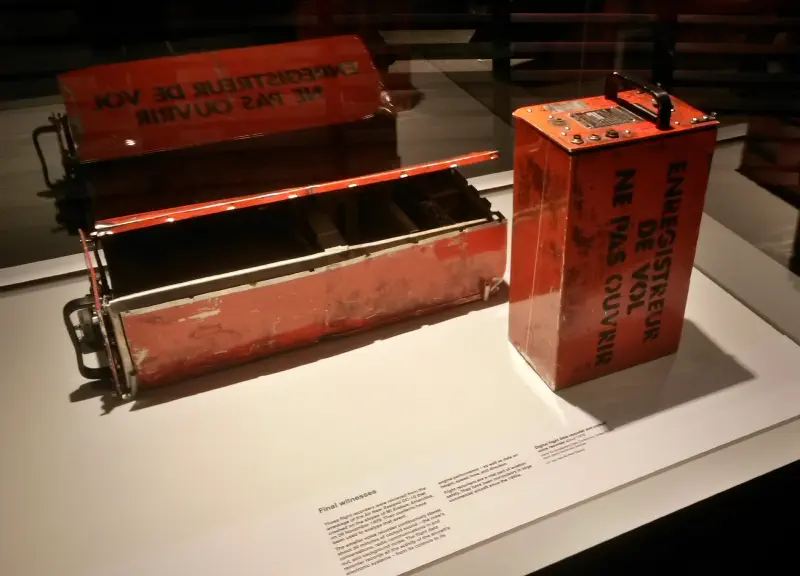
However, the families of the pilots and the New Zealand Airline Pilots Association refused to accept this conclusion. They pointed to the unannounced change in the navigation coordinates. They argued that the pilots had been misled by their own company. Under intense public pressure, the government appointed a Royal Commission of Inquiry, led by Justice Peter Mahon.
Justice Mahon was a brilliant and meticulous legal mind. He did not simply review the crash data; he investigated the entire corporate culture of Air New Zealand. He discovered that the airline had a history of allowing pilots to fly at low altitudes for sightseeing purposes, despite the official rules. He found evidence that the navigation department had known about the coordinate error but had failed to issue a formal warning.
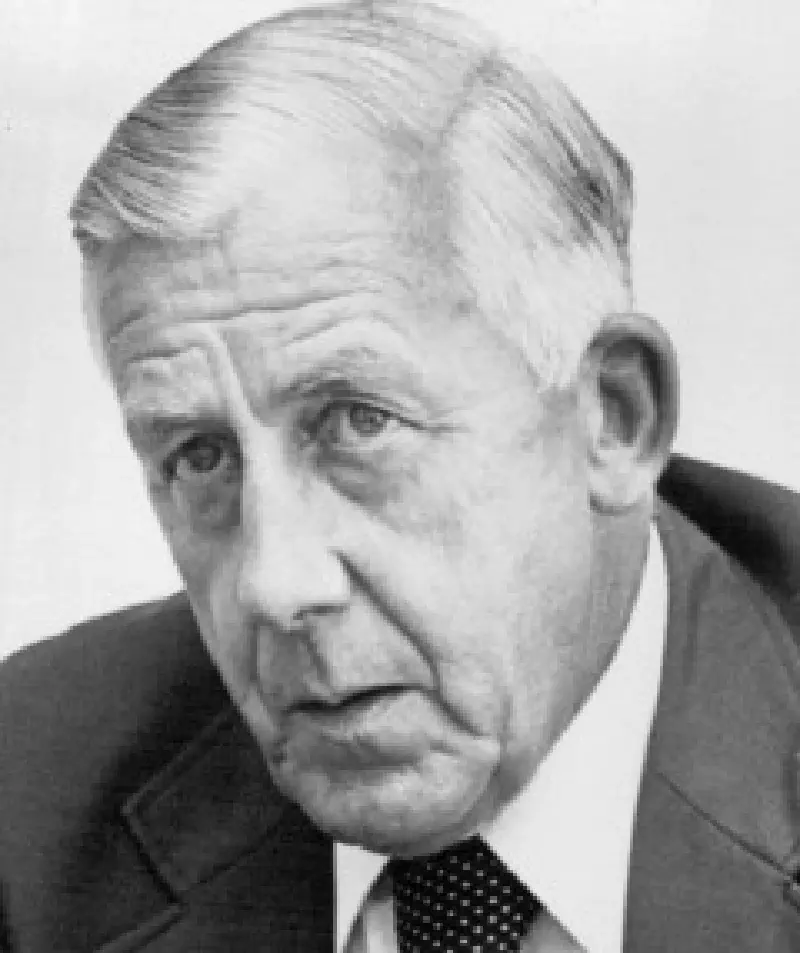
Most significantly, Mahon uncovered a coordinated effort by Air New Zealand management to hide the truth. During the hearings, airline executives gave testimony that was often contradictory or demonstrably false. Documents were missing. Briefing notes had been altered. Mahon became convinced that the airline was attempting to scapegoat the pilots to protect its reputation and avoid massive insurance liabilities.
In his final report, released in nineteen eighty one, Mahon cleared the pilots of all responsibility. He famously described the airline’s defense as an orchestrated litany of lies. He concluded that the dominant cause of the disaster was the act of the airline in changing the flight path without telling the crew. He argued that the pilots were exactly where they were told to be, and they were flying the aircraft in a manner that the company had encouraged for years.
The Mahon Report caused a national scandal. The Chief Executive of Air New Zealand resigned. The government was forced to reckon with the fact that a state owned enterprise had deceived the public. However, the legal battle did not end there. Air New Zealand challenged Mahon’s findings in court, particularly his accusation of a conspiracy. The Court of Appeal eventually ruled that while Mahon’s technical conclusions about the crash were sound, he had exceeded his jurisdiction by accusing the airline of a deliberate cover up without giving the individuals involved a fair chance to respond. Mahon resigned from the bench shortly after.
For decades, the memory of Mount Erebus remained a source of deep pain in New Zealand. It was not just the loss of life, which was the greatest in the nation’s history. It was the sense of betrayal. The families of the pilots lived for years under the shadow of the initial pilot error ruling. It was not until the twenty fifth anniversary of the crash in two thousand four that the government officially acknowledged the pilots were not to blame. In two thousand nineteen, Prime Minister Jacinda Ardern delivered a formal apology to the families on behalf of the government and the airline.
The technical legacy of Flight Nine Hundred One changed aviation forever. It led to stricter regulations regarding sightseeing flights and more rigorous protocols for updating navigation data. It became the textbook case for understanding the difference between an active failure, which is the mistake made by a pilot, and a latent failure, which is a flaw built into the system long before the plane ever leaves the ground.
The Mount Erebus disaster survives not as a story of mechanical failure, but as the foundational case study of how institutional arrogance can turn a navigation error into a national trauma. It serves as a reminder that in high stakes environments, the most dangerous distance is not the space between a plane and a mountain, but the gap between the data on a screen and the reality on the ground. The finality of the crash was not determined by the pilot’s hands on the controls, but by a single digit changed in a quiet office hundreds of miles away, proving that a system designed to eliminate human error can, if managed without transparency, simply move that error to a place where it can no longer be seen until it is too late.