The Southern Colony#
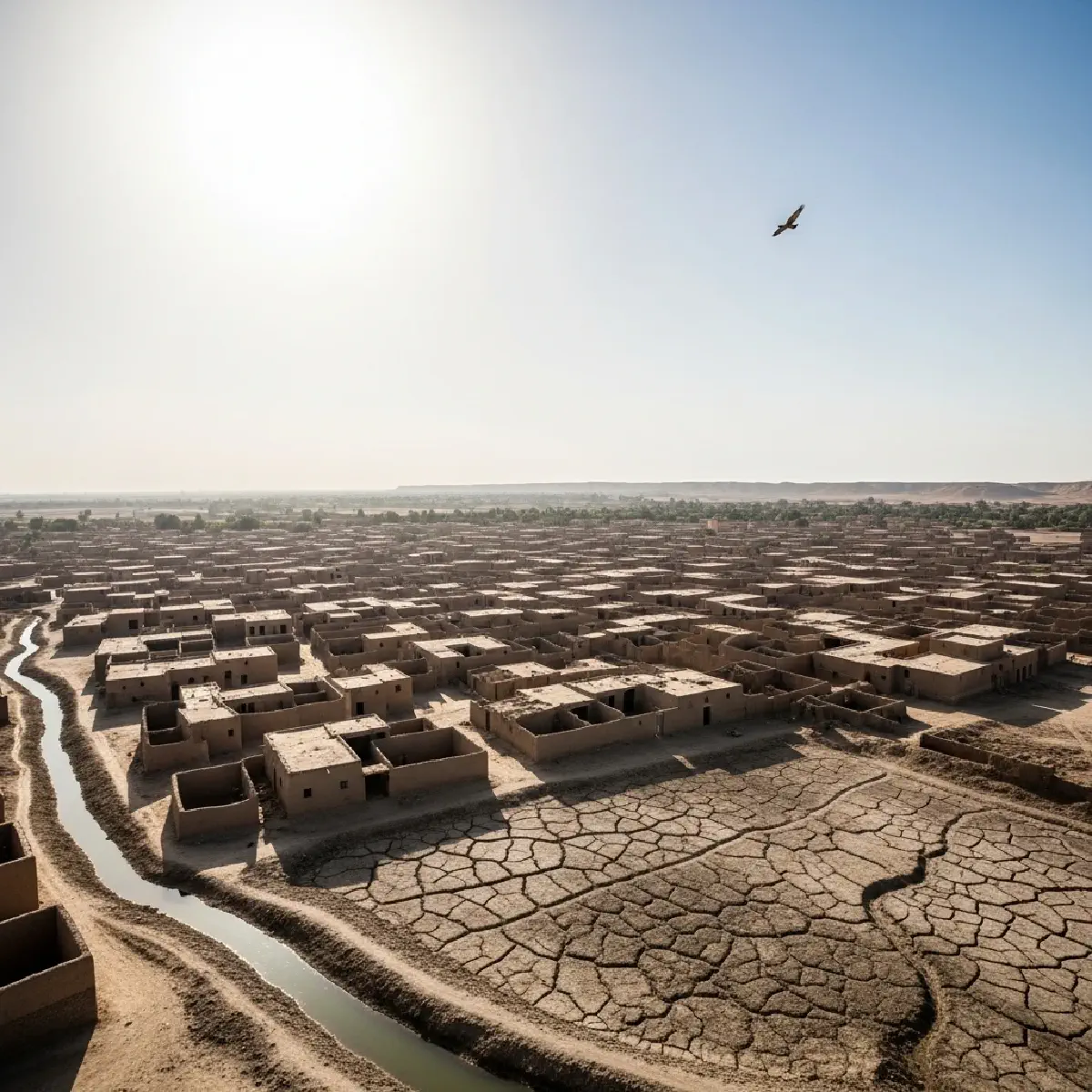
While Cairo was groomed to be a “Paris on the Nile,” Upper Egypt (the Sa’id) was relegated to the status of a conquered territory. Mohamed Ali reached the Citadel in 1805, yet it required six years of brutal warfare to finally subdue the defiant South. Once conquered, the Sa’id became the Pasha’s “first colony,” an extraction zone utilized to fund his 40-year spree of foreign wars. This regional subjugation created a geographic and economic inequality that persisted long after his death. The Pasha viewed the South not as part of a nation, but as a vast plantation for his family’s private gain.
The Mechanics of Extraction#
The Pasha utilized centralized monopolies to strip the Sa’id of its wealth, autonomy, and resources.
The Monopoly of Calculated Hunger#
Mohamed Ali declared himself the sole owner of all Egyptian land, establishing a total monopoly on grain and sugar production. In regions like Qena, he seized over 50% of arable land through tax farming and private estates for his family. While the state exported millions of bushels of wheat to Europe at prices 500% higher than the local market, the people of the Sa’id were left in abject poverty. Local populations were frequently forced to eat bread made from onions and corn because their own grain was requisitioned by the state. This system effectively turned the entire region into a trapped labor pool for a single Ottoman dynasty.
Environmental Ruin and the Imperial Plague#
The rapid industrialization of agriculture, specifically large-scale sugar cane cultivation, disrupted the stable basin irrigation systems that had existed for 1,000 years. This mismanagement of the Nile’s flow led to stagnant water and the arrival of “Imperial Plagues”. Cholera and the plague, which had not reached the Sa’id in 500 years, swept through the region because the military mobilized 10,000s of men through infected zones. Entire villages were depopulated as state officials continued to demand grain and taxes from the dead. The Pasha’s focus on output over ecology resulted in a biological catastrophe for the southern population.
The Architecture of Suppressed Revolt#
The consequences of this colonial treatment were massive, forgotten revolts that nearly toppled the Pasha’s regime. In 1824, 40,000 peasants in Qena declared a republic under Sheikh Ahmad, explicitly rejecting the Pasha’s taxes and conscription. Mohamed Ali responded with “scorched-earth” tactics, burning villages and executing 4,000 rebels to maintain his extraction machine. This violence birthed the Matarid al-Jabal (mountain outlaws), a class of permanent rebels who waged a 100-year guerrilla war against the centralized state. The state’s response was not reform, but further imprisonment and the use of the kurbash.
The Legacy of the Broken South#
The systematic marginalization of the Sa’id was a deliberate policy choice intended to fuel the Pasha’s expansionism. By focusing infrastructure almost exclusively on the Delta’s cotton production, the Pasha ensured the South remained an underdeveloped labor pool. Today, the reality that a disproportionate percentage of Upper Egyptians live below the poverty line is a direct inheritance from this 19th-century blueprint. To understand the Egyptian state today, we must recognize that it was forged in the fire of southern suppression and economic extraction.