The River as a Chain#
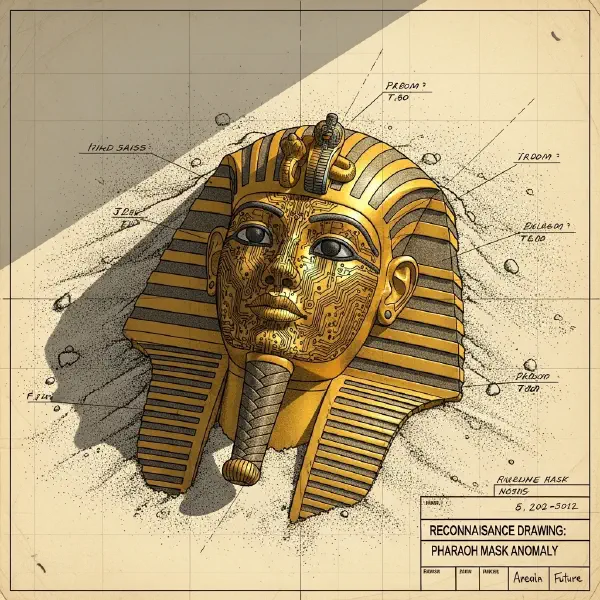
For decades, scholars have puzzled over why the great civilizations of the East—Egypt, Mesopotamia, China—remained under the grip of absolute “Sun-Kings” for thousands of years. In 1957, Karl Wittfogel proposed a startling answer: it was the water. In societies that depend on large-scale irrigation from great rivers, the state must organize massive labor forces to dig canals, build dams, and manage floods. This “Hydraulic Society” requires a central authority so powerful that it can press millions of people into “forced labor” (corvee). This matters because it suggests that our political chains were forged by our physical environment. To break them, we must understand not just the psychology of the tyrant, but the “systems” that sustain him.
The Institutional Vaccine Against Deification#
The only successful “escape from tyranny” in human history has been the transition to the “Rule of Law” where the ruler is just another citizen. This matters because it replaces the “inspired leader” with “boring institutions,” ensuring that the state outlasts any one person’s ego or madness.
The Analytical Core: The Architecture of Liberty#
The Hydraulic Trap and the Language of the Whip#
In a “Hydraulic Society,” the state is the “Supreme Landlord”. The farmer is not a citizen but a “user” of the king’s water. Because irrigation projects are like “perpetual war,” the government adopts a military mindset for civil management. This led to what Wittfogel called the “Language of the Whip”. From Sumer to the Qing dynasty, the “Ministry of Justice” was often literally called the “Ministry of Punishments”. Fear was the primary management tool. This created a “total power” that didn’t just control the army, but also the census, the postal service, and the very calorie intake of the populace. In such a system, “obedience” becomes the highest social virtue, and “innovation” becomes a threat to the canal-management status quo.
The Sadomasochistic Bond: The Psychological Hook#
Why do millions of people weep for a leader who oppressed them? Erich Fromm argued that the relationship between a tyrant and his people is often “Sadomasochistic”. The “Sadic” leader needs the people to feel his power; the “Masochistic” masses seek to “escape from freedom” by merging their tiny, frightened selves into the “Great Leader”. This “symbiosis” makes the individual feel strong, immortal, and important as long as they are part of the “Great Leader’s” movement. Hitler, for instance, noted that meetings should be held at night when people are tired and their “will to resist” is weakest. The people “love” the ruler because he relieves them of the “burden of responsibility”. This is not true love, but a pathological dependency that prevents the individual from ever growing up.
The Architecture of Constraint: Breaking the Power#
The escape from this trap began with the realization that “Man is born free, yet everywhere he is in chains”. John Locke argued that the “natural state” of man is equality and that government is merely a “trustee” that can be fired if it fails to protect “Life, Liberty, and Property”. Montesquieu provided the practical blueprint: “Power must be used to curb power”. By separating the state into three branches—Legislative, Executive, and Judicial—the “Tyrant’s person” is replaced by a “System of Checks”. This prevents the “Wolf” from ever gaining enough power to eat the city. The “Ostracism” of ancient Athens—where a leader could be exiled just for being too popular—was an early, crude form of this systemic protection.
The Democratic Evolution#
Synthesis reveals that the path to liberty requires a “double revolution”: one in the heart and one in the law. We must reject the “Masochistic” urge to find a savior and instead embrace the “burden of freedom”. This means building a “culture of the individual” where creativity and independent thought are prized over the “herd mentality”. The “Hydraulic Trap” can be overcome by diversifying the economy and ensuring that the state is not the only source of “water and bread”. Ultimately, as John Stuart Mill argued, the only legitimate reason to use power against a citizen is to prevent “harm to others”. The future does not belong to the “Inspired Leaders,” but to the “Active Citizens” who understand that “he who is not free cannot love”. We must stop waiting for a Pharaoh and start building a Republic.