The Laughter of the Conqueror#
In the spring of 327 B.C., Alexander the Great attempted to introduce the Persian custom of proskynesis—prostration—to his Macedonian generals. To the Persians, bowing before the King was a standard ritual of statecraft; to the Greeks, it was an act of worship reserved only for the gods. When one of Alexander’s commanders heard the request, he was overcome by a fit of laughter, finding the idea of a mortal man demanding divine honors to be absurd. Alexander, possessing a keen sense of the possible, eventually dropped the requirement for his fellow Greeks. However, he noted a fundamental truth: he only dared to deify himself in the East. Asia was the “cradle and source” of the deified ruler, a model that fascinated and horrified Western thinkers during the Enlightenment.
The East as the Cradle of Divine Power#
The deification of the ruler is not a religious requirement but a political strategy used to explain how one human will can rightfully dominate millions. By adopting a “divine nature,” the tyrant places himself above question: “He is not asked about what he does, but they are asked”. This deification matters because it removes the ruler from the realm of human accountability and places the law entirely within his person.
The Analytical Core: The Mechanics of the God-King#
The Three Evolutionary Stages of Divine Right#
Philosophically, the deification of power has moved through three sequential images. In the first and most primitive stage, the ruler is literally a god on earth; he is not chosen by the gods, but is the deity himself. This was the foundational logic of ancient Egypt, Persia, India, and China. In the second stage, which evolved with the rise of Christianity, the ruler is no longer a god but is “hand-picked” by God to exercise authority. This is the “Theory of Direct Divine Right,” where the ruler is a human agent of the celestial will. The third stage, emerging in the Middle Ages, argues for “Indirect Divine Right”: authority comes from God, but the specific person who exercises it is chosen by the people under divine guidance. This separated the office of authority from the person of the ruler, though tyrants often tried to collapse them back together.
The Solar Pharaoh and the Babylonian Proxy#
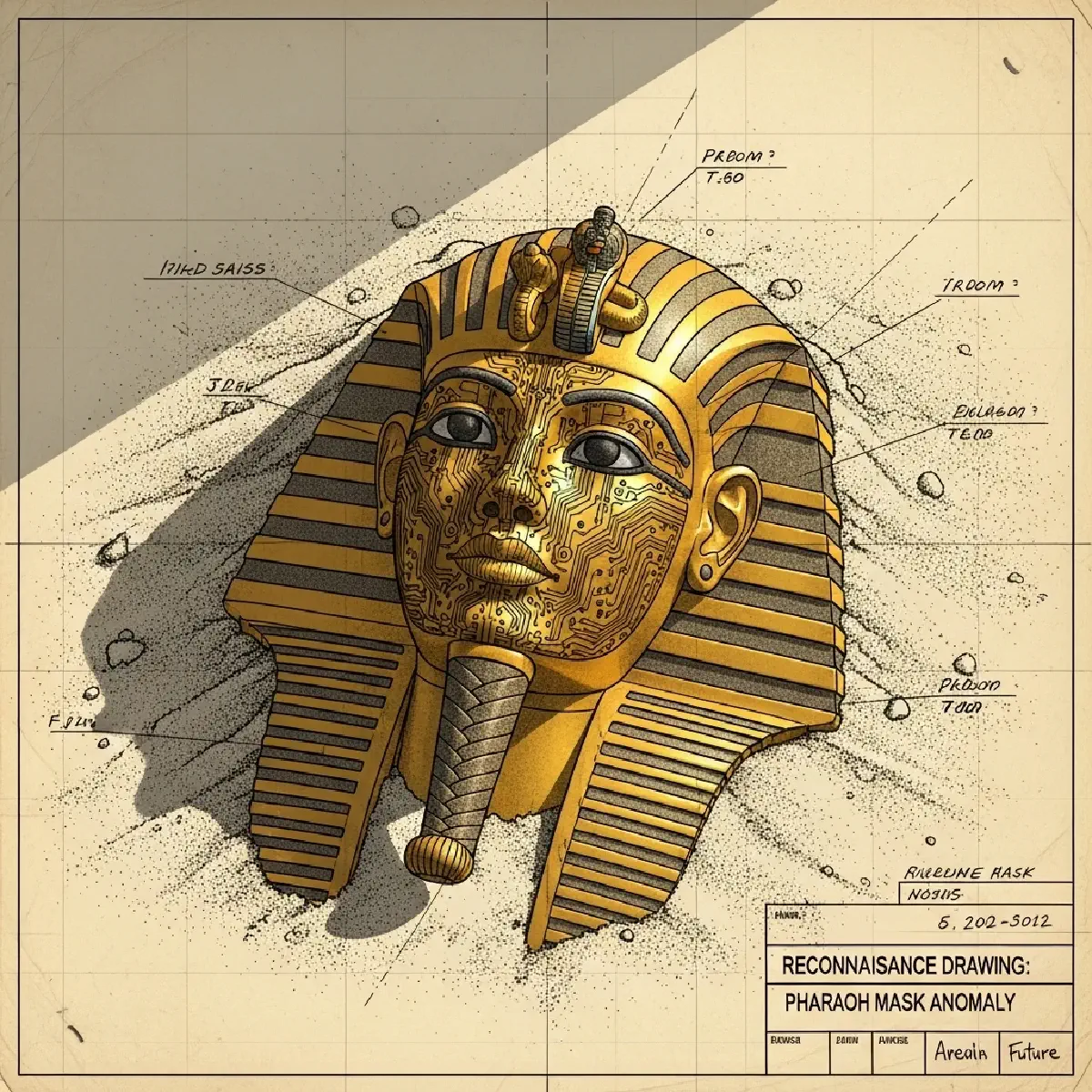
In Pharaonic Egypt, the King was the “Son of Ra,” the physical offspring of the Sun God. This was not a metaphor; the Pharaoh was the only official mediator between the people and the gods. If the Pharaoh was sacred, the Nile would rise; if he was healthy, the land would prosper. This belief was so potent that even after death, the Pharaoh was thought to ascend to the sky to merge with Ra. Babylonian rulers, while more legally grounded, claimed to be “Agents of the City God”. The Great Hammurabi claimed to receive his laws directly from the deity. The “highest virtue” in Mesopotamia was total obedience. An individual was surrounded by concentric circles of authority—family, supervisors, and finally the King. To be without a king was to be like “sheep without a shepherd”.
The Sin of Selective Theocracy#
We often do a grave injustice to religion by labeling absolute, oppressive rule as “religious government”. No major monotheistic religion inherently demands the kind of arbitrary, absolute power practiced by theocracies. Instead, these systems are usually built by a group of followers who interpret sacred texts to suit their own thirst for power. They use “despicable means” such as intrigue, bribery, and terror, all while claiming to act in the name of the Divine. The tyrant “wears the cloak of religion” to make opposition look like heresy. Whether it was the “Emperor of China” who claimed to control the seasons or the “Caliphs of Baghdad” who claimed to be the “Sultan of God on Earth,” the mechanism remains the same: using the infinite power of the afterlife to silence the grievances of the present life.
The Pharaoh’s Persistent Shadow#
Synthesis reveals that the “Eastern” model of tyranny is characterized by the total surrender of the individual to a ruler who claims to embody the cosmic order. In such systems, there are no written laws to restrain the ruler because his “will is the law”. This leads to the “Myth of the Just Despot,” the hope that a powerful, all-knowing father figure will care for his “children”. Yet, as history shows, when the ruler becomes the law, the citizen becomes a slave. The “Asian nature” that Aristotle claimed was “born for slavery” was actually a product of thousands of years of systemic deification. To escape this shadow, a society must move from the “sacred person” of the ruler to the “sacred rule” of the law. The divine mask must be stripped away to reveal the human—and often flawed—mechanisms of power.