The Fragile Fragrance of the Banda Islands#
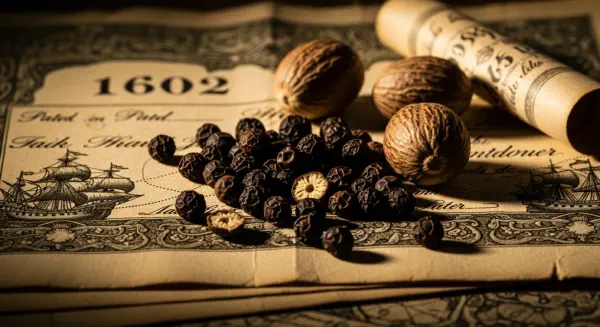
In the early 17th century, the entire world’s supply of nutmeg and mace came from a tiny cluster of volcanic outposts known as the Banda Islands. For centuries, the Bandanese people had grown wealthy by trading with Chinese, Arab, and Malay merchants, maintaining a delicate balance of power. But to Jan Pieterszoon Coen and the VOC, this independence was an intolerable inefficiency in the global market.
Coen understood that the secret to astronomical profit was not just trade, but total control. If the company could monopolize the source, they could set the price in Amsterdam without fear of competition. In 1621, after the Bandanese failed to comply with a restrictive and predatory trade agreement, Coen arrived with a fleet of warships and an army of mercenaries. What followed was not a battle, but a systematic liquidation of a society.
Of the roughly 15,000 people living on the islands, only 1,000 survived the massacre and subsequent deportations. Coen then repopulated the islands with Dutch colonists and, crucially, a massive influx of slave labor to work the plantations. This was the birth of the modern plantation economy in the East: a system where the supply chain was optimized through the total destruction of local agency and the institutionalization of human trafficking.
The Thesis of Integrated Extraction#
The VOC’s rise to the status of history’s wealthiest corporation was predicated on a ruthless “integrated extraction” model that combined local territorial monopolies with a sophisticated intra-Asian trade network. By using Japanese silver to buy Chinese silk, which was then bartered for Indian textiles to purchase Indonesian spices, the company created a self-sustaining economic loop that minimized the need for European capital while maximizing the exploitation of diverse regional markets. This “monopoly machine” succeeded not just through violence, but through a pioneering mastery of global logistics and the cold-blooded commodification of both natural resources and human life.
The Intra-Asian Trade Loop#
One of Coen’s most brilliant, and often overlooked, innovations was the realization that the VOC should not rely on shipping gold and silver from the Netherlands to buy spices. Instead, he proposed that the company become the primary middleman within Asia itself. This became the engine of the VOC’s mid-century prosperity.
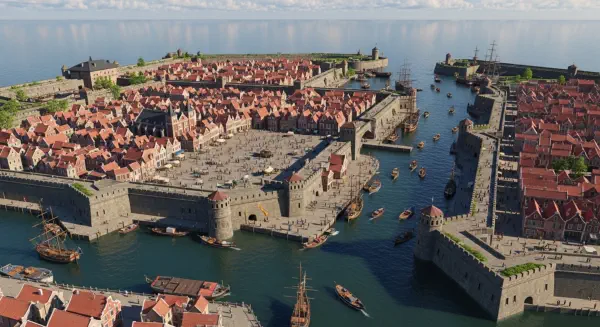
The company established a presence in Japan at Nagasaki, where they were the only Europeans allowed to trade for over two centuries. They traded Chinese silk—obtained through indirect routes after failing to crack the mainland market—for Japanese silver and gold. They then used this precious metal to buy textiles in Bengal and the Coromandel Coast of India. These textiles were then traded in Indonesia for the spices destined for Europe. This allowed the VOC to reinvest its profits locally, growing its “Asian war chest” while still sending massive dividends home to Dutch shareholders.
The Slave Trade as Corporate Infrastructure#
The “monopoly machine” required an immense amount of labor, and the VOC was not squeamish about how it was obtained. After depopulating areas like the Banda Islands, the company became a major player in the global slave trade. It is estimated that the VOC was responsible for the trafficking of between 650,000 and 1,130,000 people from Africa, India, Malaysia, and China.
Slaves were the literal fuel of the VOC’s plantations and fortifications. They were used to build the canals of Batavia, work the spice groves of the Maluku Islands, and serve as domestic labor for the company’s growing colonial elite. This was a “multicultural” society, but it was one built on a rigid racial hierarchy where the white VOC officials sat at the top, and the enslaved and local populations were treated as mere line items in a ledger.
Environmental Engineering for Profit#
The VOC’s pursuit of monopoly went beyond human control; it extended to biological warfare. To ensure that spices like cloves and nutmeg were only grown where the company could control them, the Dutch frequently engaged in “extirpation” campaigns. They would send fleets to neighboring islands to tear up and burn any spice trees that were not on VOC-sanctioned plantations.
This practice left entire islands ecologically devastated and their populations stripped of their primary means of survival. By destroying the natural abundance of the archipelago, the VOC forced local societies into extreme poverty and absolute dependency on the company’s trade network. It was a precursor to modern industrial agriculture: a system where the environment is violently simplified to serve the needs of a distant market.
The Synthesis of the Dark Dividend#
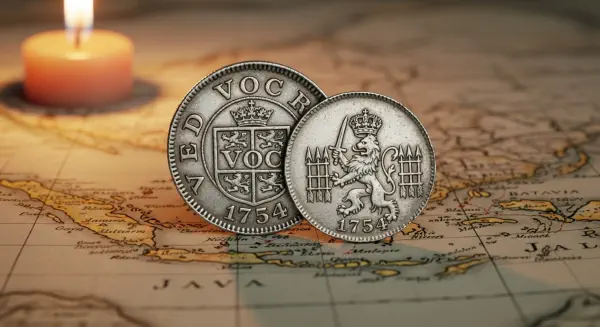
By 1670, the VOC was worth approximately 78 million guilders—the equivalent of $7.9 trillion today. Its dividends averaged 18% over two centuries, a return on investment that modern hedge funds can only dream of. But this wealth was the product of a machine that viewed the world through the cold lens of “profitless growth” and “just war”.
The VOC’s legacy is the blueprint for the global supply chain, but it is also the blueprint for the colonial trauma that still haunts the 21st century. They proved that you could connect the world through trade, but they also proved that if you remove humanity from the equation, the “monopoly machine” will eventually consume everything in its path. The spices that once brightened the bland lives of European elites were salted with the blood of the Banda Islands, a reminder that the cost of a global commodity is rarely reflected in its price.