The Pungent Allure of the Forbidden Fruit#
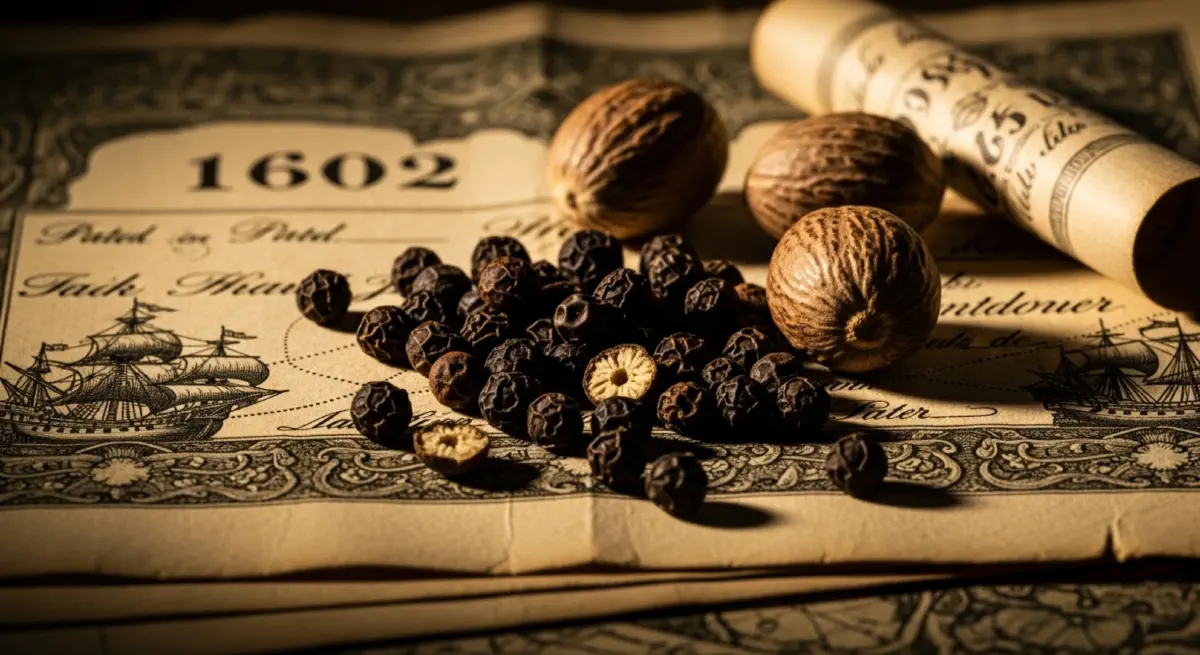
In the narrow, winding alleys of 16th-century Amsterdam, the scent of the future did not smell like salt air or damp wood; it smelled like pepper. For centuries, the European palate had been enslaved to the rare, intoxicating heat of spices that traveled thousands of perilous miles from the East Indies. By the Middle Ages, these seeds were so valuable that a single pound of ginger could purchase a healthy sheep, and a pound of saffron was worth a strong horse. This was not merely food; it was currency, medicine, and the ultimate symbol of aristocratic status.
The trade routes, however, were a geopolitical nightmare for the emerging Dutch Republic. Arab merchants guarded the sources, selling to Venetian middlemen who extracted a 40% profit before the goods even reached Northern Europe. When the Ottoman Empire choked the land routes and the Spanish-Portuguese union blockaded the Dutch from Lisbon, the rebels of the Low Countries faced an existential economic threat. They were sitting on dead capital while their enemies held the keys to the spice cabinet.
This pressure cooked a radical innovation. The Dutch did not just need ships; they needed a new way to organize human ambition and capital. The central paradox was that the very competition intended to drive the market was destroying it. Too many small syndicates were bidding up prices in Asia and flooding the market in Europe, creating a self-defeating spiral of volatility. The answer was not more competition, but a government-enforced monopoly that would change the world forever.
The Thesis of Permanent Capital#
The birth of the United East India Company, or VOC, on March 20th, 1602, represented the first time in human history that private capital was married to sovereign power through a permanent, public financial instrument. By inventing the concept of permanent joint-stock ownership and the modern stock exchange, the VOC created a financial leviathan capable of outlasting any individual merchant or single voyage. This structural shift from temporary ventures to a perpetual corporation provided the stable “war chest” necessary to dismantle the Portuguese monopoly and establish the first true global supply chain.
The Architecture of the Merger#
The VOC was not born of a single mind but from the forced reconciliation of six competing “pre-companies”. The Dutch government, known as the States General, realized that disunity was a gift to their Spanish enemies. They pressured these rival chambers into a federal structure where Amsterdam held the lion’s share—roughly half—of the capital, while smaller cities like Middelburg-Zeeland were guaranteed a seat at the table to prevent total domination by the metropolis.
This resulted in the “Heeren XVII,” or the Lords Seventeen, a board of directors that functioned as the company’s brain. To ensure these directors did not neglect their duties, a prerequisite for the position was an investment of at least 6,000 guilders, creating a skin-in-the-game model that aligned the leadership’s wealth with the company’s survival. It was a sophisticated piece of organizational machinery that balanced regional pride with the cold efficiency of centralized command.
The Innovation of the Infinite Horizon#
Before 1602, trading ventures were ephemeral; they dissolved after the cargo was sold, and capital was returned to investors. The VOC charter changed the rules of the game by stipulating that the company would function for at least 21 years. More importantly, it established that invested capital was permanent. If an investor wanted their money back, they could not ask the company for it; they had to sell their “share” to another person in a secondary market.
This necessity birthed the Amsterdam Stock Exchange in 1602, the world’s first modern market. Suddenly, 1,800 citizens from all walks of life could own a piece of a global empire. They raised an initial capital of 6,400,000 guilders—roughly $650 million in modern terms—creating a financial foundation that no king or emperor of the era could easily match. This was the first “megacorporation,” a beast with a permanent body and a thousand shifting owners.
The First Global Brand#
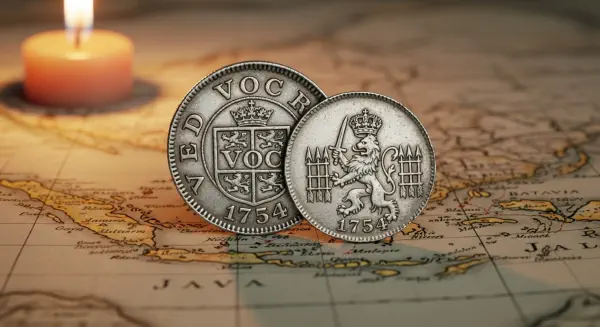
The VOC realized early that power requires a visual identity. They created a simple, recognizable logo: a large “V” with a smaller “O” and “C” on its legs. This was arguably the first instance of global corporate branding. It was stamped on everything from the cannons of their warships to the coins used in Indonesian markets and the porcelain jars arriving in Dutch parlors.
By the time the VOC captured the Portuguese merchant ship Santa Catarina in 1603, the cargo of silk and spices was worth double the company’s entire starting capital. This single event proved the model’s viability. The company wasn’t just trading; it was winning a war of attrition. The simple logo became a symbol of a new kind of power—one that did not come from a throne, but from a ledger.
The Synthesis of a New Reality#
The establishment of the VOC was the Big Bang of modern financial capitalism. By solving the problem of high-risk, long-distance trade through the invention of permanent capital and the stock market, the Dutch created a blueprint that every modern multinational corporation still follows. They proved that a group of merchants, backed by the state and organized through a board of directors, could wield more influence than traditional empires.
However, this was not a purely benign advancement. The same “efficiency” that allowed for the birth of the stock market also laid the groundwork for a system where profit was the only moral compass. The VOC was the first to show that when capital becomes permanent, it develops its own survival instincts, often at the expense of human life and environmental sanity. As we look at the $3 trillion valuations of today’s tech giants, we are looking at the distant, refined echoes of that first 6.4 million guilder investment in 1602. We live in the world the VOC built—a world of infinite growth potential, fueled by the pungent heat of global desire.