The New Creed of 1789#
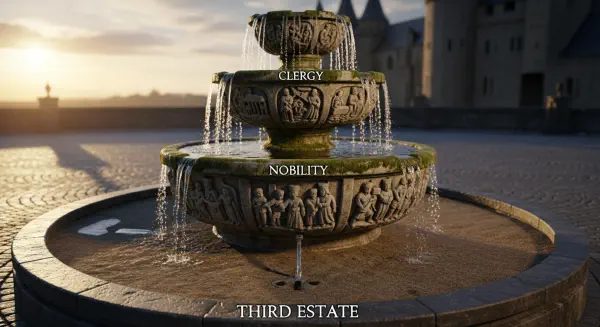
When the French Revolution abolished the “privileges” of the clergy and nobility in August 1789, it felt like the dawn of total equality. Pierre and Jean-Baptiste Guillot de Salaunes were anxious; the street names were changing to “I Love Equality Street,” and the corvée was under threat. Yet, out of the chaos of the Revolution, a new foundational principle emerged: the Declaration of the Rights of Man and of the Citizen. Article 2 of this declaration defined property as a “natural and inalienable right”. Property was no longer a feudal gift from a king; it was a promise of individual emancipation and a guarantee of social stability. This was the birth of the “Ownership Society,” where property rights became the absolute cornerstone of the social order.
The Thesis of the Proprietarian Pivot#
The transition from the Ancien Régime to the Ownership Society was not a victory for the poor, but a rebranding of wealth. By transforming “seigneurial rights” into “property rights,” the post-revolutionary state provided a new, secular justification for extreme inequality. Piketty argues that the Ownership Society of the 19th century became even more unequal than the one it replaced, with the top 10% owning 80% to 90% of all wealth by 1901. This sanctification of property allowed for the accumulation of capital without the traditional social obligations of the nobility, leading to a “Belle Époque” for the rich and a “Subsistence Trap” for everyone else.
The Mechanics of Perpetual Possession#
The Cadastre and the State as Sentinel#
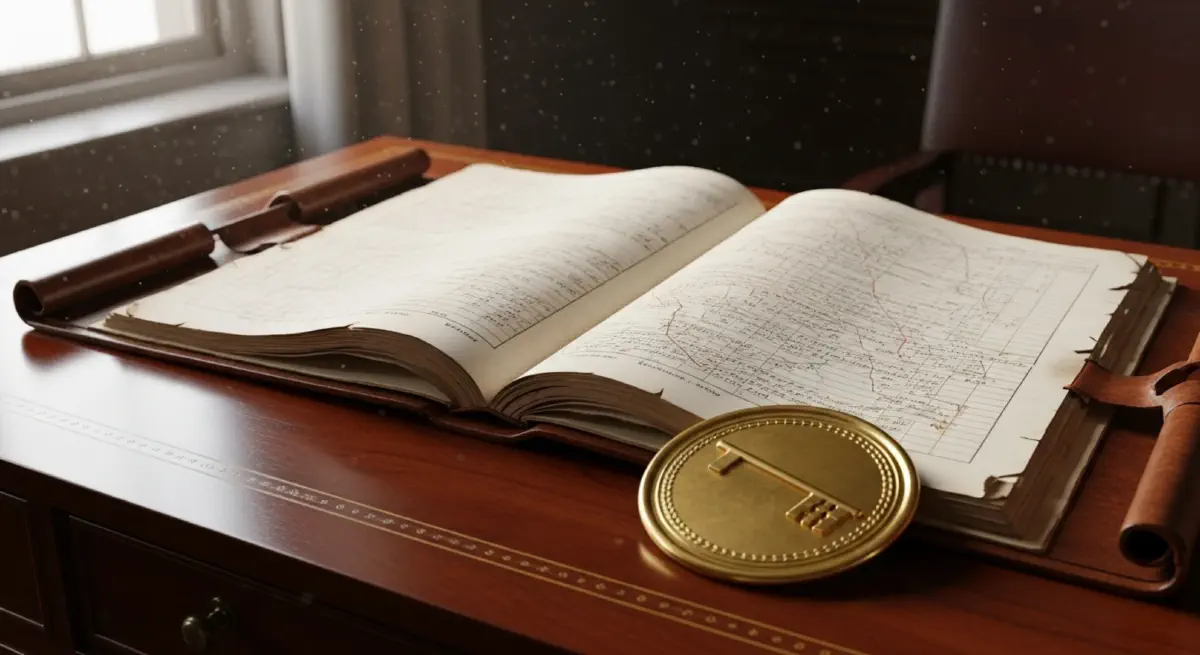
The Ownership Society required a technical infrastructure to function: the cadastre. This was a massive land registry that listed every factory, warehouse, and plot of land, along with the identity of the owner. While this seemed like a neutral administrative tool, it served a profound ideological purpose. The centralized state became the “protector” of these listed rights. Theft was no longer just a crime against a person; it was an attack on the “natural order” guarded by the state. This legal framework ensured that the transfer of wealth, once paid to the local lord as lods, was now paid to the state as a “property transfer tax,” maintaining the flow of capital while changing the recipient.
The Proportional Trap of Fiscal Equality#
Post-revolutionary taxation was built on the mantra of “Liberty, Equality, Proportionality”. In 1901, Jules—the descendant of Pierre—vehemently defended this system. To the elite, a proportional tax was “normal” because everyone was “equal before taxes”. However, this “flat” rate of roughly 2% left inequalities intact. If a rich man and a poor man both pay 10%, the rich man stays rich while the poor man stays poor. By framing proportionality as “fair,” the Ownership Society successfully blocked the introduction of “progressive taxation” for nearly a century, allowing $r$ (return on capital) to consistently outpace $g$ (growth).
The International Cascade of Colonial Property#
The Ownership Society’s logic was not confined to Europe; it expanded through colonization to alleviate domestic shortages. In Algeria and Haiti, the legal system was biased in favor of colonists, where the top 10% received 70% of the total income. This ideology allowed for the ownership of human beings in slave societies, where slaves accounted for 90% of the population in places like Saint-Domingue. Even when slavery was abolished, the “sanctity of property” was so absolute that the owners were compensated, not the slaves. France demanded 150 million gold francs—$43.5 billion in today’s value—from Haiti to compensate expropriated owners, a debt that crippled the nation for over a century.
The Architecture of Accumulation#
The Ownership Society promised that “access to property is open to all,” suggesting that wealth would naturally tend toward equality without the need for redistribution. But the numbers tell a different story. In 1900, despite the rise of modern states, the world still belonged to a tiny elite who commanded 5% to 8% of national income purely from foreign assets.
So what? The transition to “property rights” was a masterclass in ideological adaptation. By secularizing wealth and making it a “natural right,” the Ownership Society made it harder to challenge than the “divine” rights of the nobility. When Jules and his friend Ernest sat in a Paris cafe in 1901, they weren’t defending their bloodline; they were defending the “principle” of ownership. To fix the wealth gap today, we must realize that property is not a natural law but a social contract—one that was designed to protect the “lods” of the Pierre Guillot de Salaunes of the world, even after their titles were gone.