The Battle for the Blackboard#
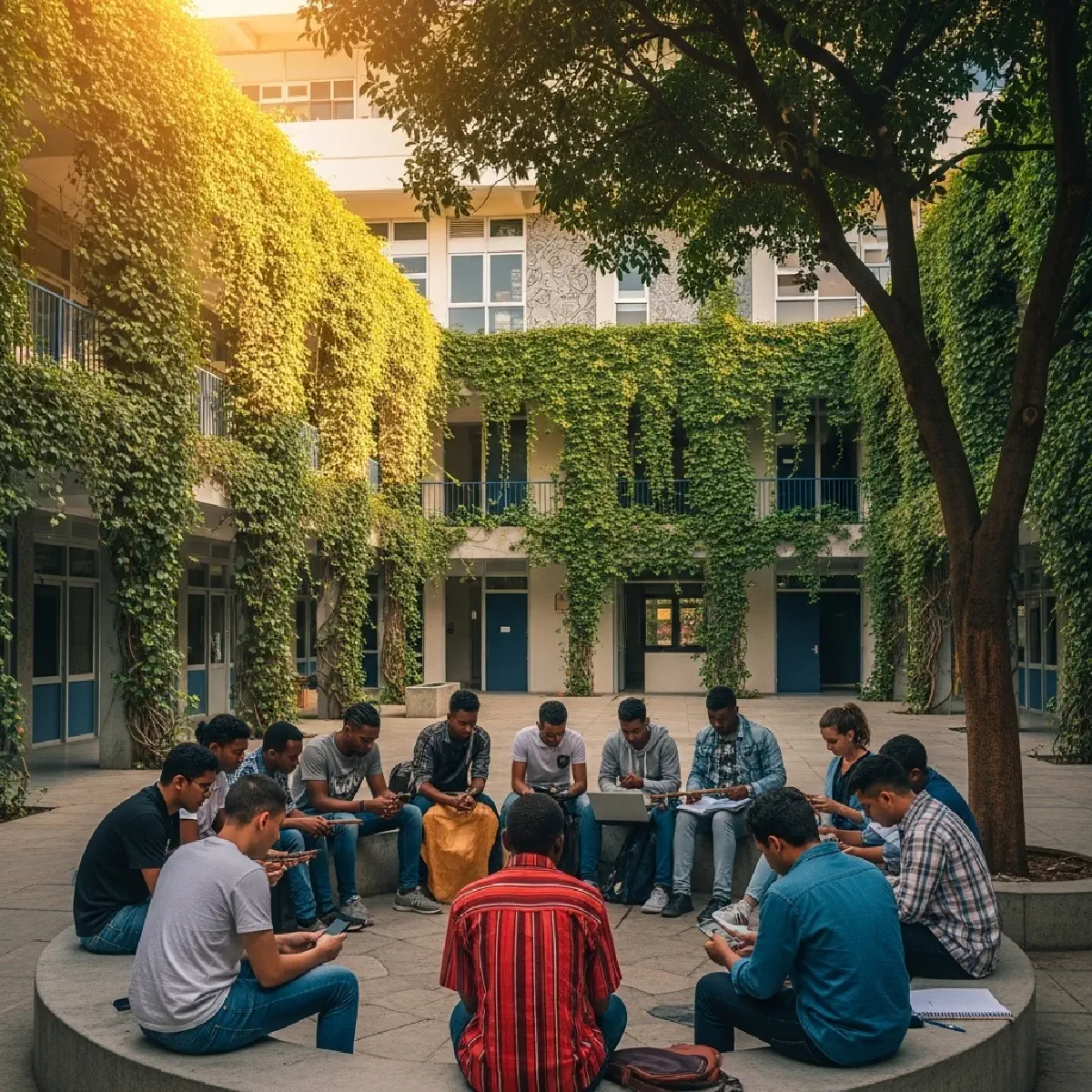
In 2015, a movement swept South African university campuses that would reverberate globally: #RhodesMustFall. It began as a demand to remove the statue of Cecil Rhodes, arch-imperialist, from the University of Cape Town. But the campaign swiftly expanded beyond bronze and stone. Its core demand was the decolonization of the university—its curriculum, its faculty, its very epistemology. Students argued that despite the end of apartheid, their education remained a Eurocentric “psychic violence.” They asked: Why is our primary philosophical reference Kant, not Biko? Why is our economics neoclassical, not rooted in African communitarian principles?
#RhodesMustFall exposed the raw nerve of our contemporary dilemma. Political decolonization in the 20th century was a monumental achievement, but it left the mental infrastructure largely intact. In the 21st century, we inhabit a world shaped by that incomplete project. Globalization spreads Western cultural products at lightning speed, often acting as a new, market-driven vector for homogenization. Yet, simultaneously, it enables marginalized voices to connect and amplify their demands for cognitive justice. The battle is no longer for the flagpole; it is for the algorithm, the textbook, and the sense of self.
The Thesis: The Unfinished Revolution#
This final post argues that decolonizing the mind is the defining intellectual and cultural challenge of our era—a complex, non-linear process fraught with contradictions. It is not about rejecting all external influence or retreating into a mythical past. It is about achieving epistemic liberation: the right to think from one’s own historical and cultural center, to participate in global dialogue as an equal producer of knowledge, and to heal the psychic wounds inflicted by the colonial narrative. In a hyper-connected world, this demands both courageous introspection and a re-imagining of global systems.
Foundations of Liberation: Reclamation and Critique#
The Linguistic and Historical Renaissance#
The decolonial project begins with the conscious reclamation of voice and memory. This is a practical, granular effort. For writers like Ngũgĩ wa Thiong’o, it meant a decisive turn: after a storied career in English, he committed to writing his novels and plays only in Gĩkũyũ. This was not a rejection of readers, but an affirmation that the deepest truths of his community required their native linguistic vessel. Similar movements exist for Maori, Welsh, and Quechua, seeking to restore languages to spheres of power and creativity.
Concurrently, historians across the Global South have engaged in what Indian scholar Ranajit Guha called “history from below.” This project excavates the subaltern past—the stories of peasants, women, and marginalized groups—deliberately bypassing the colonial archive’s bias. It challenges the colonial periodization of history (ancient/medieval/modern) and restores agency to colonized peoples, not as passive victims, but as complex actors with strategies of resistance, adaptation, and survival. This work refills the “historical blanks” with a multiplicity of narratives, providing the intellectual bedrock for a rebuilt identity.
The Critical Toolkit: From Theory to Practice#
This reclamation is guided by a powerful body of critical theory. The Postcolonial School, with thinkers like Edward Said (who exposed “Orientalism”), Gayatri Spivak (who asked “Can the Subaltern Speak?”), and Homi Bhabha, provides the tools to deconstruct colonial discourses and understand the hybrid, ambivalent spaces of post-colonial identity. The Decolonial School, rooted in Latin American thinkers like Walter Mignolo and Aníbal Quijano, focuses on the “coloniality of power”—the idea that the racial and epistemic hierarchies established in the 15th century persist within modern structures like the nation-state and global markets.
These theories are not academic abstractions. They inform practical movements: from the push for indigenous knowledge to be recognized in climate science and biodiversity conservation, to campaigns for reparative justice that address the intergenerational trauma of slavery and colonialism. They provide a framework for asking fundamental questions: Who defines development? Who gets to validate knowledge? Who owns history?
The Crucible of Context: Globalization and Its Discontents#
The New Empire of the Image#
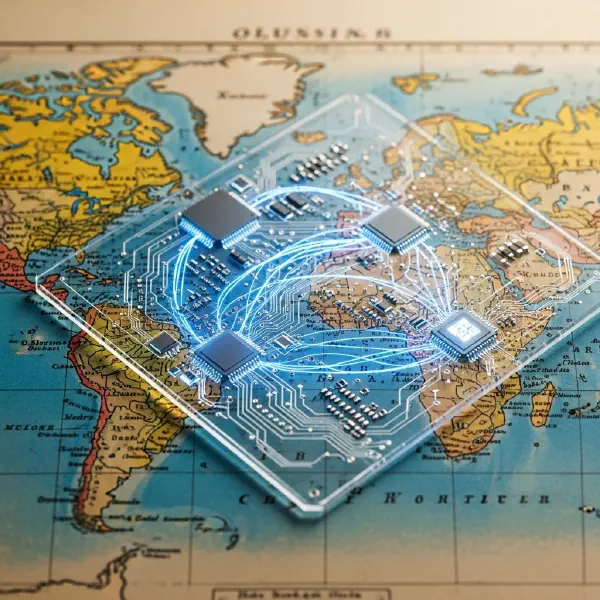
The decolonial struggle today occurs on a transformed battlefield: the digital landscape of globalized culture. The old colonial machinery of school and church has been superseded (though not entirely replaced) by the algorithmic pipelines of streaming platforms, social media, and global news conglomerates. Hollywood, Bollywood, and K-Pop create powerful cultural currents that can drown out local narratives. This “soft power” can be a new form of cultural hegemony, promoting consumerist, individualistic values that erode communal identities and create what critic Pankaj Mishra calls a “globalized elite” with more in common with each other than with their own societies.
Yet, this same technology enables counter-hegemonic networks. The Zapatistas in Mexico used the early internet to broadcast their indigenous struggle globally. #BlackLivesMatter and #RhodesMustFall became transnational solidarities. Social media allows diaspora communities to maintain cultural ties and amplify marginalized voices, creating a digital commons where alternative epistemologies can be shared and fortified. The tool is ambivalent; it is both the homogenizing megaphone and the decentralized town square.
The Neoliberal Trap and the Search for Alternatives#
A deeper complication is the neoliberal economic framework that dominates globalization. It often presents itself as the neutral, “only game in town” model for development—a direct descendant of the colonial “civilizing mission” now recast as “modernization” and “free-market reform.” This framework can co-opt the language of empowerment while reinforcing dependency, prioritizing GDP growth over ecological or cultural sustainability. To “develop” is still often measured by how closely one mimics Western urban and economic models.
True decolonization of the economy, therefore, requires exploring radical alternatives. This includes models like the Circular Economy, which draws from indigenous principles of resource stewardship and waste-as-food. It includes revaluing Ubuntu philosophy in Southern Africa (“I am because we are”) or Buen Vivir in the Andes (“good living”) as frameworks for wellbeing that challenge GDP-centric growth. It means supporting economic localization and challenging intellectual property regimes that allow multinational corporations to patent traditional knowledge. The goal is not autarky, but sovereignty—the right to define one’s own economic destiny.
Tracing the Consequences: Healing, Hybridity, and the Future of Thought#
The Long Road to Psychological Repair#
The most intimate consequence of the decolonial project is psychological healing. Fanon, who was also a psychiatrist, understood that political liberation without mental liberation was a hollow victory. Therapists and scholars today are developing methodologies for addressing intergenerational trauma and internalized oppression. This involves creating spaces for collective storytelling, validating experiences of racialized pain, and consciously deprogramming the aesthetic and intellectual standards of worth absorbed from the colonizer. It is the slow, personal work of reassembling a shattered mirror into a clear reflection.
This process inevitably leads to cultural hybridity, not as the alienated “mimicry” of the colonial era, but as a confident, creative synthesis. The Nigerian musician Fela Kuti created Afrobeat by fusing jazz and funk with traditional Yoruba rhythms and highlife. Caribbean writers like Derek Walcott patched together a rich literary language from the fragments of English, French, and Creole. This is not impurity, but a testament to resilience and creativity—the ability to master the tools of the empire and forge them into new shapes that tell one’s own story.
Toward a Pluriversal World#
The ultimate, global consequence of decolonizing the mind is the potential for a pluriversal, as opposed to universal, world. The Western Enlightenment project often posited its own reason as universal, dismissing other ways of knowing as particular or primitive. Decolonial thought proposes a world where multiple, legitimate universalities coexist and converse—a world of “many centers.” This means a global dialogue where quantum physics can engage with Aboriginal Dreamtime cosmology on questions of reality, where Western medicine can collaborate with Ayurveda as equal partners in understanding the body.
This is not a call for relativism, but for epistemic justice. It demands humility from the traditional centers of knowledge production and courage from the margins. The future of thought—on climate change, on artificial intelligence, on human wellbeing—depends on this cognitive diversity. The monoculture of the mind, like any monoculture, is fragile and prone to catastrophic failure. The decolonized mind, rooted in its own soil yet open to the world, offers not just a path to individual wholeness, but a blueprint for collective intellectual and cultural resilience. The invisible empire’s final defeat will be marked not by the toppling of the last statue, but by the flourishing of a thousand different, unchained ways of seeing.