The Arsenal of Democracy and the Power of Choice#
Following the attack on Pearl Harbor in 1941, the United States government performed a “miracle of production” by retooling its entire civilian industry for war. General Motors began turning out tanks instead of cars, and Ford built a long-range bomber almost every hour. Top tax rates were raised to 94%, and the manufacture of new cars and household appliances was banned to prioritize resources for the common survival. This history proves that governments are capable of decisive, radical action when there is the political will. Our current inability to respond to the Earth systems crisis is not a lack of capacity, but a “failure of imagination”.
The Thesis of the New Narrative#
To replace the “invisible doctrine,” we need a new Restoration Story based on the findings of psychology and neuroscience: that human beings are primarily motivated by altruism and cooperation, not competition. By reclaiming the “commons” and building a “politics of belonging,” we can create a system of private sufficiency and public luxury that respects both people and the planet.
The Architecture of a Cooperative Future#
The Structure of the Restoration Story#
A political story needs a satisfying structure: disorder afflicts the land due to nefarious forces, but heroes rise up to restore harmony. The Keynesian story and the neoliberal story used this same structure to dominate the 20th century. Our new story must state that disorder is caused by those who tell us to “fight like stray dogs over a garbage can,” and the heroes are the common people who will build generous, inclusive communities to restore harmony. This story resonates with a fundamental human need for belonging, which is a shared value across the political spectrum.
Deliberative Democracy and the Rojava Model#
We must move beyond the “presumed consent” of representative democracy toward “deliberative democracy,” where citizens discuss and solve predicaments in person. Murray Bookchin proposed a system of popular assemblies where power is delegated upward and representatives can be recalled at any time. This model has been successfully applied in the Rojava region of Syria and in “participatory budgeting” programs in Porto Alegre, Brazil. In Porto Alegre, 50,000 people a year decided how to spend the city’s investment budget, nearly eliminating corruption and transforming sanitation and healthcare for the poor. Participatory decision-making works because shared power brings people together, while disempowerment sets them apart.
Private Sufficiency, Public Luxury#
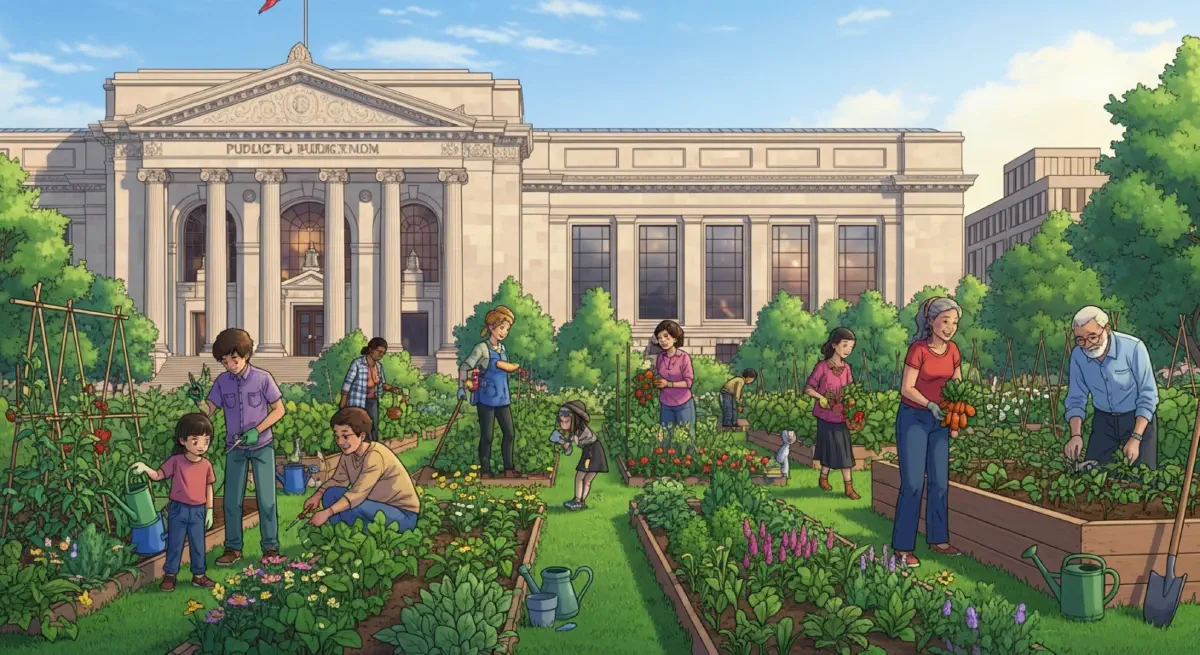
The capitalist promise that “everyone can be a millionaire” is a mathematical and ecological impossibility. There is not enough physical space for everyone to own a private jet or a mansion, but there is enough to provide everyone with magnificent public parks, art galleries, swimming pools, and libraries. We should each enjoy “private sufficiency”—enough for our own domain—but share in “public luxury”. This can be achieved by reclaiming the “commons,” resources controlled and governed by communities for equal benefit. To set this virtuous circle in motion, we need “limitarianism”—a wealth line above which no one should rise—enforced through wealth taxes to protect the planet and the political system from plutocracy.
Synthesis: Reaching the Tipping Point#
Societies, like ecosystems, have tipping points; once roughly 25% of the population is committed to change, the rest of society tends to join them as the “wind changes”. The majority does not need to be persuaded; they simply do not want to be left behind. For decades, progressive politics has relied on “incrementalism,” making small asks that fail to match the scale of the problem. But as the demagogues have proven, “system change” is the only fast and effective means of transformation. Our first task is to tear down the cloak of invisibility shielding neoliberalism and speak its name. The most important question is whether we can reach the social tipping points before we hit the environmental ones.