The Blank Slate of Madeira and the Birth of a Global Ghost#
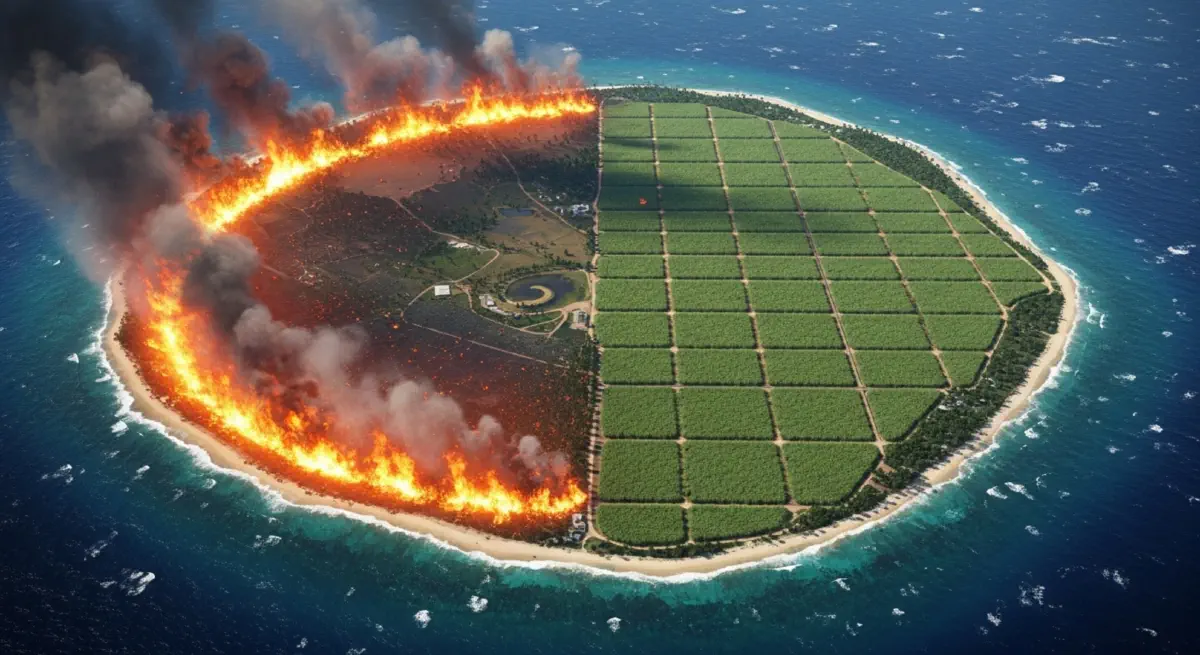
Imagine a society where the citizens of the Soviet Union had never heard of the word Communism. This is the precise state of the modern world regarding neoliberalism, the dominant ideology that governs our lives yet operates without a name in public discourse. Its anonymity is not an accident but a primary source of its overwhelming power, allowing it to be mistaken for a “natural law” akin to gravity or thermodynamics. When a system becomes nameless, it becomes unquestionable, and its failures are treated as isolated incidents rather than symptoms of a coherent worldview. To understand where this began, we must look beyond the standard textbooks to the year 1420 and a tiny, uninhabited island 320 miles off the coast of North Africa: Madeira.
The Thesis of the Nameless Order#
Neoliberalism is not merely “capitalism on steroids” but a deliberate political project designed to redefine human nature as a state of perpetual competition. By tracing the history of extraction from 15th-century colonial looting to the modern era of individuated blame, we can see that our current crises are the intended outcomes of a system that views the Earth as a sacrifice zone and citizens as mere consumers.
The Foundations of the Extractive Frontier#
The Colonial Laboratory of Madeira#
Capitalism did not spring organically from the ground; it was forged in the “blank slate” of Madeira, where Portuguese colonists detached land, labor, and money from their social and ethical contexts. On this island, resources were turned into commodities—numerical values on a ledger—fueling a sugar boom that relied on the brutal use of imported slave labor and Flemish capital. The system established a pattern that continues today: “Boom, Bust, Quit”. By 1506, the island had exhausted its timber resources to stoke sugar boilers, leading to an 80% collapse in production and the first major human-induced extinctions of endemic species. This cycle of seizure, exhaustion, and abandonment is the central model of capitalism, requiring a constantly shifting frontier to survive.
The Ideological Architecture of Human Greed#
At its core, neoliberalism tells us that we are inherently greedy and selfish, and that this greed is the only viable path to social improvement. It seeks to persuade us that our well-being is best realized through economic choice—buying and selling—rather than political action. This worldview casts the market as a meritocratic judge that discovers a natural hierarchy of winners and losers. In this framework, the state is viewed as a parasitic entity that rewards failure and stifles innovation. Consequently, the role of government is restricted to removing “obstacles” to the market, which translates to cutting taxes, shedding regulation, and crushing the power of collective bargaining.
The Internalization of Systemic Failure#
The triumph of neoliberalism lies in its ability to make us our own persecutors by individuating the blame for systemic failures. If you are unemployed, the doctrine suggests it is because you are unenterprising; if you are in debt, you are Irresponsible; if your child is unhealthy in a food desert, you are a bad parent. We have absorbed this philosophy until we blame ourselves for structural injustices like the impossible cost of rent or the loss of public services. This internalization correlates with a rising epidemic of self-harm, loneliness, and mental illness, as the social mammal is forced into a state of extreme, competitive isolation.
Synthesis: Exposing the Fairy Tale#
The fairy tale of capitalism, popularized by thinkers like John Locke, claimed that property rights were established when a man “mixed his labor” with the land. This myth ignored the tens of millions of indigenous people already living on that land and provided a moral “Year Zero” that validated colonial theft and slave ownership. Today, the system depends on the same perpetual growth, eyeing the deep ocean floor and outer space as the next frontiers to exploit. If we are to survive the “Earth systems crisis,” we must first name the doctrine that is incinerating our life-support systems. Only by stripping away the justifying myths can we see capitalism not as a tool for distributing wealth, but as a mechanism designed to capture and concentrate it.