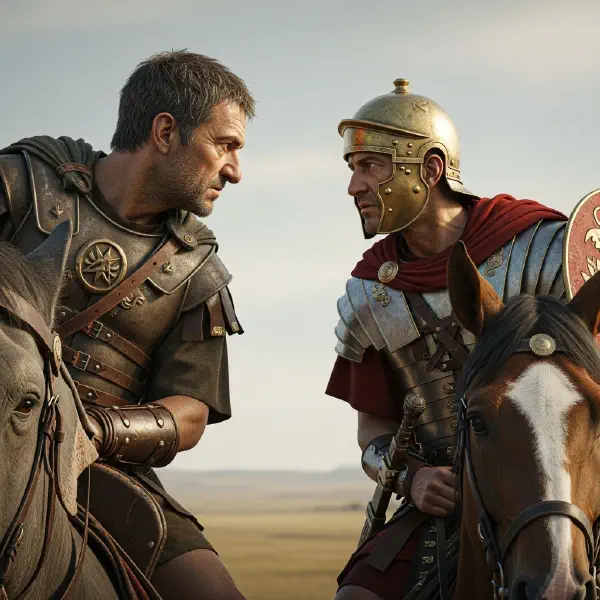
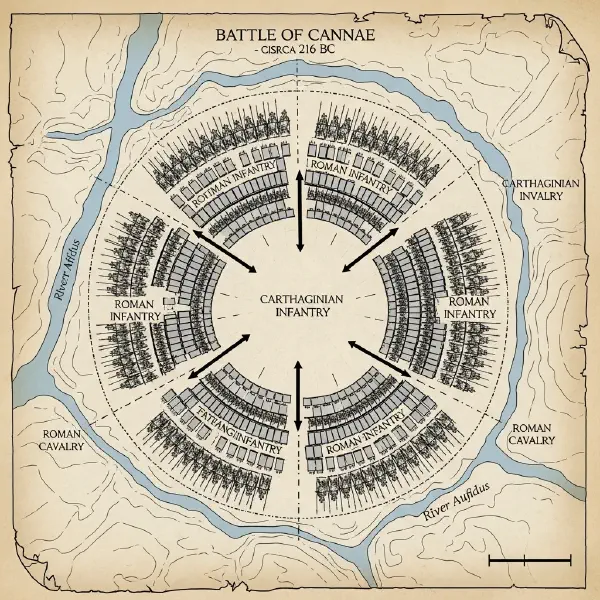
Hannibal’s tactical brilliance in battles like Cannae showcased his innovative military strategies.
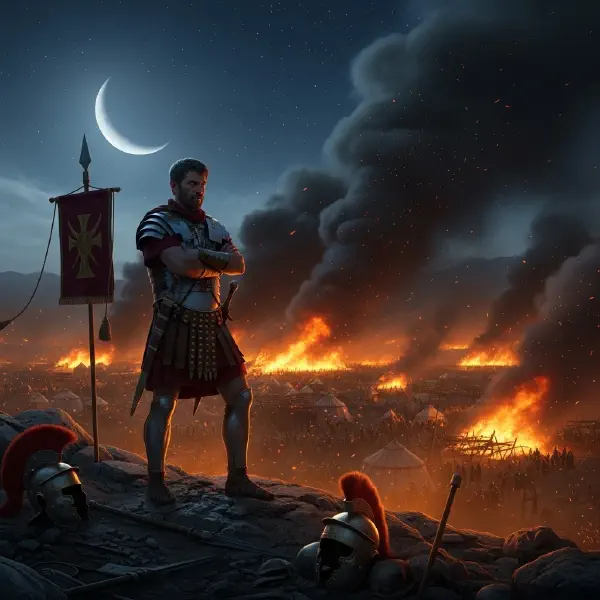
Despite battlefield successes, Hannibal’s grand strategy failed to secure long-term victory against Rome.
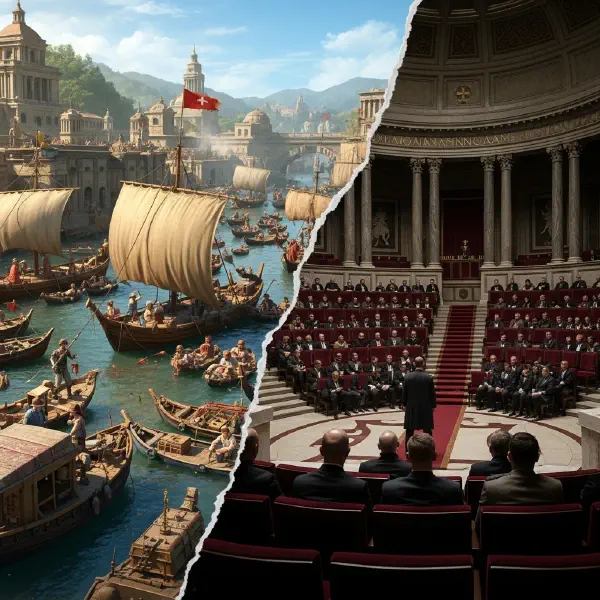
Rome’s political resilience and ability to adapt outlasted Hannibal’s military campaigns.
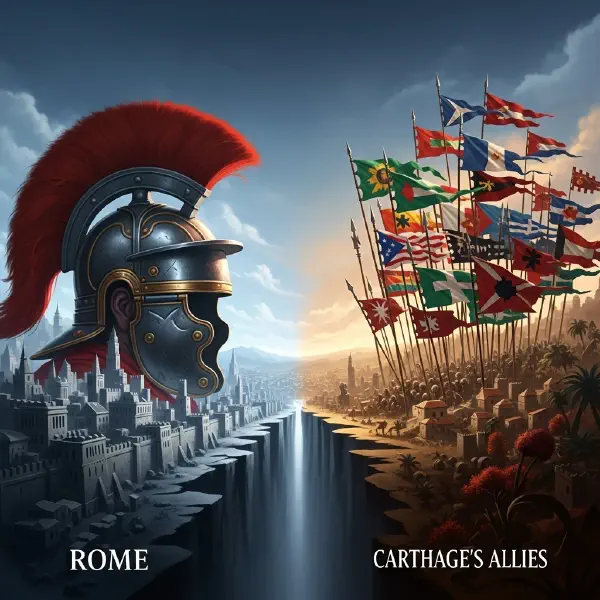
The lack of sufficient reinforcements and support from Carthage undermined Hannibal’s efforts.
The Hannibalic Paradox illustrates the complex interplay between tactical genius and strategic shortcomings in warfare.
Hannibal’s legacy influenced military thought and strategy for centuries, highlighting the importance of aligning military actions with political objectives.
Hoyos, D. (2003). Hannibal’s Dynasty: Power and Politics in the Western Mediterranean, 247–183 BC. Routledge.
Goldsworthy, A. (2000). The Punic Wars. Cassell.
Lancel, S. (1995). Carthage: A History. Blackwell.
Miles, R. (2011). Carthage Must Be Destroyed: The Rise and Fall of an Ancient Civilization. Viking.
Scullard, H. H. (1989). The Carthaginians. In F. W. Walbank et al. (Eds.), The Cambridge Ancient History (Vol. 7, Part 2, pp. 486-569). Cambridge University Press.