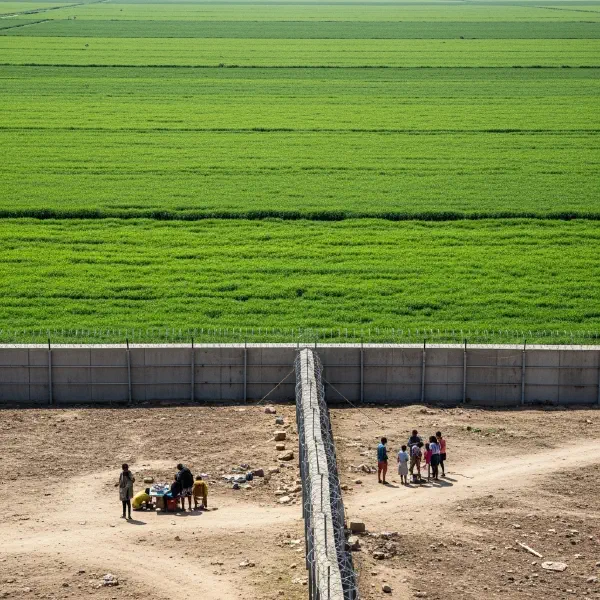
The Shadow Side of Urban Progress#
While cities rise, rural landscapes crumble. Sand extraction for urban development creates a cascade of ecological and social impacts that extend far beyond construction sites. As urban areas grow upward, peripheral regions experience downward pressure on their ecosystems, economies, and social fabrics.
Environmental Consequences: Degradation Beyond the Extraction Site#
Riverine and Coastal Damage#
Sand mining from riverbeds and coastal zones disrupts the natural equilibrium of water systems. The Brahmaputra River in India, the Yangtze in China, and the Nile in Egypt have all suffered severe channel destabilization due to massive sand extraction. In Vietnam, unregulated sand extraction from the Mekong Delta has caused riverbank collapse, threatening entire communities and agricultural hinterlands. The removal of sand destabilizes riverbanks, deepens channels unpredictably, and increases flood risk downstream.
Groundwater and Aquifer Impacts#
When surface sand extraction lowers the water table, agricultural productivity suffers acutely. In the Punjab region of India and Pakistan, indiscriminate sand mining has reduced groundwater recharge capacity. Farmers are forced to drill deeper wells at greater expense, while aquifer levels continue to decline. This creates a dependency on increasingly unsustainable water extraction and threatens long-term food security.
Loss of Riparian Vegetation and Biodiversity#
The removal of sand from riverbanks eliminates the vegetation zones that depend on specific hydrological patterns. Fish spawning grounds disappear, nesting sites for birds vanish, and the ecological corridors that support biodiversity collapse. In the Ganges-Brahmaputra Delta, sand mining has contributed to a 40% reduction in wetland habitats over the past two decades.
Food Security Crisis: From Farms to Hunger#
The Conversion of Agricultural Land#
When sand-bearing land is sold for extraction, farming is displaced. In Ghana’s Ashanti Region, the conversion of 1,000 hectares of agricultural land to sand pits between 2010 and 2020 eliminated cultivation of primary food crops including yams, cassava, and maize. The economic gain from sand sales—often borne by large mining companies—is concentrated among landowners and miners, while the loss of agrarian livelihoods is distributed across entire farming communities.
Reduced Yields and Nutritional Decline#
Even where farming continues near mining zones, yields decline sharply due to water scarcity and soil degradation. In regions where mining has not entirely consumed farmland, the remaining plots face reduced water infiltration, leading to crop failure during dry seasons. Studies in Ghana and Kenya document that children in sand-mining regions experience higher rates of malnutrition compared to non-mining areas.
Economic Vulnerability: The Illusion of Development Opportunity#
Limited Local Benefit from Mining#
Sand mining creates jobs, but these are often temporary and underpaid. In Ghana, sand miners earn between $5 and $15 per day, below the national minimum wage. More significantly, large-scale mining operations employ mechanized equipment requiring fewer workers than small-scale extraction. The local economic gains are ephemeral, while the environmental costs persist for generations.
Forced Urbanization and Urban Poverty#
As agricultural livelihoods collapse, rural inhabitants migrate to cities in search of employment. This is not the planned, systematic urbanization that policy-makers envision, but rather a crisis-driven displacement. In Accra, Lagos, and Dhaka, significant portions of urban growth in the last two decades have been fueled by rural-to-urban migration driven partly by sand-mining-induced agricultural collapse. These migrants often settle in informal slums with inadequate sanitation, healthcare, and education.
Synthesis: A Sustainability Crisis Masquerading as Development#
Sand extraction presents a profound sustainability paradox: the material that enables urban development degrades the rural ecosystems and agricultural systems that feed the world. The “granular rush” is fundamentally unsustainable because it externalizes environmental and social costs to peripheral regions while concentrating the benefits of development in urban centers. Without intervention, this pattern will intensify as global urbanization accelerates. The next sections will explore how this dynamic manifests across specific regions and what alternatives might exist.