The Most Mundane Material of Modernity#
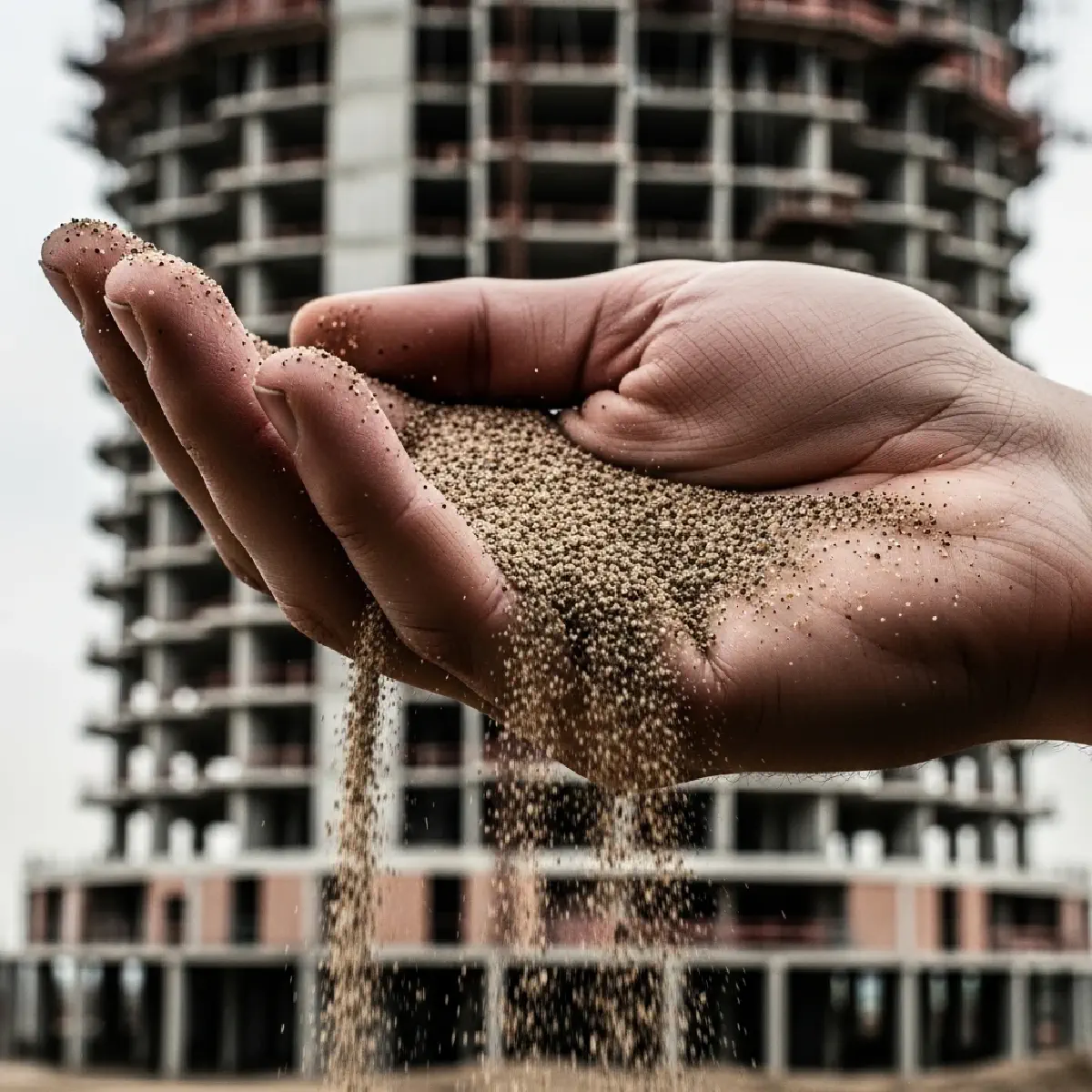
Sand is created every second through the patient erosion of rain, wind, and the help of fungi. It travels down rivers to become the literal foundation of human society. While it is used for high-tech microchips and fracking, its primary destination is the global construction sector. We extract approximately 50 billion metric tons (55 billion short tons) of sand and gravel every year. This volume is enough to build a wall 27 meters (88 feet) high and 27 meters wide around the entire planet. Despite its apparent abundance, scholars have declared a “looming tragedy of the sand commons”. This post investigates whether the “crisis” is a physical reality or a political construct.
The Scarcity Myth and the Power of Definition#
The central claim of this analysis is that the “global sand crisis” is often an elite-driven narrative that flattens local complexities to justify top-down governance. While extraction rates currently exceed natural renewal, “scarcity” remains a political tool rather than a purely data-driven fact.
The Systemic Construction of Crisis#
Explaining the System: Extraction versus Geologic Time#
The sand industry operates on a temporal mismatch where daily excavation removes material that takes thousands of years to generate. Sand is the most used solid material on Earth, second only to water in total global usage. Because construction-grade sand is mostly found in rivers and on beaches, these specific environments bear the brunt of extraction. In these areas, the removal of sediment reduces the overall transport capacity of the river and alters channel morphology. Globally, this has led to urgent warnings that “time is running out for sand”.
Complicating Factors: The Politics of Data Gaps#
Critical geographers argue that the language of “crisis” and “emergency” is used to demand action that often overlooks unwanted futures for local populations. There is surprisingly limited reliable data to support claims of absolute global sand scarcity. Most journal articles mention scarcity without explication or support, frequently citing missing or inaccessible sources. Furthermore, calls for urgency often come from international NGOs that scale complex transboundary problems to the nation-state level. This scaling frequently benefits well-resourced elites who are in a position to take the opportunities that a crisis presents.
Tracing the Consequences: The Criminalization of Subsistence#
The “crisis” narrative frequently positionates sand extractors as external actors harming local environments. This often leads to a generalized discourse of “sand mafias” and illegality. In countries like Colombia and Morocco, these narratives can result in the criminalization of Artisanal and Small-scale Mining (ASM). When the state defines “efficiency” and “legality” through a large-scale industrial lens, traditional resource users are marginalized. This criminalization risks dispossession for communities that depend on sand for their survival, such as the areneros of Brisas del Frayle.
Synthesis: Beyond the Flattened Narrative#
Deconstructing the sand crisis does not mean ignoring the environmental damage of unchecked extraction. Instead, it requires asking who has the power to declare a crisis and who benefits from the resulting policy shifts. If the “crisis” is used solely to keep the capitalist economy going, it may perpetuate social and ecological injustice. We must move beyond narrow logics that view the world only as resources for instrumental use. A truly generative understanding of sand must reveal existing inequalities and critique power structures rather than reinforcing the status quo. The future of sand governance must be grounded in local realities rather than just high-level anxieties.