The Islands That Cost 15,000 Lives#
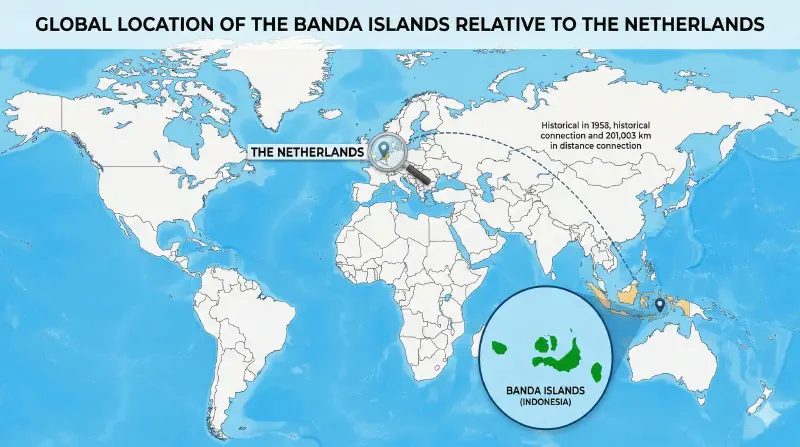
In April 1621, Jan Pieterszoon Coen landed on the Banda Islands with 1,900 Dutch soldiers and a mandate from the Heeren XVII — the seventeen-man board of the Dutch East India Company — to establish a monopoly on nutmeg. The islands’ total population was approximately 15,000. Within three months, fewer than 1,000 remained. The rest were killed, enslaved, or starved into the surrounding sea. Coen’s operational reports to his employers described the outcome in the language of administration, not atrocity. The Bandanese had violated their contract. They had sold nutmeg to English traders. The consequence followed logically from the terms.
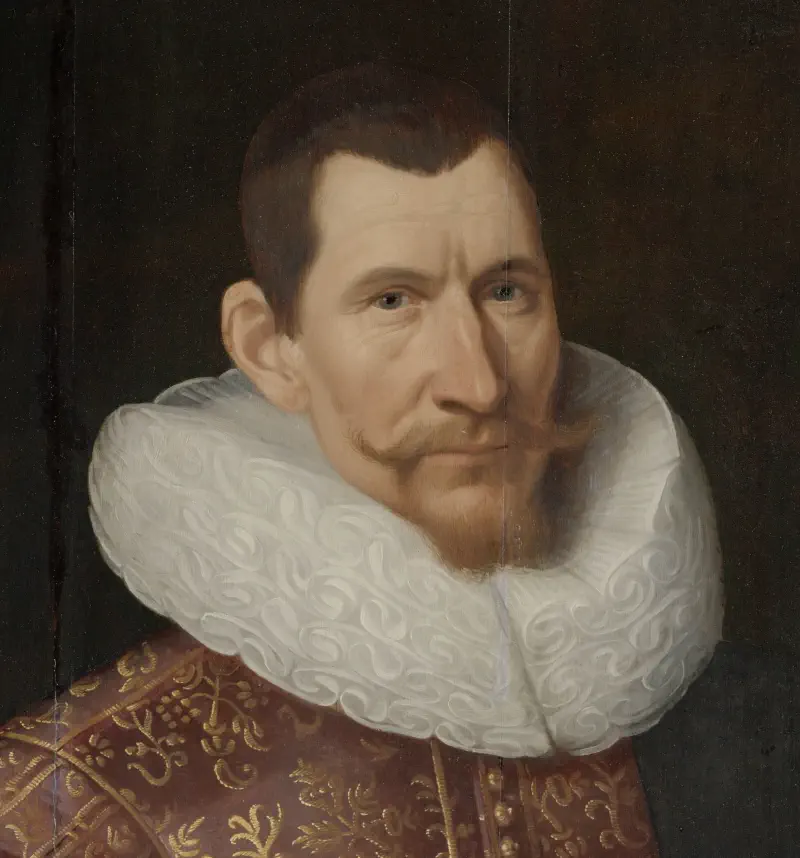
What happened on Banda was not an accident of temper or a failure of command. It was the output of an institutional architecture — a system designed with sufficient precision that its outcomes were predictable before the ships left Amsterdam. The question that matters is not whether Coen was a monster, though the historical record is not ambiguous on the point. The question is: what did he build, and why does it still run?
The First Corporation That Could Wage War#
The VOC — Vereenigde Oostindische Compagnie — was chartered by the Dutch States-General in 1602. Its founding document was unlike anything that had preceded it. Previous trading companies had commercial mandates. The VOC had something more: the legal authority to wage war, sign treaties, build fortifications, and administer territory in the name of the Dutch Republic. It was, in institutional terms, a sovereign entity wearing a commercial skin.
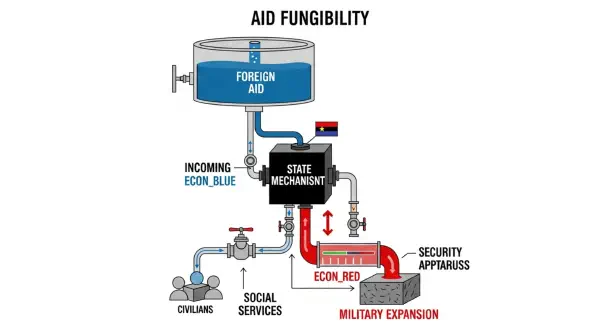
This fusion was not accidental. The Dutch Republic was at war with Spain, and the spice trade was a strategic asset. Centralizing that trade into a single entity — rather than distributing it across competing merchants — gave the state a military-commercial instrument it could deploy across the Indo-Pacific without bearing the full cost of empire. The VOC socialized enforcement expenses across its shareholders while directing rents toward its governors and creditors. The Heeren XVII set policy from Amsterdam. Coen implemented it in Batavia. The distance between boardroom and battlefield was the architecture’s most important feature: it allowed commercial decisions to produce military consequences while maintaining the formal separation between the two.
The economics were extraordinary. Nutmeg — available only in the Banda Islands — was marked up by a factor of more than 300 between its point of origin and Amsterdam’s markets. A kilogram of nutmeg that cost the VOC roughly 1 stuiver on Banda sold for 40 or more guilders in northern Europe. The markup was not driven by scarcity; the islands were productive and their soil reliable. It was driven by monopoly enforcement. The rents existed only as long as competition was suppressed — English traders, Portuguese merchants, and Bandanese farmers who retained the freedom to sell to the highest bidder.
This is what made Banda a policy problem rather than a commercial one. The Bandanese had no formal obligation to sell exclusively to the VOC, and they did not. Coen’s solution was to eliminate the sellers. Once depopulated, the islands were repopulated with Dutch settlers — perkeniers — who operated as plantation tenants under VOC contracts. The monopoly was now structurally enforced rather than contractually negotiated. There was no one left to defect.
The Organizational Logic of Controlled Violence#
Coen was not the first European to use violence in the pursuit of commercial monopoly. The Portuguese had done it a century earlier in the Indian Ocean. What Coen contributed was the institutionalization of that violence — its conversion from an improvised tool into a standard operating procedure. His letters to the Heeren XVII are remarkable not for their cruelty but for their administrative precision. He described civilian massacres with the same register he used for inventory reports and cargo manifests. The category of victim did not exist in his correspondence. Only the category of obstacle.
This was made possible by the organizational structure the VOC provided. Coen was not acting on personal initiative; he was executing a mandate within a formal hierarchy that had authorized his methods, however implicitly, by structuring his incentives correctly. A VOC governor’s advancement depended on returns. Returns depended on monopoly. Monopoly depended on enforcement. The hierarchy did not need to issue an explicit order to massacre the Bandanese. It merely needed to reward outcomes and decline to punish methods.
Providence as the Operating System#
Coen was a Calvinist, and Dutch Calvinism in the early seventeenth century was not a private faith. The Synod of Dort had concluded in 1619 — two years before Banda — having established predestinarian doctrine as the theological foundation of the Dutch Reformed Church. The doctrine held that God had elected certain individuals and certain nations to salvation and to worldly success. Commercial prosperity was legible as divine favor. Resistance to that prosperity was therefore not merely commercial competition; it was an obstacle to God’s purposes.
This framing had a specific and measurable institutional effect. It converted the moral category of massacre into the administrative category of enforcement. The Bandanese were not victims in Coen’s theological universe; they were instruments of obstruction. His famous declaration — “Despair not, spare your enemies not, for God is with us” — was not a battle cry. It was an operational authorization. Once God was invoked as the supervening authority, the constraint on coercive response disappeared. The actor became an instrument of providence rather than the agent of violence. Providence absorbed the moral cost.
This is not an observation about Calvinist theology in particular. Any ideological system that inserts a higher authority — divine, legal, historical, or scientific — between the actor and the target performs the same function. The mechanism is transferable. The specific content of the ideology is irrelevant. What matters is its structural effect: it removes the recognition of the target as a moral subject, and with that recognition removed, the constraint on coercion disappears.
The Template and Its Outputs#
The Banda operation was not an isolated event. It was a proof of concept. The VOC applied the same operational sequence — resource identification, commercial monopoly claim, designation of non-compliance as criminal or heretical, removal of constraint on response, extraction — across the full range of its territorial ambitions. In Ceylon, it was cinnamon. In Malacca, it was control of the maritime passage. In Java, it was coffee and indigo. Each case followed the same architecture. The resource changed. The sequence did not.
What the template produced, across these applications, was a geographic and commercial network of extraordinary reach. By 1670, the VOC was the wealthiest corporation in history, with over 150 merchant ships, 40 warships, and 50,000 employees — of whom 10,000 were soldiers. It paid an annual dividend that averaged 18% for nearly a century. No subsequent commercial entity has matched its combination of scale, coercive capacity, and return on equity.
The Balance Sheet That Providence Could Not Balance#
Coen died in Batavia in 1629, eight years after Banda. He never saw the system he built reach its peak, and he did not live to observe its structural contradiction. The VOC he institutionalized survived him by 168 years. It went bankrupt in 1799.
The cause of bankruptcy was not military defeat, not commercial competition, and not an absence of resources to extract. It was the weight of the enforcement apparatus itself. Maintaining a commercial monopoly across a 15,000-kilometer trading network required continuous military presence, continuous suppression of resistance, and continuous management of the corruption that any coercive hierarchy generates internally. Each extension of the system’s reach increased its administrative and military costs faster than it increased its extractable rents. The marginal cost of enforcement eventually exceeded the marginal rent.
This is not an idiosyncratic outcome. It is the structural terminus of extraction-based monopolies. They do not fail because their enemies grow stronger. They fail because their own architecture becomes unsustainable. Coen’s doctrine was not wrong on its own commercial terms in 1621. By 1799 it had become impossible on any terms.
The lesson is not moral. It is arithmetic. What Coen built had a balance sheet, and balance sheets have a reckoning. Providence does not alter the calculation. It only adjusts the timeline.