In 1489, King Henry VII of England sent royal missions to the Low Countries to identify locations suitable for wool processing. He was not sightseeing. England at the time was a raw material exporter, shipping unprocessed wool across the Channel for Flemish weavers to turn into cloth and sell at a handsome premium. Henry wanted that premium for England. His method: recruit the skilled workers who held the knowledge in their hands, raise export duties on raw wool to make domestic processing more attractive, and wait. It took nearly a century before England had sufficient processing capacity to ban raw wool exports entirely. When it did, in 1578, under Elizabeth I, the competing manufacturers in Flanders — deprived of their raw materials — were ruined.
Britain became the world’s greatest industrial power through a program of state-directed knowledge acquisition, skills poaching, and infant industry protection that lasted nearly a hundred years. Daniel Defoe, whose fictional hero Robinson Crusoe became the mascot of free-market economics, documented the whole programme in a forgotten 1728 economic treatise. The mascot and the author were leading entirely separate intellectual lives.
Key Insights#
- Daniel Defoe’s largely forgotten economic work demonstrates that Britain’s woollen manufacturing industry — the foundation of its Industrial Revolution — was deliberately built through tariff protection, export subsidies, industrial espionage, and the poaching of skilled workers from the Low Countries, beginning with Henry VII in the late 15th century.
- Robert Walpole’s 1721 legislation — a comprehensive programme of protective tariffs, manufacturing subsidies, and quality standards — was the direct template for the post-war industrial policies of Japan, Korea, and Taiwan, though few in those countries realized it at the time.
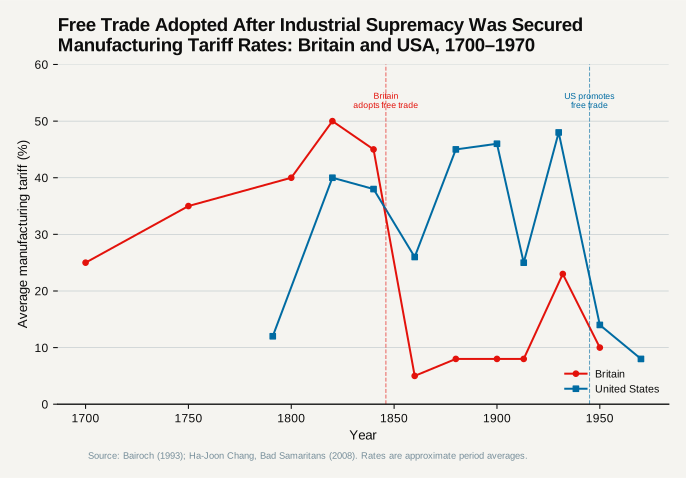
- Britain’s average manufacturing tariff rate was 45–55% in 1820, more than four times that of Germany or the Netherlands; it adopted free trade only after 1846, when its industrial lead was already secured and protection had become unnecessary.
- The United States, the most forceful promoter of free trade since 1945, maintained the world’s highest manufacturing tariffs — 40–50% — for the entire period from the 1820s to the First World War.
- Alexander Hamilton’s 1791 Report on Manufactures, which included protective tariffs, export bans on raw materials, subsidies, and prizes for invention, is the direct intellectual ancestor of every successful industrial policy of the 20th century, including those of Japan and Korea.
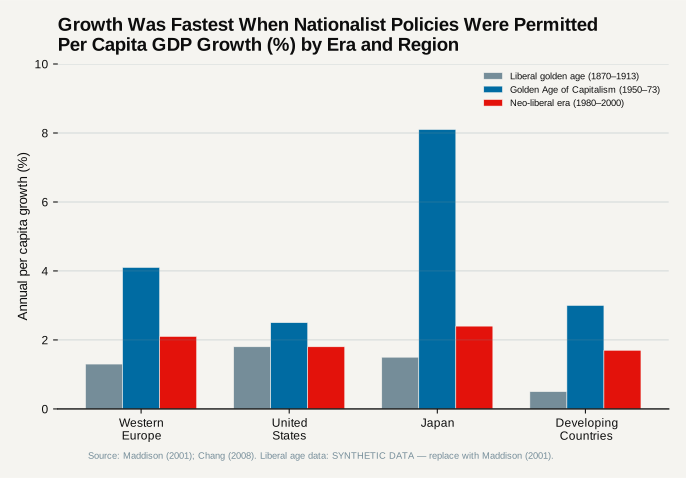
- The Marshall Plan (1948–51) represented an exceptional period when the United States actively supported, rather than restricted, the use of nationalist industrial policies by other countries — and the subsequent Golden Age of Capitalism (1950–73) produced the fastest growth in world history for both rich and developing countries.
- The shift to neo-liberal orthodoxy after 1980 coincided with a measurable deceleration in growth in the rich countries themselves, from 3.2% to 2.1% per capita annually.
Protection built the first industrial economy#
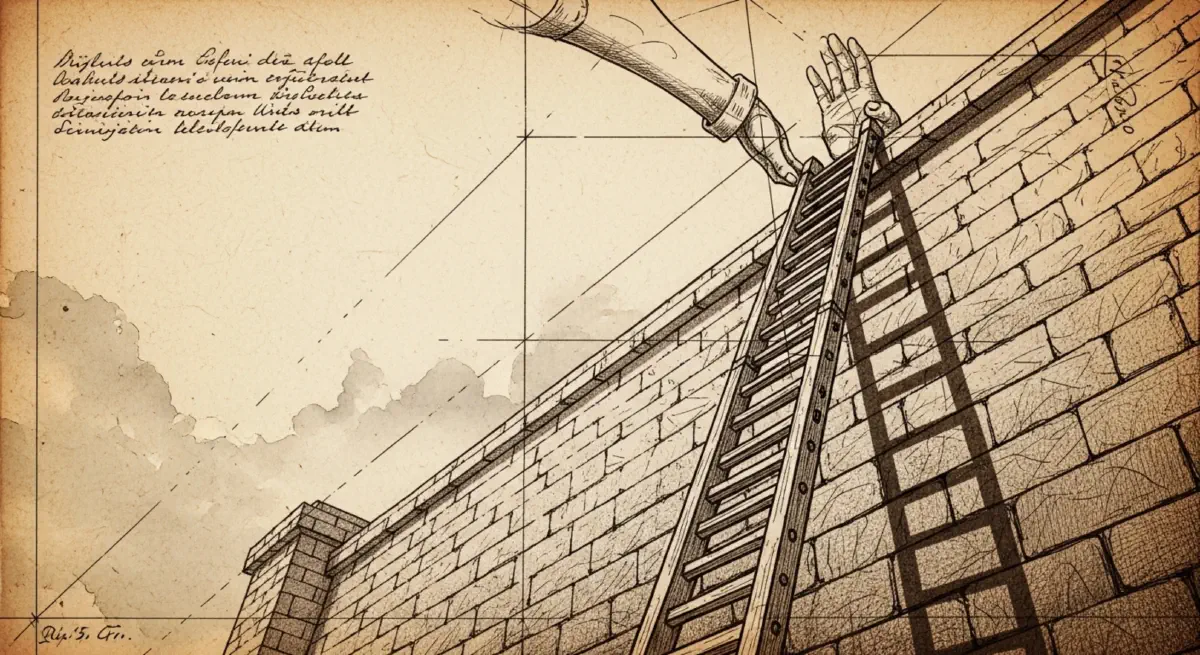
Henry VII’s wool programme is not a curiosity. It is the template. Defoe’s Plan of the English Commerce describes a strategy that is structurally identical to the post-war industrial policies of Japan, Korea, and Taiwan — and, as it happens, to the 1721 legislation introduced by Robert Walpole, the first British prime minister, which raised tariffs on imported manufactured goods, subsidized exports, and set minimum quality standards for British manufacturing products. These policies were not exceptions to the British tradition. They were the British tradition. Britain maintained average manufacturing tariff rates of 45–55% from the early 18th century until 1846, when it finally adopted free trade. By that point, British manufacturing was so dominant that protection had become not only unnecessary but actively counterproductive. The ladder was no longer needed.
The timing matters. Britain adopted free trade in 1846, after more than a century of aggressive industrial promotion. The anti-Corn Law movement that preceded liberalization was not simply about cheaper bread. Richard Cobden, the movement’s leader, explicitly argued that without the Corn Laws, factory development would not have taken hold in America and Germany. He was trying to pull other countries back toward agriculture. The political economist John Bowring, a key figure in the anti-Corn Law League, advised German states to specialize in wheat and buy British manufactures. The intellectual historian Paul Bairoch put the point with precision: Britain adopted free trade only after it had acquired a technological lead over its competitors “behind high and long-lasting tariff barriers.”
Figure 1: The horizontal axis spans 1700–1970; the vertical axis shows average manufacturing tariff rates as a percentage. Both Britain and the United States exhibit peak tariff periods — Britain at approximately 50% before 1846, the United States at 40–50% from the 1820s through 1913 — before their respective conversions to free trade advocacy. The annotated vertical lines mark the years each country changed course. The pattern directly supports the ‘kicking away the ladder’ thesis: industrial supremacy was achieved behind protective walls, and free trade was adopted only once competition became advantageous.
The American System was the world’s most successful industrial programme#
The United States offers the starker case. Under British colonial rule, Americans were prohibited from manufacturing high-value products. William Pitt the Elder declared in 1770 that the colonies should not be permitted to manufacture “so much as a horseshoe nail.” After independence, the debate about trade policy became the central conflict of American politics. Thomas Jefferson, the slave-owning agrarian idealist, wanted a republic of self-sufficient farmers. Alexander Hamilton, the illegitimate son of a Scottish pedlar who became the country’s first Treasury Secretary, wanted an industrial nation, and understood that building one required protecting it from British competition.
Hamilton’s 1791 Report on Manufactures is the most important economic policy document in American history that nobody reads. It recommended protective tariffs and import bans, subsidies for domestic manufactures, export bans on key raw materials, prizes for invention, government quality standards, and public investment in financial and transport infrastructure. Congress initially rejected most of it. But by the 1820s, following the War of 1812, which disrupted British imports and gave American industries a chance to grow, Hamilton’s programme was in full effect. Average tariffs reached 40%, then 50%. Abraham Lincoln — the Great Protector before he was the Great Emancipator — raised them further. From the 1820s to the First World War, the United States was the most protectionist economy in the world and the fastest-growing.
It became the advocate of free trade after 1945, precisely when it had achieved the industrial supremacy that made free trade in its interest. The pattern is identical to Britain’s.
Germany, Japan, and the quiet protectionists#
The popular image of 19th-century protectionism assigns the vice to France, Germany, and Japan. The data do not support this. Germany’s average manufacturing tariff throughout the 19th and early 20th century was 5–15% — well below Britain’s pre-1860 rate and far below the American rate. Japan, forced into effective free trade by unequal treaties until 1911, had tariff rates below 5% for its first period of modernization. The instrument Japan used was not tariff protection but directed credit, state-owned enterprises, aggressive export promotion, tight controls on foreign investment, and regulation of technology imports. The toolkit was different; the underlying logic — protect and nurture until you can compete — was identical.
France provides perhaps the most instructive counter-case. In popular imagination, France has always been interventionist and protectionist. In reality, between 1821 and 1875, France had lower tariffs than Britain. It was not until after the Second World War, when France explicitly acknowledged that its conservative, hands-off economic policies had contributed to its relative decline and to two military defeats, that the French state became genuinely interventionist. The result was dramatic: within two decades, France had transformed itself into a technological leader in aerospace, railways, nuclear power, pharmaceuticals, and telecommunications. Companies now celebrated as private-sector icons — Renault, Alcatel, Thomson, Elf Aquitaine, Rhône-Poulenc — were state-owned enterprises that became world-class firms under public management before their eventual privatization.
The one period that worked for everyone#
The exception that proves the rule came between 1950 and 1973. During those two decades, the United States adopted what might be called an enlightened approach to the economic development of other nations. Through the Marshall Plan and the early GATT framework, it channelled money into European reconstruction and explicitly allowed developing countries to use protection and subsidies more aggressively than rich countries. This was a decisive departure from the British colonial tradition, under which free trade had been imposed on weaker nations through military force or legal coercion.
The result was the Golden Age of Capitalism. Per capita income in Europe grew at 4.1% per year, up from 1.3% during the liberal golden age of 1870–1913. Japan grew at 8.1%. The United States itself grew at 2.5%, well above both its previous performance and its subsequent one. Developing countries, permitted to use nationalist policies, grew at 3.0% per capita. The world economy, both rich and poor, did its best on record during the one period when the dominant power explicitly supported other countries’ industrial development strategies rather than prohibiting them. After 1980, when neo-liberal orthodoxy displaced this approach, growth rates in both rich and developing countries decelerated.
Figure 2: The horizontal axis lists economies; the vertical axis shows per capita income growth as a percentage. Three eras are compared for each group: the liberal golden age (1870–1913), the post-war Golden Age (1950–73), and the neo-liberal era (1980–2000). Growth rates are uniformly higher during the Golden Age across every group. The single period when the dominant power explicitly permitted nationalist industrial policies produced the fastest growth on record for both rich and developing worlds.
Conclusion#
The history of capitalism, written honestly, is the history of infant industry protection — of states that built industrial capacity behind protective walls, then opened their borders once those walls were no longer necessary. What rich countries currently recommend to poor countries is the opposite of what made rich countries rich.