The Refusal of the Six Garrisons#
By 523, the northern frontier of the Northern Wei was a powder keg of ethnic and social resentment. For generations, ethnic Xianbei soldiers had been stationed at the six northern military garrisons to defend against Rouran attacks. These men were largely barred from the social mobility enjoyed by the elite in Luoyang. The official Li Chong proposed converting these garrisons into provinces to grant the soldiers civilian rights. The regent Yuan Cha refused this proposal, effectively sealing the fate of the empire.
The Thesis of Borderland Alienation#
The frontier rebellions were the direct consequence of a central government that viewed its defenders as an expendable caste. This alienation converted the empire’s most effective military units into its most lethal enemies. When the state refused to integrate its warriors into the civilian structure, it forced them to seek power through revolt. This transition from defenders to rebels decentralized military authority across the northern landscape.
The Mechanism of Agrarian Revolt#
The Ignition of the Northern Rebellions#
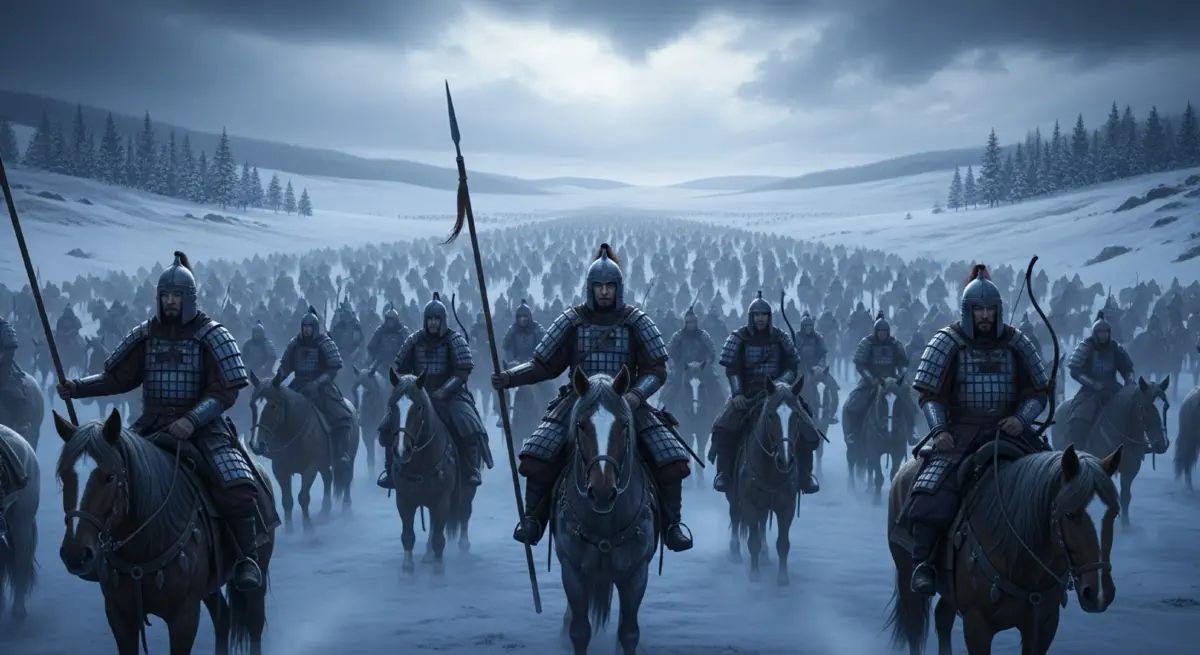
Discontent reached a breaking point in the Woye and Huaihuang garrisons in modern Inner Mongolia and Hebei. Rebels led by Poliuhan Baling sparked a movement that Northern Wei forces could not quickly quell. The rebellion spread rapidly across the six garrisons, fueled by the professional training of the insurgent soldiers. These were not disorganized peasants but highly trained cavalrymen with a deep understanding of imperial logistics. The state’s inability to respond allowed multiple rebel leaders to declare themselves emperors of their own small territories.
The Rise of the Xiurong Privateer#
Amidst this chaos, a minor chief named Erzhu Rong began his ascent in the Xiurong region of modern Shanxi. Descended from Xiongnu ancestry, his family had accumulated vast wealth through hereditary control of animal husbandry. Recognizing the imperial degradation, Erzhu Rong sold his livestock to gather a private army of “brave warriors”. He transformed his clan’s economic advantage in animal and fodder supply into a high-quality military machine. This private force would eventually become the most effective military unit in the entire empire.
The Cascade of Imperial Paralysis#
The spread of revolts created a cascading failure of the Northern Wei’s territorial control. Rebels like Mozhe Niansheng declared themselves Emperors of Qin in the west, while Ge Rong proclaimed himself Emperor of Qi in the north. The imperial government was forced to rely on independent generals like Erzhu Rong to defend the capital. This reliance further eroded the central authority of the Yuan dynasty. By the mid-520s, the Northern Wei state existed only as a collection of warring provinces with no unified command.
Synthesis of the Frontier Collapse#
The failure to reform the garrison system in 523 serves as a historical lesson on the dangers of institutional rigidity. By denying social mobility to its most vital demographic, the Northern Wei turned its shield into a sword. The resulting vacuum allowed figures like Erzhu Rong to prioritize personal ambition over dynastic loyalty. The empire was now divided into two worlds: a decadent capital and a burning frontier. The intersection of these two worlds would soon lead to a lethal confrontation in the halls of power in Luoyang.