The Edible Idol of Empire
Key Insights#
The United States presented democracy as a universal principle, but in practice often applied it selectively in service of strategic interests.
American global power was sustained not only by military strength but by institutions, law, finance, and narrative control that gave hierarchy a moral appearance.
Trump did not create the contradiction within U.S. power, but made it far more visible by discarding the language of stewardship and embracing open transactionalism.
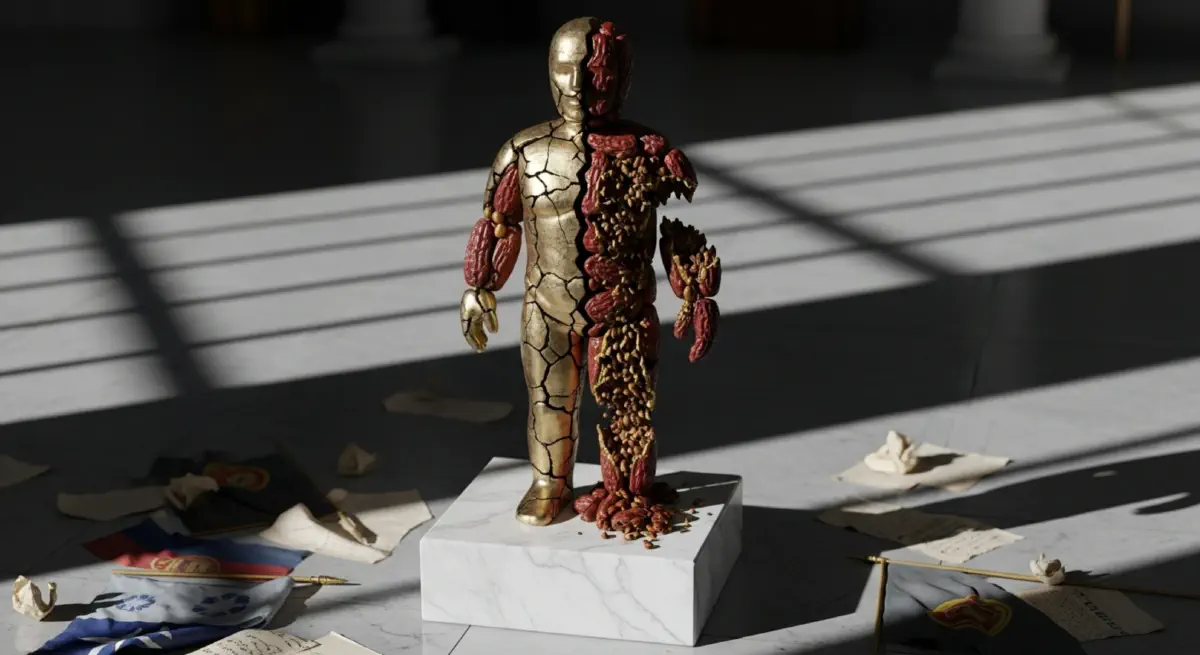
Once an empire begins consuming the very ideals it once used to justify itself, its legitimacy erodes even if its material power remains immense.
References#
- Ikenberry, G. J. (2011). Liberal leviathan: The origins, crisis, and transformation of the American world order. Princeton University Press.
- Keohane, R. O. (1984). After hegemony: Cooperation and discord in the world political economy. Princeton University Press.
- Reuters. (2025, February 3). WHO proposes budget cut after U.S. exit, defends its work. (Reuters)
- Trump White House Archives. (2018, May 8). Ceasing U.S. participation in the JCPOA and taking additional action to counter Iran’s malign influence and deny Iran all paths to a nuclear weapon. (Trump White House Archives)
- United Nations Climate Change. (2026, January 27). The Paris Agreement. (UNFCCC)
- United Nations Security Council. (2015, July 20). Resolution 2231 (2015) on the Iranian nuclear issue. (United Nations)
- United Nations. (2025, January 28). U.S. to withdraw from climate deal on January 27, 2026, says UN. Reuters. (Reuters)
- Walt, S. M. (2018). The hell of good intentions: America’s foreign policy elite and the decline of U.S. primacy. Farrar, Straus and Giroux.