The first century of the East India Company is often told as a story of exotic ships creaking into English harbours with their holds full of pepper, cloves, nutmeg, mace, cinnamon, and ginger. The spices, they say, revolutionised the English table and filled the national coffers. The reality is uglier. The spice trade was a slow haemorrhage of the nation’s silver, a transfer of wealth that enriched a handful of Company men while leaving consumers worse off and weavers rioting in the streets.
The Silver Drain#
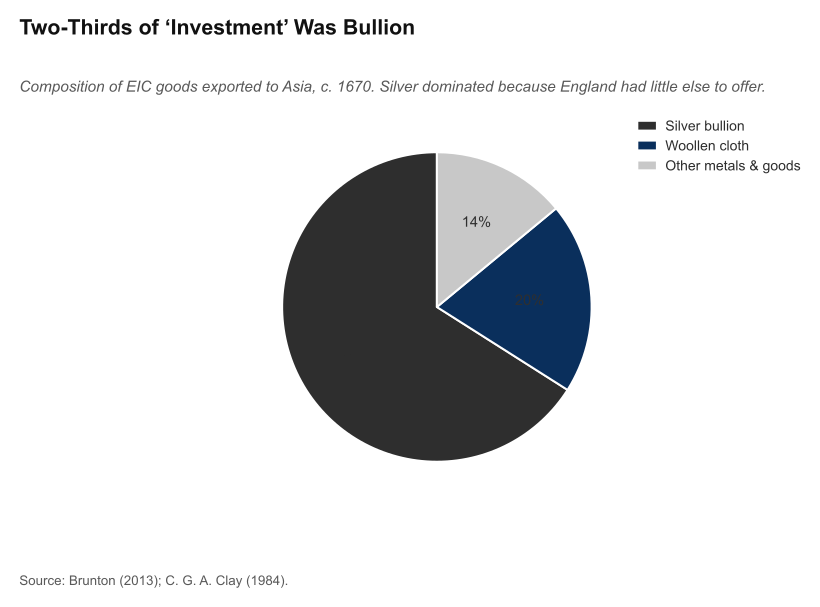
In the seventeenth century, England had few goods that Asia wanted. The Company’s main export—woollens—found scant buyers in tropical climates. So the merchants did the only thing they could: they packed their ships with silver bullion and Spanish pieces of eight, filling the void with hard currency. By 1670, silver accounted for roughly two-thirds of the Company’s exports to the East.
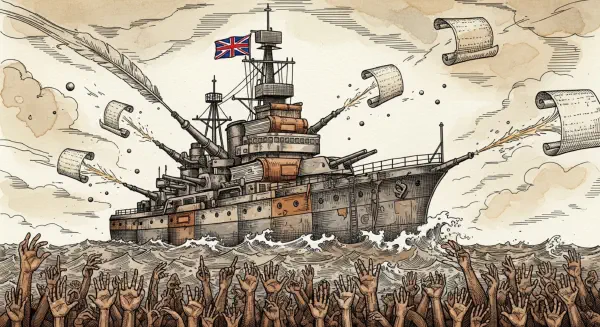
Mercantilist thinkers were horrified. The prevailing doctrine held that a nation grew rich by accumulating gold and silver, not by shipping it overseas. To watch the East India Company pour bullion into the Indian Ocean was, to them, a kind of fiscal treason. Pamphlets were written. Parliamentary committees deliberated. Yet the outflow continued, because the profits were private and the hand-wringing was public.
flowchart LR
    A[England: Silver bullion] -->|EIC ships| B[Asia: Spices, cloth, tea]
    B --> C[European markets]
    C --> D[Profits for EIC shareholders]
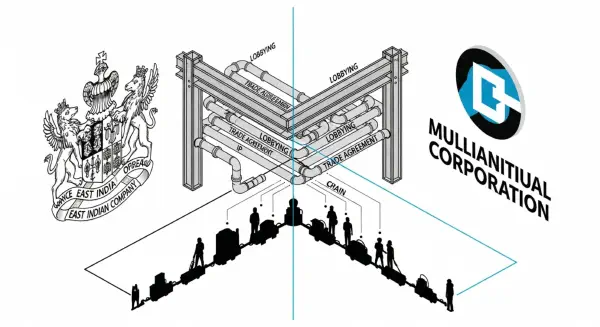
    D --> E[Lobbying to maintain monopoly]
    E --> F[Continued silver outflow]
    F --> A
The loop was self-perpetuating. The state worried about the national stock of treasure; the Company worried about its next dividend. The state’s worry never translated into action, because the Company had already bought the ears that mattered.
The Numbers Beneath the Fragrance#
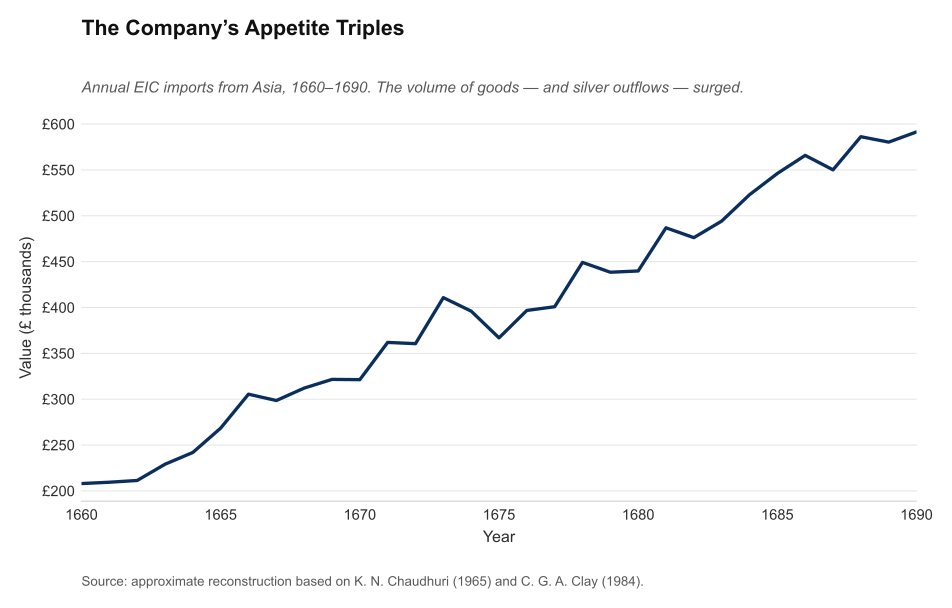
Between 1660 and 1690, the EIC’s average annual imports from Asia tripled. Merchants grew rich. London’s docks bustled. But the statistics tell a story of disproportion. The spices that arrived in England were re‑exported to Europe at a markup, and the profits accrued to a few hundred shareholders and directors. The ordinary Englishman ate slightly better‑seasoned food at a higher price, while the nation’s stock of precious metal declined.
By the numbers (c. 1670):
- Silver as a share of EIC exports: ~66%
- Annual EIC imports from Asia: tripled over 30 years
- Principal imports: pepper, indigo, saltpetre, silk, cotton cloth
- Dutch VOC market share in the spice trade: higher than EIC’s for the first century
The Dutch East India Company outdid the English for decades. Its charter gave managers a profit slice based on turnover, pushing them to flood markets and outtrade rivals. The EIC, by contrast, was a pure profit-maximiser. Competition, even between two monopolies, exposed the superior side: the Dutch model, with its perverse incentives, was temporarily more effective at moving goods. But both were cartels, and the difference was only in how they sliced the spoils.
The Riot of the Weavers#
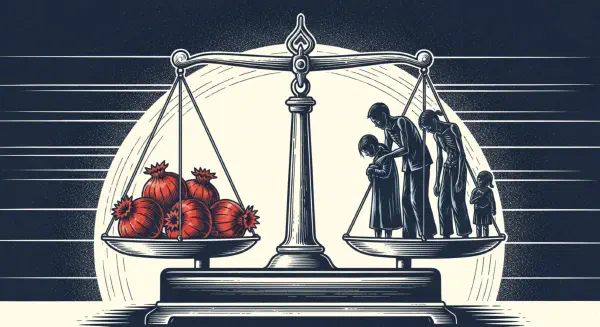
In 1667, several thousand men gathered outside the EIC’s London headquarters. They were weavers, dyers, and other cloth workers whose livelihoods were being destroyed by the rising tide of Indian textiles. The Company was importing cheap calicoes and silks, underselling domestic producers. The riot was put down, but its message was clear: when the Company profited, English workers bled.
This is the great unspoken truth of the mercantile monopolies. They created enclaves of wealth while hollowing out the domestic economy. The state defended the monopoly because the monopoly lent it money. The workers had no such leverage. Their suffering could be ignored, and was.
The language used to justify the trade was a smear of grease over a wound. "Free trade," they said, but the Company’s trade was anything but free: it was a protected conduit. "National wealth," they said, but the wealth concentrated in a few streets of London and in the war chests of the directors. The spinners of Spitalfields knew better. They saw the truth: the Company’s spice was the sweat of the poor, and its pepper was paid for in threadbare coats.
The Search for Something Other Than Silver#
The silver drain eventually forced the Company to find alternative goods to trade. They discovered that Indian cotton and silk could be bartered in Southeast Asia for spices. Saltpetre, essential for gunpowder, had a ready market. And in a grim preview of the century to come, they began to experiment with opium. By the end of the 1600s, the foundations were being laid for a triangular trade in which Indian opium would buy Chinese tea, and Chinese tea would buy English revenue—all without a single pound of silver leaving the Company’s vaults after the initial lubrication.
The problem was not solved; it was merely displaced. The silver that once flowed east would later return as drug addiction and cannon fire. The Company had learned that if you could not find something to sell, you could always create a market by force.
The Lesson of the First Century#
The EIC’s early decades demonstrate a permanent rule: when a private body is given monopoly power, it will exploit that power to amass riches while externalising the costs onto others—the domestic poor, the foreign trader, the national treasury. The state will tolerate these costs so long as a slice of the profit comes back in taxes, loans, and influence. The language used to describe the arrangement will be carefully laundered: "trade," "enterprise," "colonial development."
In reality, the East India Company’s first hundred years were a slow‑motion robbery—of the English tax‑payer through lost bullion, of the English worker through flooded labour markets, and of the Asian producer through unequal exchange backed by the eventual threat of violence. The spices were only the fragrance that concealed the rot.
Next in the series: "The Conquest of Bengal: When the Merchant Became King" – how a trading company collected an army and swallowed an empire.