The “Pantry Pirates” and the Morning After#
By midnight on September 9, 1923, Honda Mesa had been transformed from a desolate wilderness into a survival camp for over 500 drenched and oil-smeared sailors. Around massive bonfires fueled by railroad ties, the “Cavalry of the Sea” demonstrated that while their ships were broken, their spirit remained intact. Survivors from the S.P. Lee and Chauncey scavenged turkeys and hams from their own half-submerged galleys, earning the nickname “Pantry Pirates” as they brewed “Jamoke” in the freezing fog. “Ma” Atkins, the wife of a local telegrapher, became the “Angel of Mercy,” distributing 700 sandwiches to men who, hours earlier, had been jumping for their lives into a 45-degree list.
However, as the survivors boarded the “Honda Special” train for San Diego, the warmth of their rescue was replaced by the chill of a looming judicial storm. The Navy Department, still reeling from the Teapot Dome oil scandals, could not afford the appearance of a “whitewash”. The wheels of justice began to grind, not just to find the cause of the wreck, but to determine if the very soul of naval discipline—unquestioning loyalty to the leader—was a liability in the modern age.
The Thesis of Conditional Loyalty#
The General Court Martial of the Honda officers established a revolutionary precedent: seniority does not replace common sense, and “follow-the-leader” is not a defense for the hazarding of a vessel. The Court’s findings challenged the unwritten Destroyer Doctrine, asserting that a subordinate’s primary loyalty is to the safety of the unit, even if it requires a “Nelsonian” defiance of a superior’s orders. This shift marked the end of the 19th-century military mindset and the beginning of a modern era where individual initiative and technical verification are mandated as the ultimate safeguards against systemic error.
The Court of Conscience#
The Unprecedented Mass Trial at San Diego#
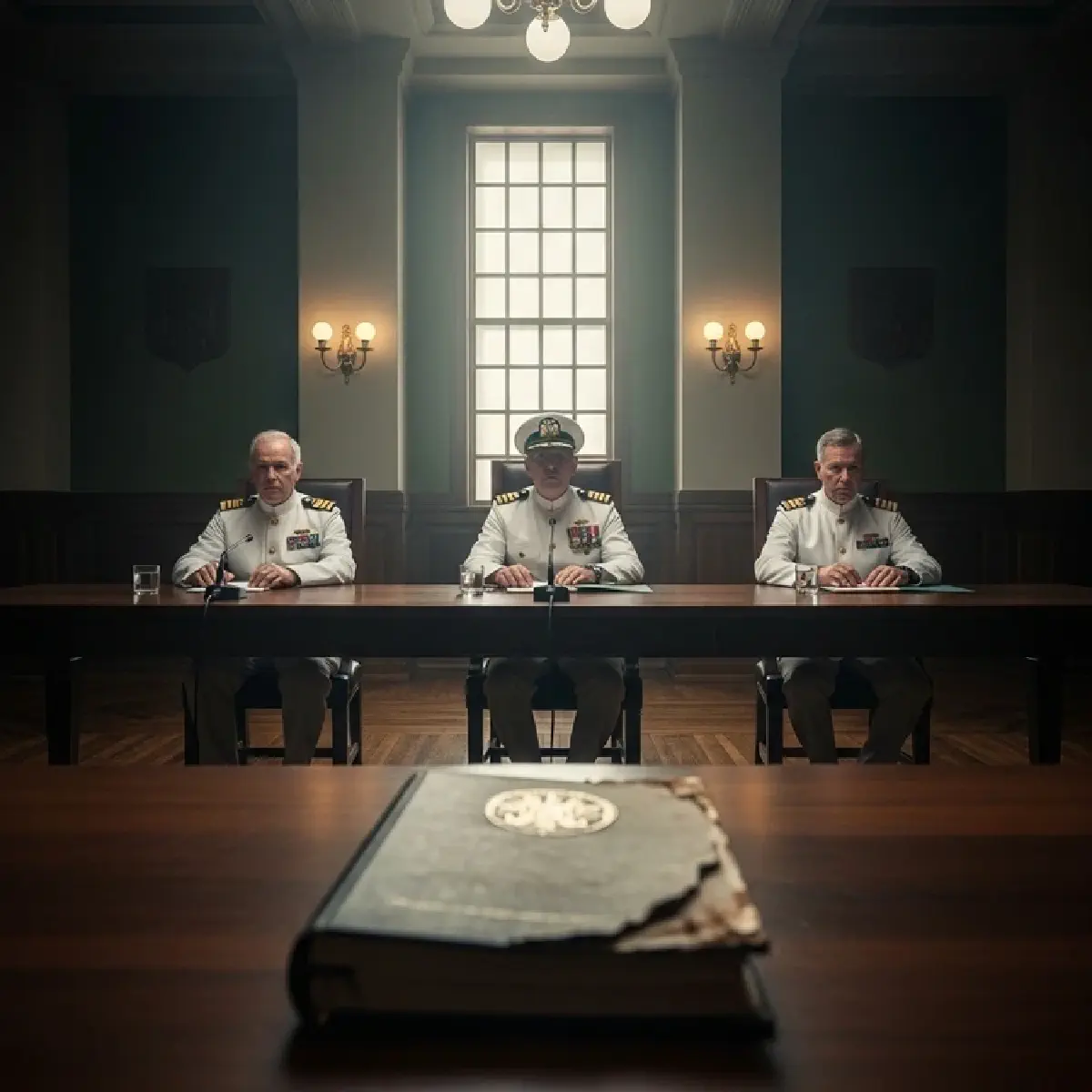
The legal aftermath of Honda was a cause célèbre unmatched until the Pearl Harbor investigations. For the first time in history, eleven officers were recommended for a General Court Martial for a single incident. The Court of Inquiry, presided over by Rear Admiral William Pratt, was forced to become a public affair after a “star chamber” secrecy attempt backfired and ignited a national media firestorm. This transparency put the defendants—including two Division Commanders and six ship Captains—in the crosshairs of a public that demanded to know why seven “sea hornets” had “jumped off the barn” at the flagship’s command.
The Conflict of the “Nelsonian” Standard#
The central tension of the trial was Admiral Pratt’s invocation of Horatio Nelson’s legacy. Pratt argued that just as Nelson had ignored signals at Copenhagen to win a battle, the Honda captains should have used their own “sound common sense” to ignore the Delphy’s fatal turn. Captain Robert Morris, Commander of Division 33, was asked point-blank if seniority ever replaced common sense; he replied that they were “supposed to be synonymous”. The prosecution argued that the subordinate captains were “nonfeasant” for not independently verifying their positions via radio bearings, even though squadron orders explicitly forbade them from doing so to prevent airwave congestion. This created a “damned if you do, damned if you don’t” paradox for the captains, who were being tried for obeying the very discipline they had been trained to uphold.
The Finality of the Verdicts and Their Reversal#
The General Court Martial eventually returned verdicts of “Not Guilty” for all but the three lead officers on the Delphy. Captain Watson, in a display of “outstanding manliness,” had assumed full responsibility, hoping to shield his subordinates from the ruins of their careers. However, the Navy Department and the Judge Advocate General were not satisfied with this leniency. In early 1924, Secretary Denby took the extraordinary step of “disapproving” the acquittals of the subordinate captains. While this did not lead to a re-trial, it placed a permanent legalistic cloud over their records, asserting that their failure to notify the flagship of their navigational doubts constituted negligence.
The Legacy of the Devil’s Jaw#
The synthesis of the Honda Point disaster is found in the “Postscript” of modern naval training. The tragedy forced the Navy to rewrite its operational mindset, moving away from the blind adherence to “tactical details” toward a focus on individual responsibility for safety. Today, the “follow-the-leader” doctrine survives only in the swift maneuvers of combat, but it is now tempered by ship-to-ship telephones, radar, and GPS, which ensure that every captain has the data to verify the leader’s path.
Captain Watson’s career ended in the “unlucky Year of the Tiger,” just as his friend had predicted in Tokyo. He retired with a loss of 150 numbers on the seniority list, a broken man who nevertheless maintained a “dignified and grateful silence”. The seven ships of Squadron 11 have long since been ground into “rusty remnants” by the Devil’s Jaw. Yet, their sacrifice established the “Nelsonian Imperative” in the American Navy: that the ultimate loyalty of an officer is not to a person or a rank, but to the truth of the chart and the safety of the sea.