The Two Souls of the Empire#
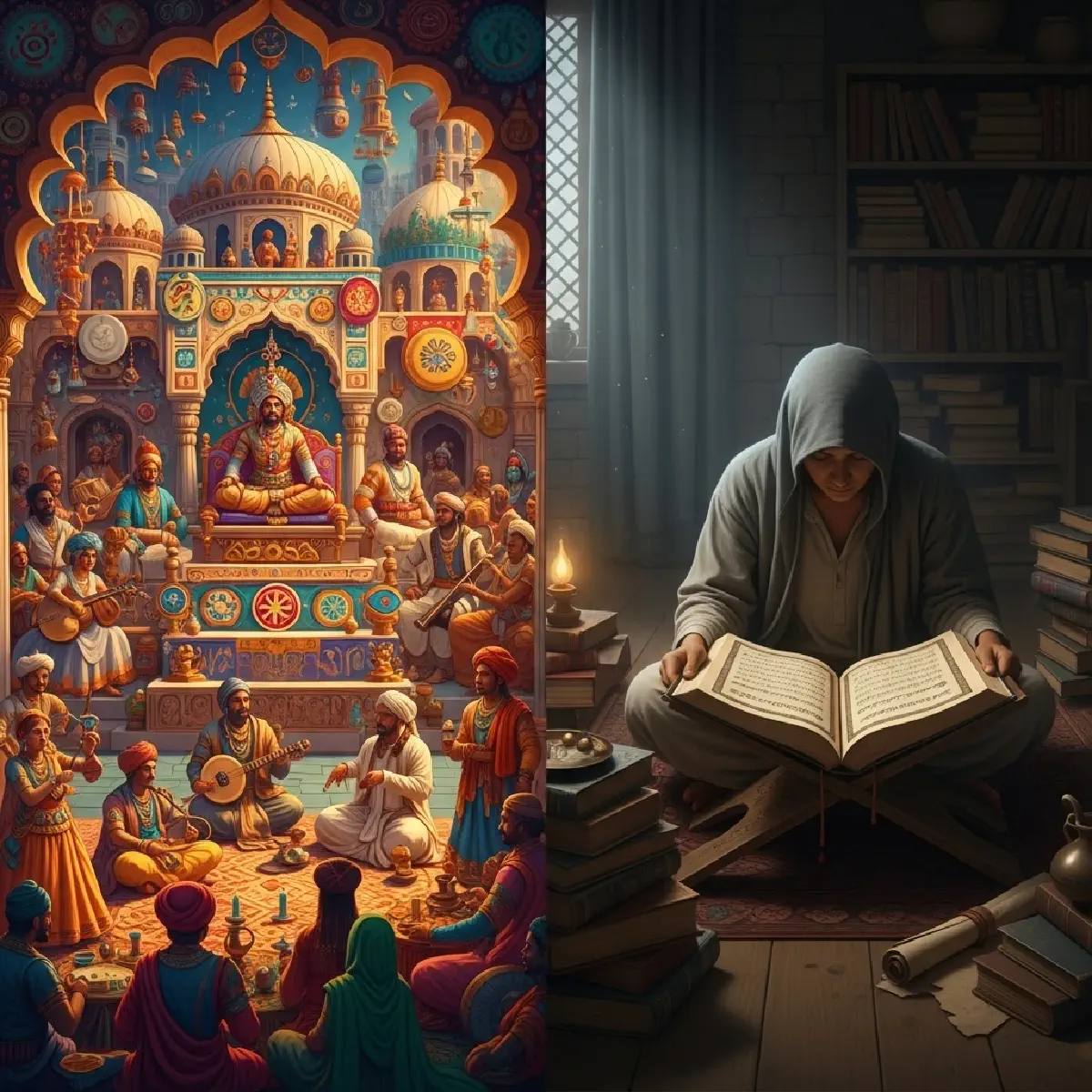
The Mughal Empire reached its greatest extent and its most profound internal crisis under two long-lived monarchs: Jalal-ud-Din Akbar and Aurangzeb Alamgir. Both ruled for approximately 50 years, yet they represented two diametrically opposed visions of how an Islamic system should govern a Hindu majority. This tension—between universal syncretism and strict orthodoxy—defined the high noon of the “Andalusia of the East”.
The Divergent Paths of Governance#
The peak of the Mughal Empire was a study in systemic paradox. It was a period of unmatched wealth and cultural production, yet it was also the moment when the ideological foundations of the state began to fracture.
The Mechanism of “Din-i Ilahi”#
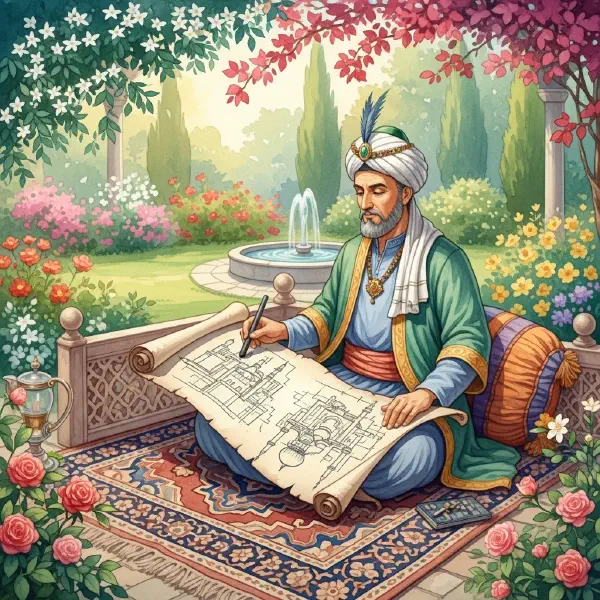
Akbar sought to solve the problem of governing a diverse empire through radical inclusion. He abolished taxes on non-Muslims and attempted to create a new “Divine Faith” (Din-i Ilahi) that blended elements of Islam, Hinduism, and Zoroastrianism. While this stabilized the empire and won the loyalty of the Rajput warrior class, it alienated the orthodox clerical establishment. Akbar’s system was a political masterpiece but a theological controversy that removed the prophet’s name from some official proclamations.
The Crucible of the Orthodox Reaction#
A century later, Aurangzeb Alamgir rose to power as the antithesis of Akbar. A scholar-king who memorized the Quran, he sought to bring the empire back to strict Sunni orthodoxy. He reinstated the jizya tax and dismantled the syncretic court culture. While his critics see him as a bigot who destabilized the empire, his supporters see him as a reformer who fought against the “corruption of the faith”. Under his rule, the empire reached its maximum territorial extent, covering almost the entire subcontinent.
The Cascade of the Final Expansion#
The dual legacies of Akbar and Aurangzeb created a state of immense power but high internal pressure. The massive military campaigns of Aurangzeb in the south drained the imperial treasury even as they brought the Deccan under Mughal control. This expansion created a military-industrial complex that the empire’s economy could eventually no longer support. The very success of the empire’s expansion became the engine of its future exhaustion.
The Fragile Zenith#
By the end of Aurangzeb’s reign in 1707, the Mughal Empire was the “Goliath of the East”. It produced 25% of the world’s GDP and possessed a military that could crush any European company. However, the ideological pendulum had swung from one extreme to the other. As the strong kings were replaced by weaker successors, the internal tensions of the system were left exposed to a new, external threat.