The Silent Architectures of Memory#
A traveler wandering through modern Delhi might feel an inexplicable pull toward the red sandstone arches and towering minarets. These structures do not match the Greco-Roman or East Asian styles familiar to Western textbooks. They are the physical remains of the “Andalusia of the East,” a civilization that governed the subcontinent for 800 years. Despite this longevity, many educated laypeople know more about the 700 years of Muslim Spain than the eight centuries of Muslim India. This discrepancy is not an accident of history but a result of specific linguistic and geographic barriers.
The Forgotten Narrative of the East#
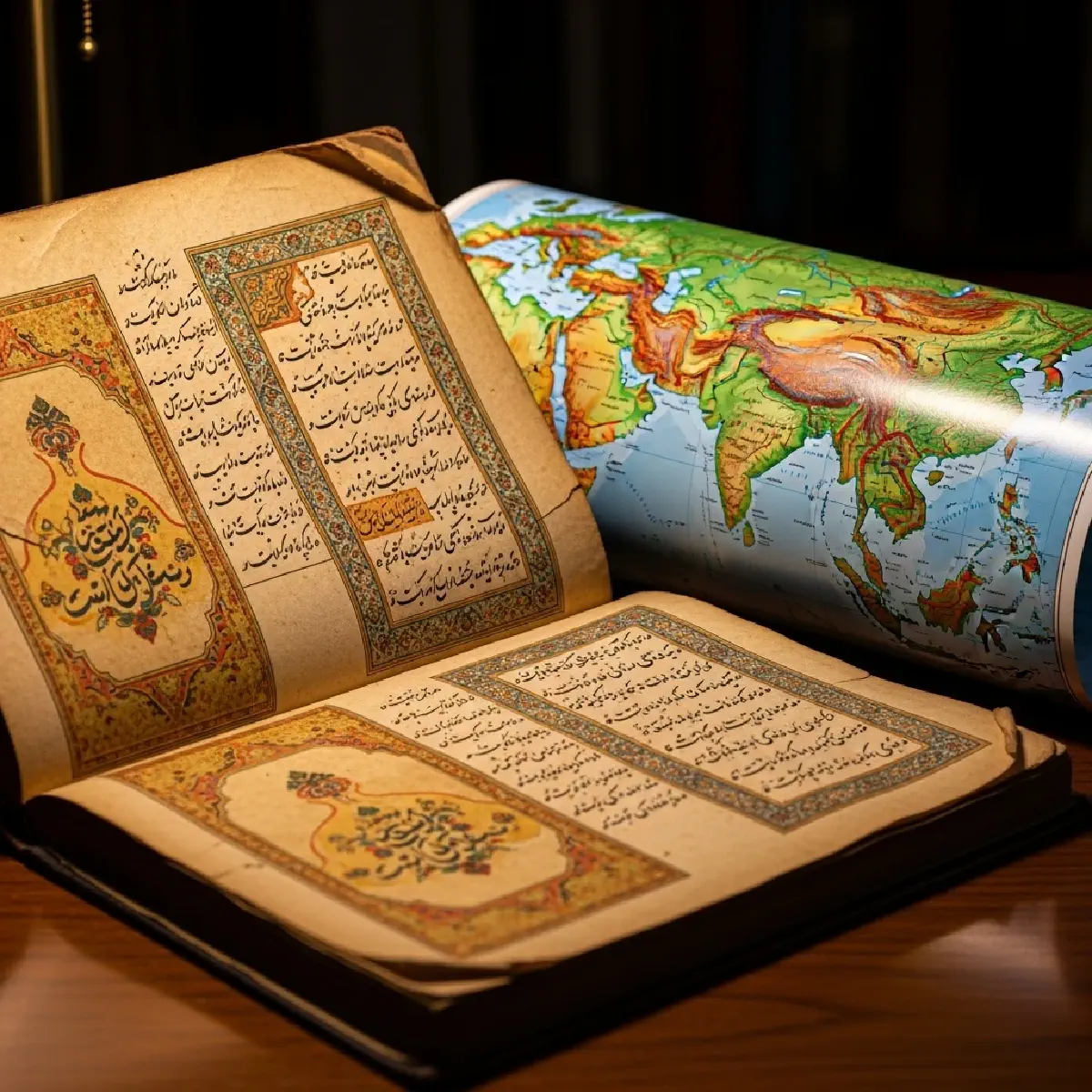
The history of Islamic India remains obscured because its primary records were written in Persian rather than Arabic. While the Arabic records of Andalusia reached the Western world through proximity, the Persian archives of India remained largely untranslated for the Arab and Western public. We must recognize that understanding the Indian subcontinent is essential to understanding the global Islamic system, as 33% of the world’s Muslims currently reside in this region.
The Linguistic Filter of History#
The Islamic civilization in India chose Persian as its administrative and literary tongue. This choice created a disconnect with the Arabic-speaking heartlands of the Middle East. While the poetry of Ibn Zaydun in Spain is celebrated globally, the vast Persian libraries of Delhi remain locked to those without specialized training. Modern nationalism further exacerbated this, as Arab nations focused on “Arab” history, often ignoring the Persian-influenced contributions of the Indian subcontinent.
The Geographic Isolation of the Subcontinent#
India’s geography created a natural, yet permeable, isolation. The subcontinent is ten times the size of Andalusia, yet it was often bypassed by the traditional routes of knowledge-seeking. Scholars traveling from Baghdad toward Transoxiana frequently left India to the south. Only the annual pilgrimage to Mecca served as a consistent bridge, where scholars like Abu al-Hasan al-Nadwi would surprise Middle Easterners with the sheer scale of the Indian Muslim population.
The Complexity of a Continental System#
Unlike the relatively homogenous social structures of Islamic Spain, India was a continental system of staggering complexity. It managed a volatile mix of Sunnis, Shias, Sufis, Hindus, and Sikhs within a single political framework. This complexity made the history difficult to summarize, leading many historians to favor simpler narratives of other regions. The result is a historical “black hole” where 800 years of sophisticated governance are treated as a mere footnote.
Synthesizing the Missing Link#
The “Andalusia of the East” was not a peripheral event but a central pillar of Islamic history. Its disappearance from the common consciousness is a systemic failure of translation and geographic focus. To ignore this history is to ignore the evolution of one-third of the modern Muslim world. As we move forward, we must look past the linguistic veil to see how this 800-year system shaped the modern nations of India, Pakistan, and Bangladesh.