The Scent of Nutmeg and the Stench of Decay#
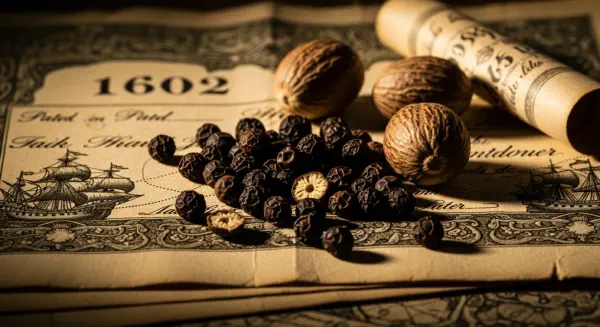
In the spring of 1621, the air over the Banda Islands should have been filled with the sweet, intoxicating aroma of nutmeg drying in the tropical sun. Instead, the small volcanic archipelago was shrouded in the smoke of burning villages and the heavy silence of a systematic liquidation. Jan Pieterszoon Coen, the Governor-General of the Dutch East India Company (VOC), had arrived not to negotiate, but to solve an “inefficiency” in the global market. The local Bandanese had failed to adhere to a restrictive trade agreement that granted the VOC total control over their ancestral crops. To Coen, this was not a diplomatic disagreement; it was a breach of contract that required the ultimate penalty.
The ensuing massacre remains one of the most chilling examples of corporate violence in human history. Of the roughly 15,000 inhabitants of the islands, only 1,000 survived the VOC’s military campaign. Men, women, and children were hunted down, executed, or deported into a burgeoning global slave network. This was not a random act of cruelty by a rogue official, but a calculated business decision aimed at securing a 100% monopoly on the world’s nutmeg supply. It raises a central, disturbing question: how did a group of merchants from the Netherlands transform into a sovereign military machine capable of exterminating an entire society for the sake of a condiment?
The Banda massacre was the first true application of “sovereign capitalism,” where profit was not just the goal, but the justification for state-level violence. To understand our modern world, we must look beyond the stock certificates and tea sets. We must examine the mechanics of a company that treated human life as a depreciating asset in the pursuit of a global monopoly.
The Arithmetical Logic of Corporate Sovereignty#
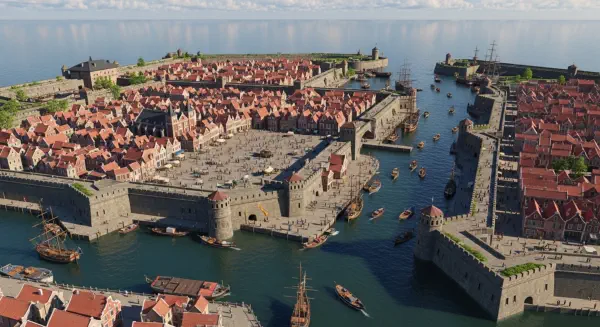
The Dutch East India Company was not a business in the way we understand the term today; it was a ghost empire with the legal power of a kingdom. When the VOC was chartered in 1602, the Dutch States General granted it a total monopoly on trade in the East Indies. More significantly, the charter authorized the Company to maintain its own armies, build its own forts, and wage war or conclude treaties in the name of the Republic. This created a “state within a state” that operated outside the traditional boundaries of European diplomacy and accountability.
This legal framework allowed the VOC to externalize the moral costs of its expansion. In the boardroom of the Heeren XVII in Amsterdam, the reports of massacres were viewed through the lens of supply chain optimization. The initial capital of 6,400,000 guilders—roughly $650 million today—was not just for buying ships; it was a war chest for the conquest of the eastern seas. By the 1670s, the VOC employed 30,000 soldiers and operated 200 ships, most of which were heavily armed. This was a company that viewed the “freedom of trade” as a military objective rather than a market condition.
The Grotius Defense and the Justification of Plunder#
To provide a legal veneer for this violence, the VOC recruited the brilliant young jurist Hugo Grotius. In 1603, after the VOC captured the Portuguese ship Santa Catarina and its cargo worth 3,000,000 guilders, Grotius formulated the doctrine of Mare Liberum, or the Free Sea. He argued that because the Portuguese used force to block trade, the Dutch were engaged in a “just war” to defend international waters. While this sounds like a defense of open markets, it was actually a weaponized legal theory. It gave the VOC a permanent “right of self-defense” that justified pre-emptive strikes against any competitor or local population that dared to trade with anyone else. This doctrine turned every commercial rivalry into a military conflict, effectively licensing piracy under the guise of international law.
The Ambon Crucible and the End of Cooperation#
The VOC’s aggression was not limited to Asian populations; it extended to its European rivals with equal ferocity. In 1623, the tensions between the Dutch and the English culminated in the Ambon Massacre. Dutch officials accused ten English traders of spying and subsequently tortured and executed them, alongside nine Japanese employees and one Portuguese man. This act of state-sanctioned murder effectively ended English presence in the Indonesian archipelago for over a century. It demonstrated that the VOC’s commitment to monopoly was absolute. They were willing to risk war with another Protestant nation to ensure that no single pound of cloves reached Europe through a non-VOC vessel. The “just war” had become a total war for market share.
The Urban Paranoia of the 1740 Massacre#
As the VOC transitioned from a maritime power to a territorial ruler, its violence became inward-looking and paranoid. Nowhere was this more evident than in Batavia, the company’s fortified headquarters on Java. By 1740, the city was struggling with economic stagnation and a growing population of Chinese residents who were essential to the economy but viewed with deep suspicion. A wave of rumors about a Chinese rebellion sparked a three-day bloodbath. VOC soldiers and Dutch civilians systematically murdered at least 10,000 Chinese inhabitants—roughly 80% to 90% of their population in the area. This was followed by the Java War, a brutal conflict that lasted until 1743. The massacre was a symptom of a corporate structure that was “rotten on the inside,” characterized by corruption and a complete disregard for the human collateral of its administration.
The Dark Synthesis of Permanent Capital#
The atrocities of the VOC were the inevitable byproduct of a financial innovation: the permanent joint-stock corporation. Unlike earlier ventures that dissolved after a single voyage, the VOC was designed to be immortal. This immortality required constant, aggressive growth to satisfy shareholders who came to expect an average annual dividend of 18%. When profit is the only metric of success and the state has delegated its monopoly on violence to a board of directors, the result is a system that views massacres as a form of market correction.
The VOC showed the world that a group of private citizens, organized around the pursuit of capital, could wield more power than traditional empires. They pioneered the tools of modern globalization—the stock market, the multinational logistics network, and global branding—but they did so through a “dark and bloody stain” of systematic violence. The spices that once brightened the lives of the European elite were purchased at the cost of entire civilizations. As we look at the immense power of modern multinational corporations, we are looking at the direct descendants of the VOC. We must ask if we have truly moved beyond a system where the “ugly reality” of human suffering is merely a side effect of achieving the next quarterly dividend.