
Key Takeaways
- The Roman Inheritance: The United States resembles Rome not by culture or rhetoric, but by system design—a territorial empire that expanded through conquest and integrated peripheral economies through force.
- Carthage’s Fatal Flaw: Carthage relied on mercenaries and assumed that economic interdependence would deter aggression, leaving it unable to sustain prolonged conflict against Rome’s citizen-soldier system.
- China’s Historical Memory: Unlike Carthage, China’s modern identity is shaped by the "Century of Humiliation," creating a strategic culture that prioritizes self-reliance, military modernization, and the prevention of external control.
- The Deterrence Shift: China’s nuclear arsenal and integrated defense industry fundamentally alter the strategic calculus, making total conquest or economic strangulation structurally impossible—a reality that frustrates the Roman model of decisive victory.
- Managed Rivalry vs. Erasure: The U.S. confronts a peer competitor that cannot be eliminated, forcing a transition from imperial expansion to managed coexistence—a strategic adjustment that challenges the core assumptions of the Roman system.
When an Empire Meets Its Reflection#
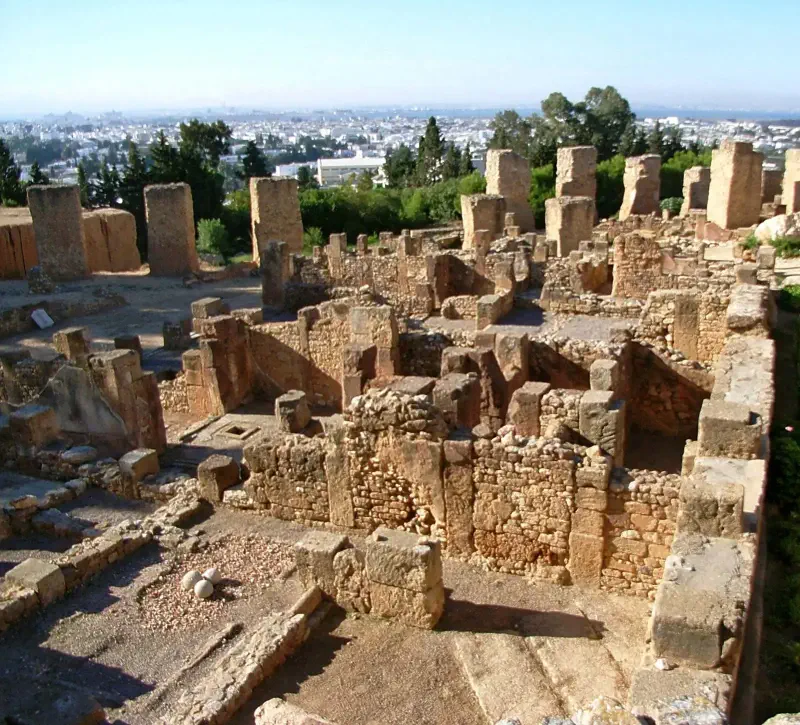
In 146 BCE, Carthage was not merely defeated. It was erased. The city was burned, its population killed or enslaved, and its memory deliberately degraded. Rome did not seek balance; it sought finality. That decision hardened a principle of imperial behavior that would echo for millennia: when a rising commercial system threatens a territorial hegemon’s status, coexistence is framed as weakness.
Two thousand years later, the comparison resurfaces with unsettling regularity. The United States is cast as Rome; China as Carthage. The surface analogy appears neat—maritime power versus continental depth, finance versus production. Yet the analogy breaks precisely where it matters. China is not Carthage. And that divergence, more than any ideological dispute, drives contemporary anxiety in Washington.
Empires are most dangerous when they misclassify their challengers. Rome mistook Carthage for a merchant republic that could be coerced by losses. The United States risks a parallel error if it treats China as a complacent trading state rather than a historically literate civilization that has designed its system around survival.
The Roman Inheritance in American Power#
The United States resembles Rome not by culture or rhetoric, but by system design.
Rome’s power rested on three pillars: territorial control, elite-driven expansion, and the routinization of force. American power expresses the same logic through modern instruments. Territory is replaced by basing rights and alliance networks. Senators become lobbyists and donor classes. Legions become carrier strike groups, sanctions regimes, and proxy forces.
The Roman Senate did not wage war out of madness. It did so to stabilize internal elite competition and secure resource flows. Likewise, U.S. foreign policy consistently externalizes domestic contradictions—industrial hollowing, financial volatility, political fragmentation—into overseas arenas. War and coercion become system maintenance.
Crucially, Rome did not recognize peers. It recognized clients, rivals-to-be-crushed, or barbarians. The U.S.-led order retains this hierarchy. States may integrate as junior partners; they may not reorganize the system itself. When they attempt to do so, their actions are reclassified as threats irrespective of stated intent.
This is why the analogy to Rome matters. It explains behavior without resorting to morality. Rome destroyed Carthage not because Carthage attacked Rome, but because Carthage’s recovery invalidated Roman supremacy.
China’s Difference Is Memory, Not Morality#
The core claim is straightforward and falsifiable:
China is not Carthage because it has systematically internalized historical defeat and redesigned its institutions to prevent erasure. This deprives the Roman-type system of its traditional endgame.
This matters because imperial systems rely on escalation dominance—the belief that pressure can always be increased until submission or collapse. Carthage validated that belief. China challenges it.
To understand why, one must examine how systems learn—or fail to.
Learning from Erasure#
Carthage’s fatal error was not commercialism. It was strategic illiteracy. It assumed trade rationality would restrain Roman violence. It outsourced its military, fragmented command authority, and delayed existential recognition until defeat was irreversible.
China’s modern state is built on the opposite assumption: that predatory powers exploit weakness regardless of rhetoric. The Opium Wars institutionalized this lesson. Hong Kong became not merely a lost territory, but a living archive of humiliation. These experiences are not cultural footnotes; they are embedded in education, doctrine, and policy planning.
Where Carthage trusted norms, China trusts only capability.
Force as a Sovereign Function#
Carthage relied on mercenaries. Rome relied on citizens. The difference was decisive.
China’s People’s Liberation Army is not a contractor force. It is a national institution under centralized political control. This choice is inefficient in peacetime and decisive in crisis. It ensures that violence remains subordinate to strategy rather than market logic.
This design choice directly negates Rome’s historical advantage. Rome could grind down Carthaginian armies because they were replaceable assets, not existential organs. China’s system denies that vulnerability.
Deterrence Against Deletion#
Carthage lacked a final veto. Once Rome decided on annihilation, nothing stopped it.
China’s nuclear deterrent exists for a narrow purpose: to prevent erasure. It does not aim at dominance. It aims at denying the Roman option of total victory. This single fact alters the entire strategic landscape. It converts confrontation into management and attrition rather than destruction.
An empire accustomed to decisive endings finds this intolerable.
Why Brilliance Failed and Systems Endured#
Hannibal is often romanticized as proof that Carthage nearly won. This misreads history. Hannibal exposed Roman vulnerabilities but did not alter Roman structure. Rome absorbed catastrophic losses because its system converted defeat into recruitment and political integration.
China’s lesson is explicit: do not rely on exceptional individuals. Build redundancy. Invest in scale. Prioritize patience. Systems, not heroes, determine outcomes.
This is why China’s approach appears slow and cautious to American observers. It is not indecision. It is an optimization strategy derived from historical analysis. Carthage gambled on brilliance. China invests in inevitability.
The Crucible of Interdependence#
Here the ancient analogy strains—but does not collapse.
Rome and Carthage were economically connected, but not structurally interdependent. The modern world is different. Supply chains, finance, and technology bind competitors together. This creates constraints Rome never faced.
Yet interdependence cuts both ways. It delays conflict but intensifies it when it occurs. The U.S. weaponizes access to finance, semiconductors, and logistics precisely because it recognizes that military annihilation is no longer feasible. China responds by accelerating indigenous capability, even at efficiency cost.
This dynamic confirms the thesis rather than contradicting it. A Carthage-like system would double down on trade dependence. China treats dependence as a temporary vulnerability to be engineered away.
The Predator and the Counter-Predator#
In ecological terms, the United States behaves as a status predator. It intervenes early to prevent parity. China behaves as a counter-predator, avoiding premature confrontation while expanding mass and resilience.
The South China Sea, Taiwan, and technology chokepoints function as modern equivalents of Sicily—not because they are identical, but because they concentrate systemic anxieties. Control signals dominance; loss signals decline.
The critical difference is that Rome could win decisively in Sicily. The United States cannot achieve comparable closure without systemic self-harm. This produces escalation without resolution—a condition Rome never had to tolerate.
Why the Roman System Is Uneasy#
Empires fear what they cannot finish.
China’s existence as a peer system that cannot be erased, coerced cheaply, or absorbed threatens the Roman logic at its core. It forces a choice between accommodation—which undermines hierarchy—and permanent pressure—which drains resources and legitimacy.
This is why rhetoric escalates even when interests overlap. Ideology fills the gap left by strategic frustration. Values are invoked to justify what is, at base, a material and structural conflict.
Rome destroyed Carthage to preserve its system. The United States confronts a China that has made such an outcome structurally impossible.
Memory as Power#
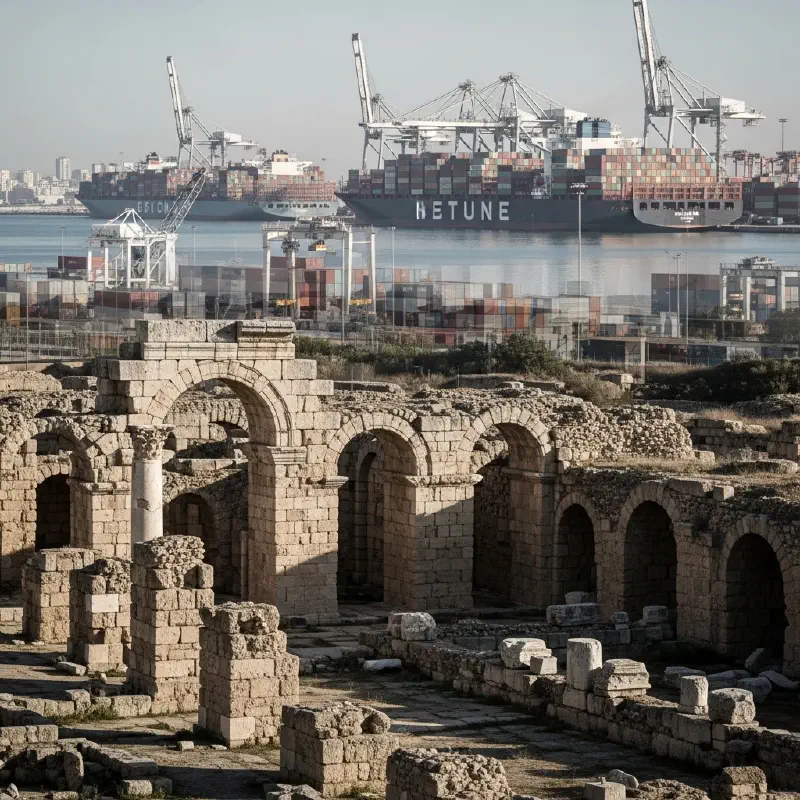
The enduring lesson is not that history repeats, but that systems that remember outlast systems that forget.
China is not Carthage because it has internalized the conditions of its own potential destruction and redesigned itself accordingly. The United States resembles Rome because it inherited a system optimized for dominance rather than coexistence.
This does not guarantee China’s success, nor does it doom the United States. It does, however, foreclose simple endings. The age of erasure has passed. The age of managed rivalry has arrived.
For a Roman system, that is the most unsettling outcome of all.
References#
- Polybius. (2010). The Histories (R. Waterfield, Trans.). Oxford University Press.
- Goldsworthy, A. (2006). The Fall of Carthage. Cassell.
- Kennedy, P. (1987). The Rise and Fall of the Great Powers. Random House.
- Mearsheimer, J. J. (2014). The Tragedy of Great Power Politics. W. W. Norton & Company.
- Allison, G. (2017). Destined for War: Can America and China Escape Thucydides’s Trap? Houghton Mifflin Harcourt.