
The Unspoken Rule of Initiative#
Military doctrine is founded on obedience, yet history repeatedly presents moments when victory hinged on a commander having the courage to disobey a direct order. This inherent tension—the requirement to follow explicit instructions versus the exercise of judgment based on unforeseen context—is a defining feature of command and character. Such instances of successful disobedience fundamentally challenge the traditional military ethos, serving as profound case studies in initiative and risk.
In naval and land warfare, commanders are judged by whether they won the day, regardless of established doctrine or the contents of “the book”. A victory achieved through independent judgment often results in glory, while a defeat, even if sustained while following orders, can lead to severe consequences, or worse.
Horatio Nelson and the Triumph of Intent#
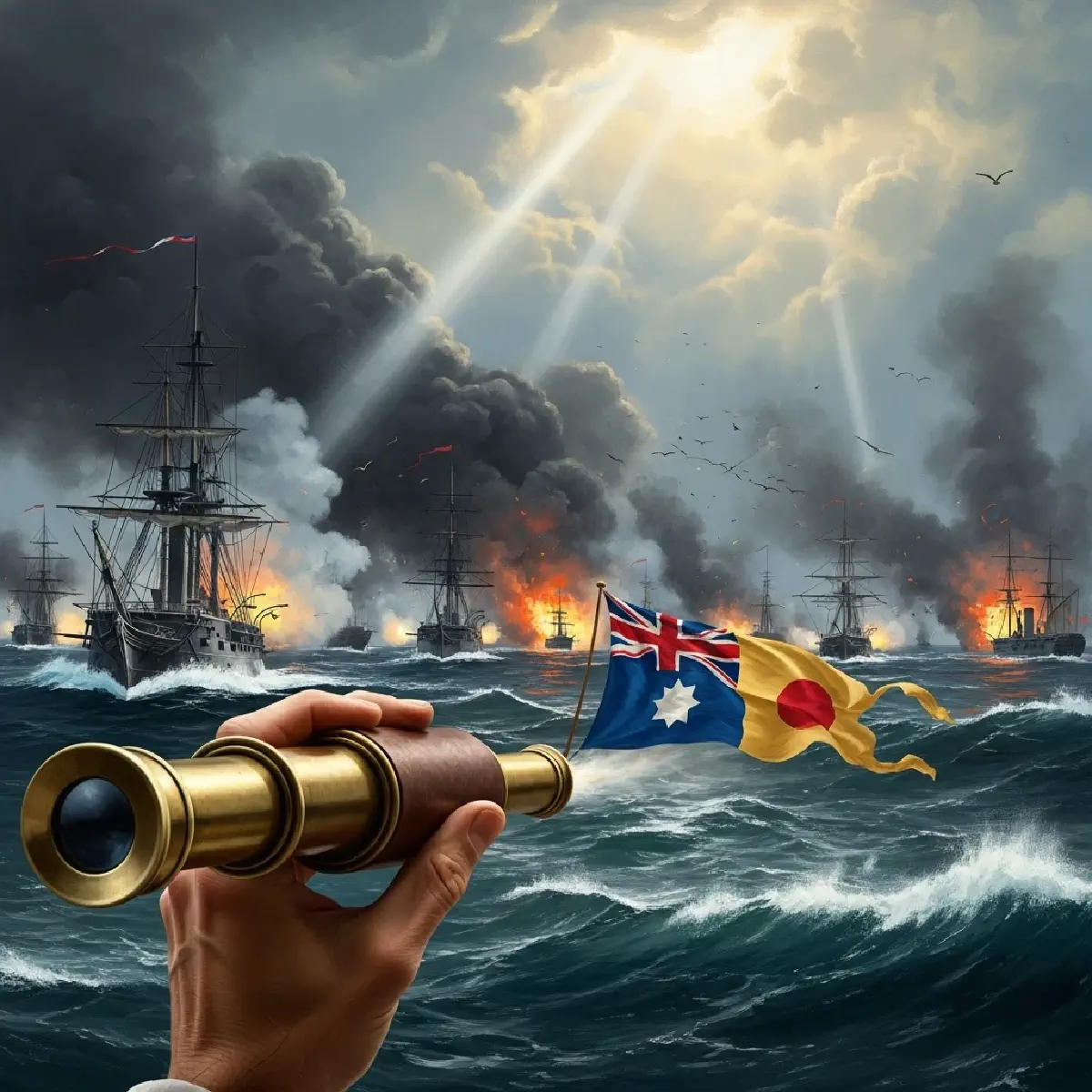
One of the most celebrated examples of virtuous disobedience involves Admiral Horatio Nelson, demonstrating that a deep understanding of a superior’s intent can supersede specific commands. At the Battle of Copenhagen in 1801, Nelson’s superior officer, Admiral Hyde Parker, signaled a withdrawal. Nelson famously disregarded the signal and pressed his attack, winning the battle.
The story is often embellished with the detail that Nelson deliberately raised his telescope to his blind eye so he would not see the flag signal to retreat. Earlier, at the Battle of Cape St. Vincent in 1797, Nelson again broke formation against orders to attack the Spanish line. While technically subject to court-martial, his wildly successful actions that contributed significantly to the decisive British victory were ultimately excused as an exercise of extreme initiative. Nelson himself later formalized this philosophy, stating at the Battle of Trafalgar that “no captain can do very wrong if he places his ship alongside that of an enemy” if signals are unclear.
The Revolutionary Calculus of Arnold#
Conflict in Command Temperament#
The American Revolutionary War provides another dramatic example of a commander achieving a decisive victory by defying a superior whose temperament clashed with the operational reality. General Benedict Arnold, prior to his treason, was known as a bold and aggressive officer who frequently argued with his cautious overall commander, General Horatio Gates.
During the pivotal Battles of Saratoga in 1777, the British launched an attack that failed, prompting them to withdraw toward their fortifications. Gates, preferring a cautious defense, ordered the American forces not to pursue them. This decision risked allowing the British to regroup safely.
Riding Toward the Guns#
Arnold, despite having been removed from field command due to escalating disagreements and having returned to his tent, heard the sounds of the distant fighting. He rode toward the guns, disregarding Gates’s explicit wish for him to be arrested and brought back. Arnold arrived, took command of the stalled American forces, and immediately began chasing the retreating British.
Arnold personally led a charge against the British fortifications, creating a gap in their lines that allowed the American forces to overrun the defenses. This disobedience resulted in the capture of over 6,000 British soldiers and convinced France to ally with the United States, cementing Saratoga as a decisive victory.
From Heroic Valor to Tragic Cost#
Arnold’s disobedient valor had profound personal and historical consequences. During the final volleys of the battle, Arnold’s horse was killed and fell on him, breaking the same leg that had been wounded in an earlier engagement. As he lay wounded among the cheering, victorious troops, the aide sent to arrest him, Major Armstrong, cheekily informed Arnold that he was “not to attack”. Arnold lamented his injury, wishing the bullet “had been through my heart,” fearing the end of his military career.
The ultimate irony of his career is captured by the monument erected at Saratoga that pays tribute to the “most brilliant soldier of the Continental Army” wounded on that spot but pointedly refuses to mention Arnold by name due to his subsequent treason. As historians observe, had Arnold been killed in that disobedient charge, he would be remembered as “the greatest martyr of the Revolution instead of its greatest traitor”.
The Indelible Mark of Outcome#
The study of military disobedience reveals that while character often drives the decision to defy authority, the historical judgment relies almost entirely on the outcome. Commanders like Nelson and Arnold, driven by confidence and a decisive temperament, seized operational opportunities missed by cautious superiors. Nelson’s successes created a philosophical justification for initiative, making him a hero despite his violations.
Arnold’s victory was indispensable to the American cause, yet the historical calculus of his subsequent betrayal stripped the merit from his disobedience, turning his act of life-saving valor into a monument dedicated merely to his injured leg. This demonstrates that successful disobedience confirms the brilliance of command, but character flaws can retroactively negate the glory of even the most decisive victory.