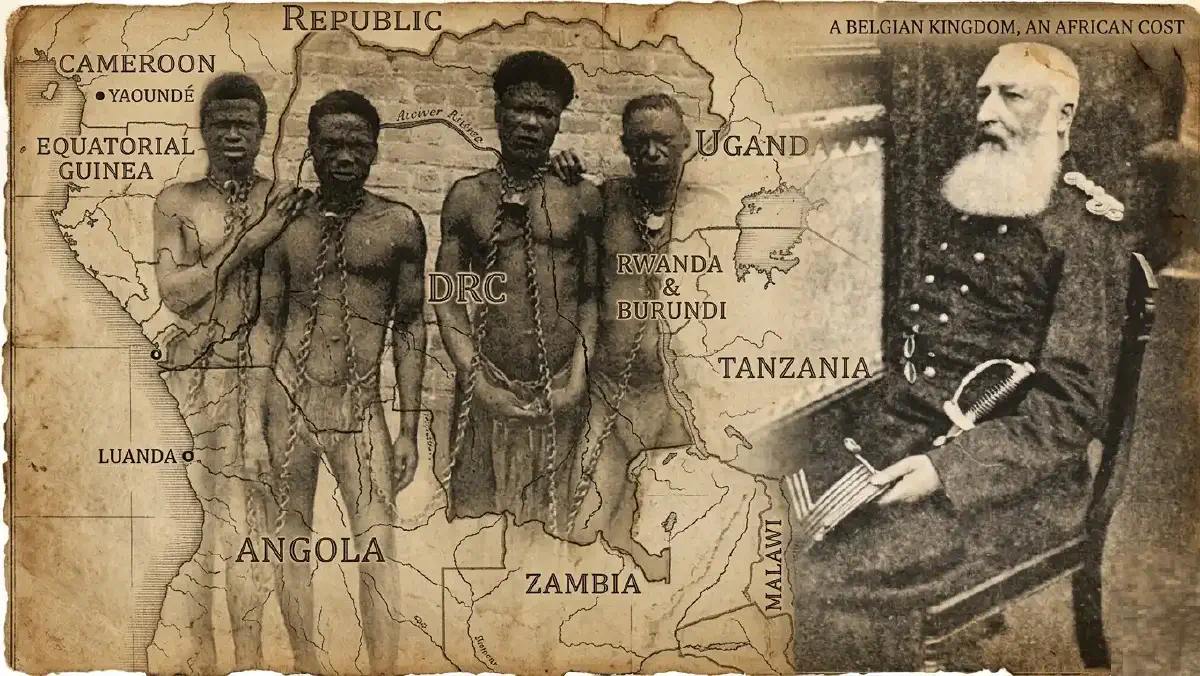
An examination of Belgium's colonial venture in the Congo — its origins, its atrocities, and its enduring shadow over Central Africa today
I. The Unlikely Empire‑Builder#
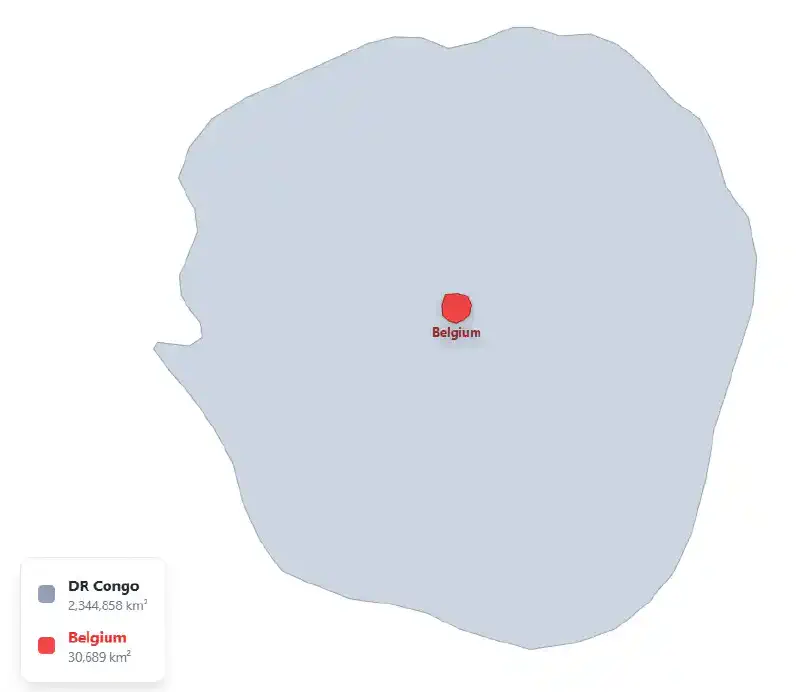
Belgium is an unassuming country. Tucked between France, Germany, and the Netherlands, its 11,787 square miles (30,528 km²) of flat, rain‑soaked land are home to about eleven million people. It is known for chocolate, beer, and the headquarters of the European Union. Yet this small, parliamentary kingdom once controlled nearly a million square miles of Central Africa — a territory seventy‑six times its own size.
Belgium won its independence from the Netherlands only in 1830. Its first king, Leopold I, was content to let the young nation industrialise and consolidate its fragile parliamentary system. By the 1860s Belgium was the second‑most industrialised country in the world after Britain, with dense railways, booming coal mines, and a powerful banking sector. But its second king had ambitions far beyond the Meuse valley.
II. The Monarch Who Dreamed of Empire#
King Leopold II was born in Brussels on 9 April 1835 and ascended the throne in 1865. He would reign for forty‑four years, until his death in 1909.
Leopold found Belgian politics tedious. Deputies squabbled over budgets; the press criticised his expensive hobbies. His true passions lay elsewhere: geography, exploration, and the acquisition of territory. He devoured explorers' accounts, studied navigation charts, and maintained a voluminous correspondence with adventurers and colonial schemers. Contemporaries described him as cold, calculating, secretive, and possessed of an almost pathological ability to manipulate.
The Eastern Trip That Changed Everything#
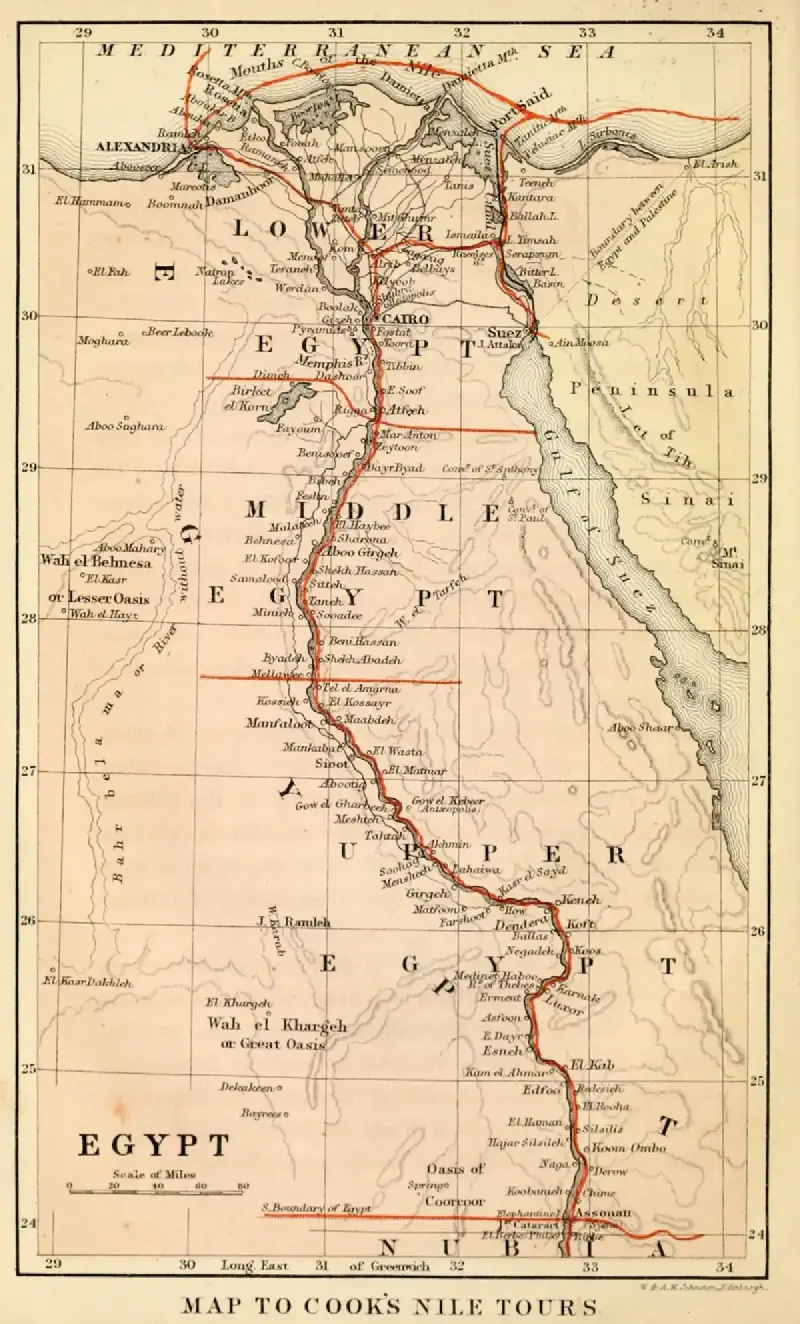
In 1854–55, the young heir made a grand tour of the eastern Mediterranean — Syria, Palestine, and, most consequentially, Egypt. The Nile captivated him. Here was a river that sustained an entire civilisation, a highway into the heart of Africa. He wrote to his father: "One could purchase a small kingdom in Abyssinia for 30,000 francs... If instead of talking so much about neutrality Parliament looked after our commerce, Belgium would become one of the richest countries in the world."
The continent he glimpsed from the Nile's edge would consume the next fifty years of his life.
III. The False Starts#
Leopold's early attempts at colonial acquisition failed. He pursued bases in the Philippines, Fiji, Borneo, and New Guinea — each blocked by the Dutch, British, or French. The Belgian parliament refused to fund overseas adventures. Deputies worried about cost and entanglement in great‑power rivalries.
Leopold learned a crucial lesson: if the state would not pay for an empire, he would build one himself. He would not seek a colony for Belgium. He would acquire one for himself. It was the decisive insight of his career, and it set him apart from every other European monarch of his era.
IV. The Acquisition: Cunning Personified#
Leopold's plan unfolded over nearly a decade — a masterpiece of diplomatic manipulation and stage‑managed deception, executed in three moves.
Step One: The Humanitarian Cover#
In 1876, Leopold convened a conference in Brussels. The official subject: the suppression of the Arab slave trade and the introduction of civilisation to Africa's benighted interior. Attendees included explorers, geographers, and philanthropists from across Europe. The proceedings were suffused with high‑minded rhetoric about science, commerce, and Christian charity.
Not one attendee knew that Leopold intended to claim the Congo basin for himself.
Step Two: Henry Morton Stanley#
Henry Morton Stanley was born in Wales as John Rowlands, raised in a workhouse, and emigrated to the United States as a teenager. He fought in the Confederate and Union armies, turned to journalism, and famously found David Livingstone near Lake Tanganyika in 1871. He was driven, ambitious, and ethically flexible — exactly the instrument Leopold needed.
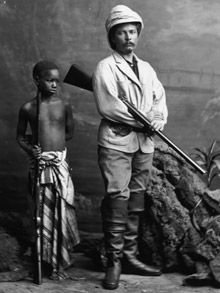
Stanley accepted a secret contract in 1878. His instructions: present his activities as scientific and anti‑slavery; make treaties with local chiefs, often written in languages the signatories could not read, ceding sovereignty over vast territories; and establish stations along the Congo River that would form the skeleton of a colonial state.
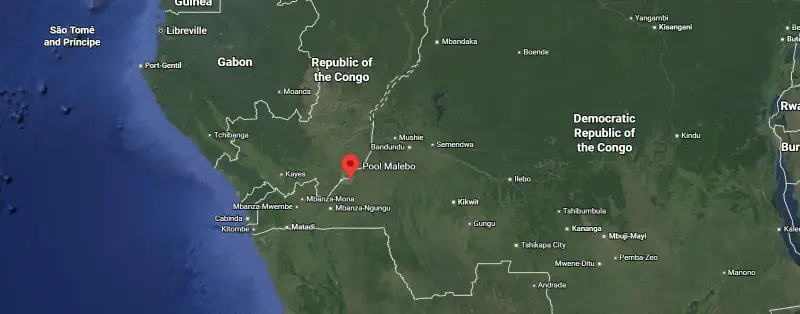
Between 1879 and 1884, Stanley built a chain of posts from the Atlantic coast to Stanley Pool (modern Kinshasa). He negotiated or coerced hundreds of local rulers. He mapped the river's navigable sections. He did it all under the flag of the International African Association — a front organisation Leopold had created. Stanley's methods were brutal; he was not above shooting his way past resistance. Yet he genuinely believed he was opening Africa to commerce and Christianity. The contradiction — a self‑made man enforcing a monarch's private empire — would haunt him.
Step Three: The Berlin Conference, 1884–1885#
The great powers, engaged in the Scramble for Africa, sat down in Berlin to divide the continent. Leopold had no army, no navy, no official colony. What he had was cunning.
He positioned the Congo Free State as a free‑trade zone open to all European merchants. He assured France and Portugal their interests would be respected. He convinced Bismarck that a neutral buffer on the Congo might be useful. And he presented Stanley's treaties as legitimate acquisitions from sovereign African rulers.

Most critically, the United States was the first major power to recognise the Congo Free State. Leopold had lobbied President Chester A. Arthur through American agents, stressing anti‑slavery rhetoric and free‑trade promises. Washington's recognition in April 1884 broke the diplomatic ice. Britain and France followed, and the Berlin Act formally recognised the Congo Free State as Leopold's personal property.
No Belgian parliamentary oversight. No constitutional constraints. Nearly a million square miles — seventy‑six times the area of Belgium itself — now belonged to one ambitious monarch.
Leopold founded the Congo Free State in 1885. Its main objective was to extract ivory and rubber from the Congo basin. It was a private property of the King, not a Belgian colony. It was ironically named the Congo Free State, as it would become one of the most brutal regimes in colonial history.


V. The Extraction Machine: Rubber and Terror#
Once the Congo was his, Leopold set about extracting its wealth with terrifying efficiency.
The Devil's Milk#
Global demand for rubber exploded in the 1890s. The new automobile industry needed tyres; electrical insulation required rubber; industrial machinery depended on rubber hoses. Natural rubber came from Landolphia vines that grew in the Congo's tropical forests.
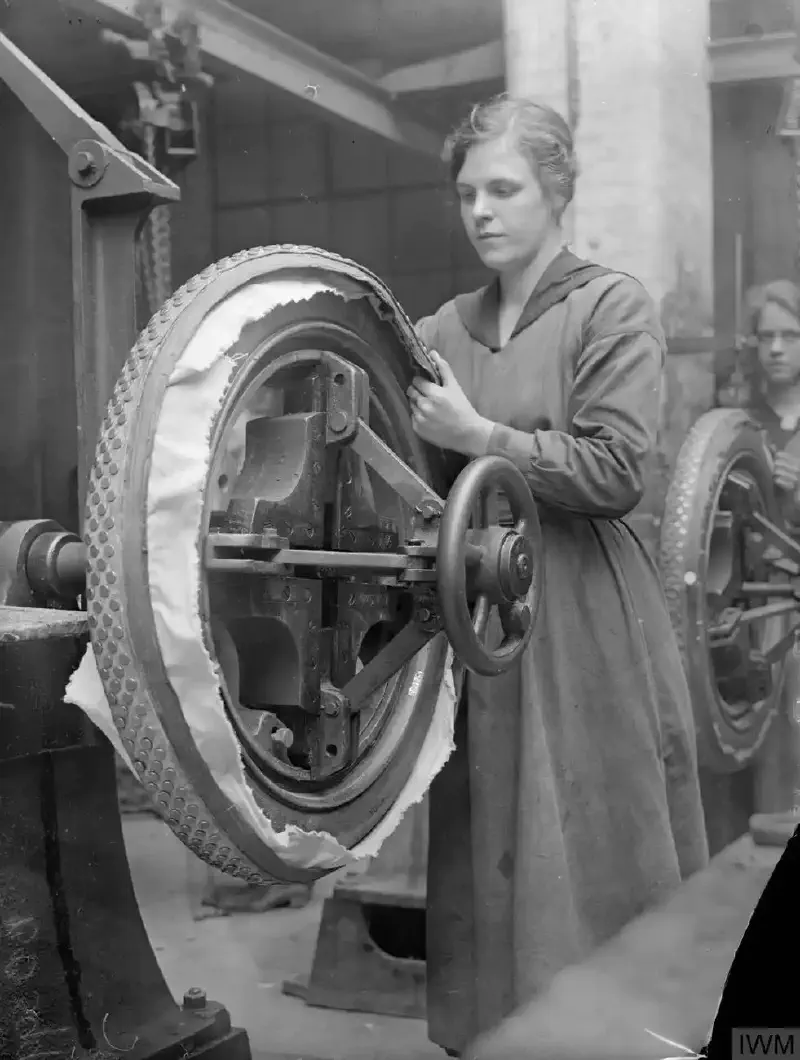
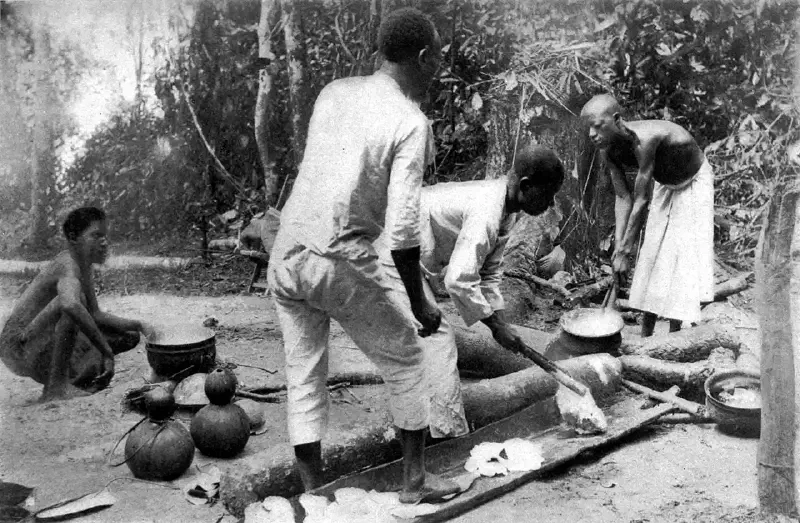
The problem: no one there wanted to collect it. The work was dangerous, exhausting, and interfered with local agriculture. The vines had to be slashed and the latex collected by hand, a process that killed the plant and required villagers to push deeper into the forest each season. Leopold's solution was compulsion.
The Concession System#
Leopold granted enormous concessions to private companies. In exchange for the right to extract rubber and ivory, these companies paid Leopold a share of their profits and were largely left to run their own terror. The most notorious was the Abir concession, which controlled much of the central basin. Others included the Anglo‑Belgian India Rubber Company and the Société Anversoise.
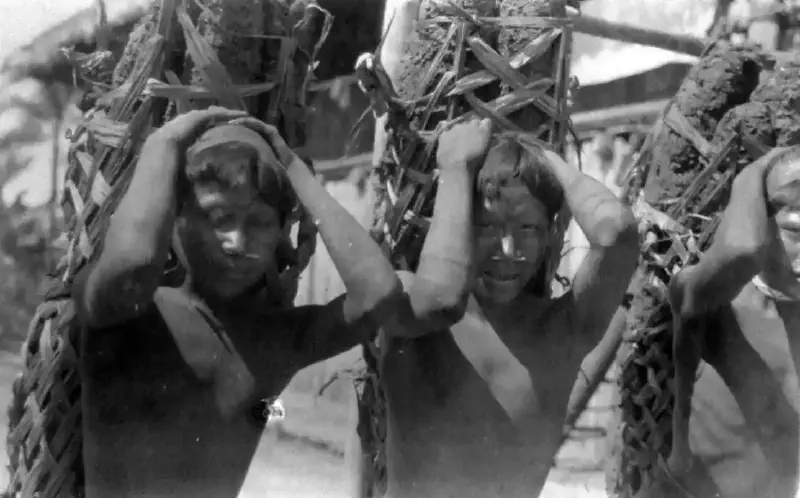
These companies were not in the business of persuasion. They demanded rubber quotas; if quotas were not met, the Force Publique — Leopold's private army — was dispatched. Villages that failed to deliver could be burned. Hostages, often the wives and children of chiefs, were held until quotas were filled.
The quotas were deliberately set impossibly high. This was not incompetence; it was a business model. By demanding more rubber than any community could reasonably produce, the companies created a permanent state of indebtedness and terror.
The Severed Hands#
One of the most infamous practices arose from bureaucratic accounting. Force Publique soldiers, mostly recruited from other parts of Africa, had to account for every bullet fired. The proof that ammunition had not been wasted on hunting or personal disputes was a severed hand, cut from a corpse and presented to an overseer.
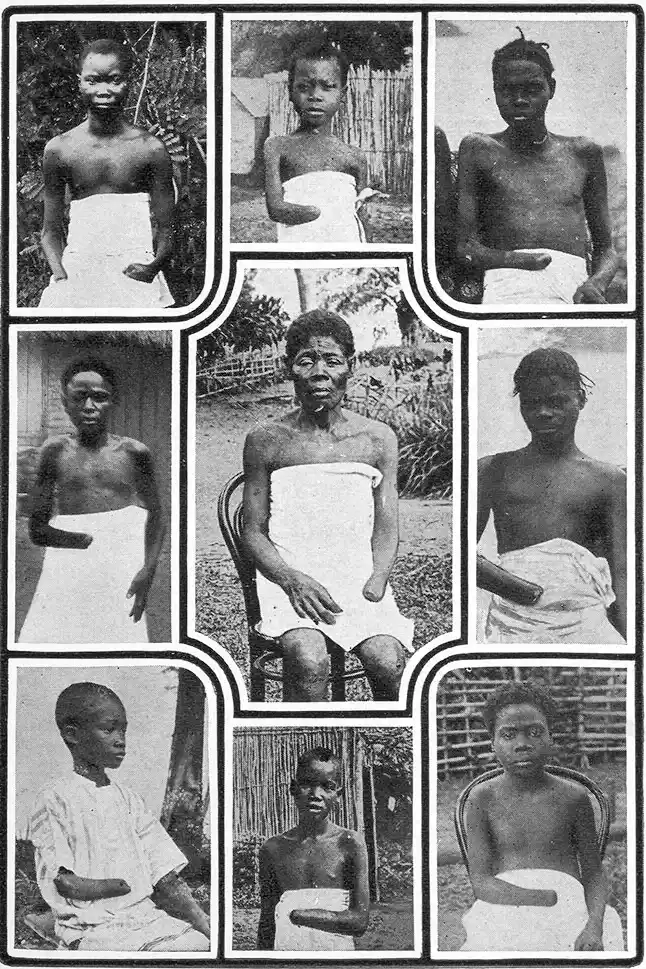
The result was a system that incentivised atrocity. Killing a rubber‑quota defaulter produced a hand. Killing someone who refused to work produced a hand. And as the system spiralled, soldiers began cutting off the hands of live victims — the better to prove that ammunition had not been "wasted" on the dead.
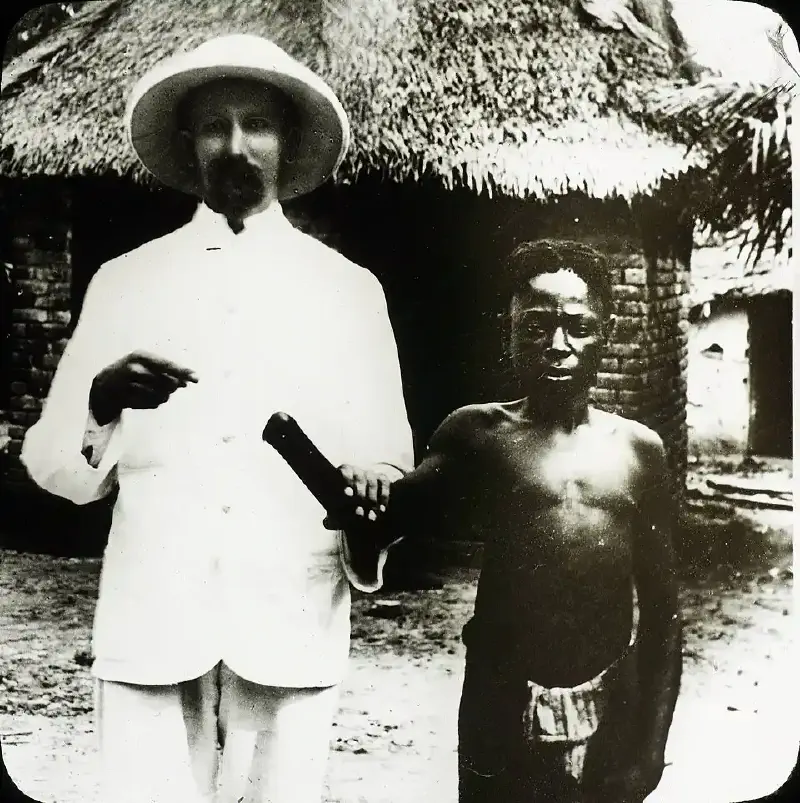
Photographs from the era show piles of hands outside concession stations. Children who survived the massacres often grew up with stumps. A Congolese proverb of the period, recorded by Hochschild (1998), captures the madness: "If you fail to bring enough rubber, the white man cuts off your hand. If you bring enough rubber, the white man says you are stealing and still cuts off your hand."
VI. The Force Publique: Soldiers of Terror#
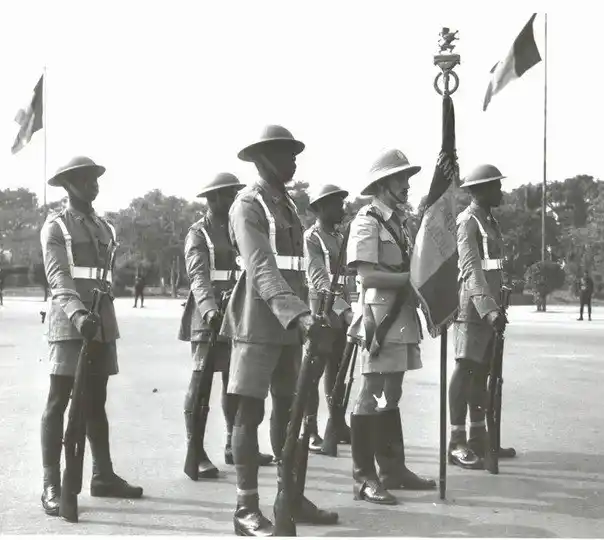
The Force Publique began as a few hundred European mercenaries and African auxiliaries. By the height of the rubber terror, it had grown to perhaps 19,000 men — most of them Congolese recruits, all subject to harsh discipline and commanded by a white officer corps.
The Psychology of Atrocity#
How does an institution become an instrument of such systematic cruelty? Historians and psychologists have identified four factors that converged in the Congo, each reinforcing the next.
Dehumanisation was the first precondition. The Congolese were systematically portrayed as childlike, lazy, and in need of coercion — not as people with families, histories, or moral claims. Colonial administrators, missionaries, and official propaganda reinforced this image daily, making it easier for ordinary men to inflict extraordinary cruelty. Once a population is categorised as subhuman, the barriers to violence drop dramatically.
Obedience to authority turned that dehumanisation into action. Stanley Milgram's famous experiments demonstrated that ordinary people will, under pressure from an authority figure, administer what they believe to be lethal shocks to strangers. The Force Publique's command structure was designed to maximise this effect. Orders came from the king himself, filtered through officers whose careers depended on unquestioning compliance. To disobey was to risk punishment; to obey was routine.
Economic incentive made atrocity systematic rather than spontaneous. Soldiers were paid poorly, if at all. They were expected to extract rubber and ivory; doing so efficiently meant promotion and material rewards. The hand‑counting system turned mass violence into a bureaucratic necessity — killing the right number of people and presenting the right number of hands made a soldier "effective" in the eyes of his superiors.
Moral disengagement, finally, allowed perpetrators to live with themselves. People learn to tell stories that justify the unjustifiable: "We are bringing civilisation." "They are resisting progress." "We have no choice." Most members of the Force Publique did not consider themselves monstrous. They were just following orders, just enforcing the quotas. That shared self‑deception — running from the king to the concession agent to the soldier in the field — is perhaps the most chilling feature of the entire system.
VII. The Fall: How the World Found Out#
By the early 1900s, the atrocities could no longer be hidden.
Edmund Morel, a former shipping agent who had worked in the Congo trade, became the most effective campaigner against Leopold's regime. He had noticed something telling in the cargo manifests: ships left Belgium loaded with weapons and ammunition, and returned loaded with rubber and ivory. No trade goods went in. The only currency being exchanged was coercion. Morel documented how the concession system worked, how quotas were enforced, and how profits flowed to Brussels.
Roger Casement, the British consul in the Congo, travelled through the interior in 1903 and prepared a detailed report. He interviewed survivors, documented mutilations, and produced irrefutable evidence that the system was not the result of rogue agents but of deliberate policy.
The Congo Reform Association, founded by Morel with Casement's support, mounted an international campaign. Mass meetings were held in London, Paris, New York, and Brussels itself. The British government, initially reluctant, was forced by public pressure to act. Leopold fought back with propaganda, legal threats, and diplomatic manoeuvres. But the evidence was overwhelming. Even the Belgian parliament, which had long ignored Leopold's adventure, began to ask questions.
The Transfer#
In 1908, under intense international pressure, Leopold ceded the Congo Free State to the Belgian state. He received a substantial payment in compensation — widely estimated at around fifty million francs — and the Belgian Congo was born. The rubber terror officially ended. Forced labour did not.
VIII. The Balance Sheet: The Most Profitable Colony in History#
What did the Congo Free State produce for its owner?
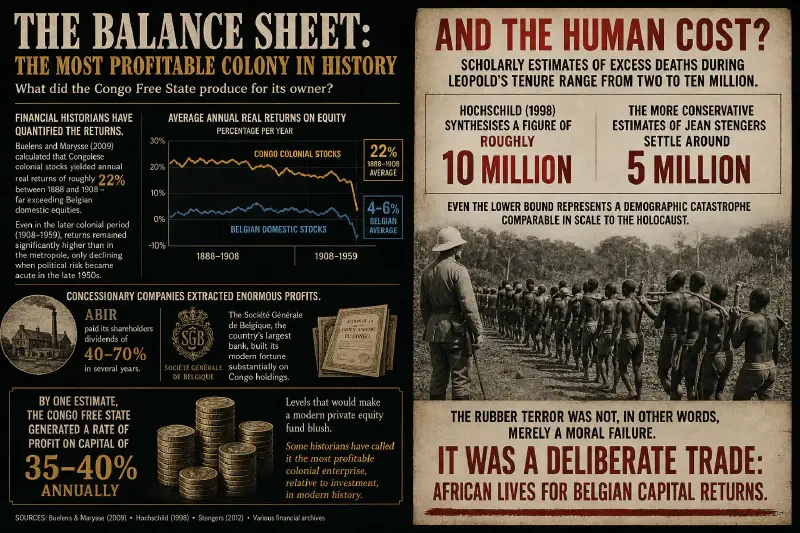
Financial historians have quantified the returns. Buelens and Marysse (2009) calculated that Congolese colonial stocks yielded annual real returns of roughly 22% between 1888 and 1908 — far exceeding Belgian domestic equities. Even in the later colonial period (1908–1959), returns remained significantly higher than in the metropole, only declining when political risk became acute in the late 1950s.
Concessionary companies extracted enormous profits. Abir paid its shareholders dividends of 40–70% in several years. The Société Générale de Belgique, the country's largest bank, built its modern fortune substantially on Congo holdings. By one estimate, the Congo Free State generated a rate of profit on capital of 35–40% annually — levels that would make a modern private equity fund blush. Some historians have called it the most profitable colonial enterprise, relative to investment, in modern history.
And the human cost? Scholarly estimates of excess deaths during Leopold's tenure range from two to ten million. Hochschild (1998) synthesises a figure of roughly ten million. The more conservative estimates of Jean Stengers settle around five million. Even the lower bound represents a demographic catastrophe comparable in scale to the Holocaust. The rubber terror was not, in other words, merely a moral failure. It was a deliberate trade: African lives for Belgian capital returns.
IX. The King's Fate: Wealth and Emptiness#
What did Leopold do with his blood‑soaked fortune?
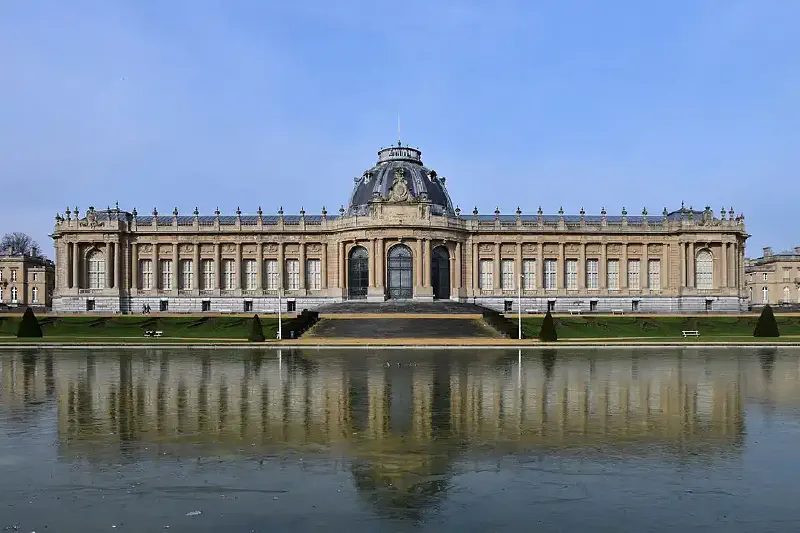
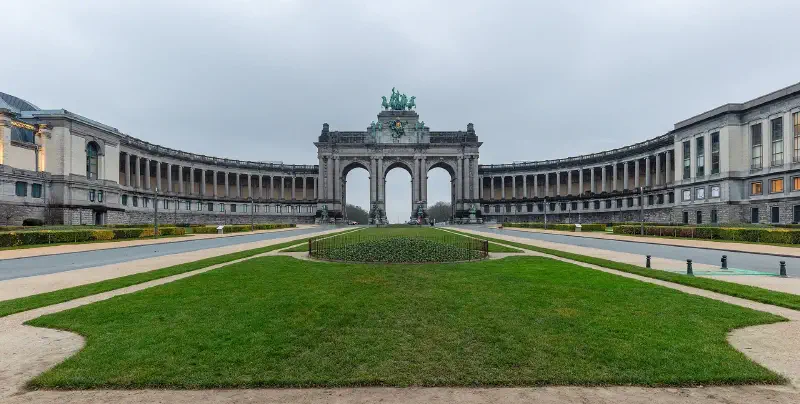
He built. The Royal Museum of Central Africa at Tervuren, the Cinquantenaire arches, the royal greenhouses at Laeken, and extensive urban renewal in Brussels — all largely financed by Congo profits. He collected: porcelain, paintings, rare books, and an extensive stable of racehorses that, by most accounts, gave him genuine pleasure.

He took mistresses. His marriage to Marie Henriette of Austria was famously unhappy; the queen lived largely apart from him for decades.
But the money could not buy what he really wanted: a legitimate heir. His only son died at age nine. His daughters could not inherit the throne under Belgian succession law. The crown would pass to his nephew, Albert. All his cunning, all his wealth, all his construction — and the dynasty he imagined would carry his name.
The Prostitute Who Became a Baroness#
The final act of Leopold's life was, by any measure, operatic.
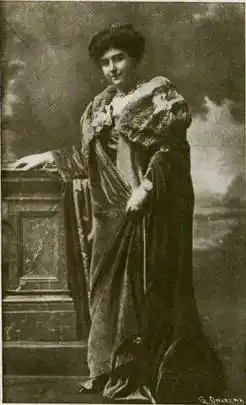
In 1899, the sixty‑four‑year‑old king met Caroline Lacroix, a French woman of sixteen working as a performer in a Brussels café. Some called her a prostitute, others a dancer, still others an adventuress. She became his mistress and eventually his morganatic wife, elevating him to the status of European royal joke. Lacroix extracted money, jewels, and titles. Leopold made her a baroness — Baroness de Vaughan. When he died in 1909, a substantial portion of his personal fortune went to her.
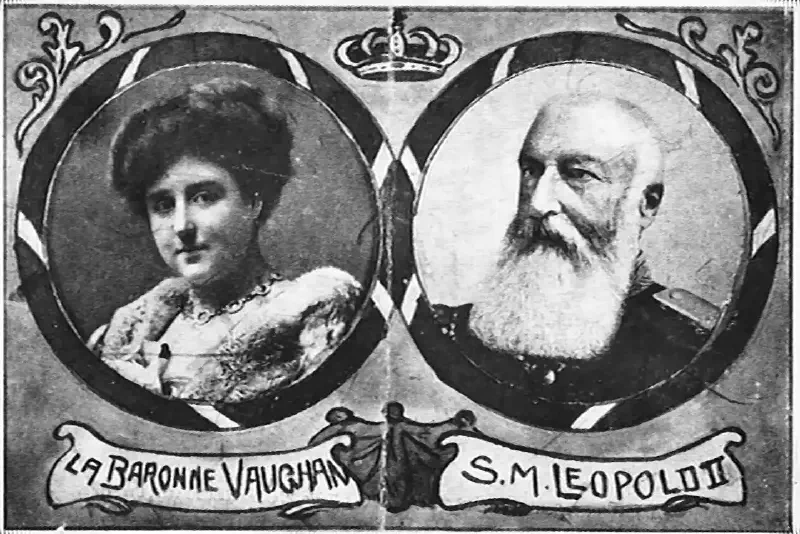
The Belgian public, long accustomed to ignoring their king's colonial crimes, was outraged. Lacroix fled to France with diamonds sewn into her clothing. Posters appeared in Brussels mocking the dead monarch: the man who had dismembered a continent was, in the end, dismembered by his own will, his dynasty cheated of its glory, his wealth delivered to a young woman who, it was widely rumoured, had never much cared for him.
X. Congo's Legacy: The Colony That Would Not Die#
The Belgian Congo gained independence in 1960. The transition was rushed, chaotic, and catastrophically mismanaged.
The Political Vacuum#
Belgium had educated, by 1960, exactly twenty‑nine Congolese university graduates. Twenty‑nine. For a country of fifteen million people, the colonial administration had produced barely two dozen people capable of managing a modern state. The deliberateness of this is worth registering: Belgium did not simply neglect education. It suppressed higher education for Congolese as a matter of policy, in the explicit belief that an educated African population would demand political rights.
Within two weeks of independence, the administrative structure collapsed. Congolese civil servants found themselves running ministries whose files were in Dutch and French, whose procedures assumed Belgian oversight, and whose budgets remained in the hands of Belgian financial interests. The Congo Crisis that followed — secessionist movements, a UN intervention, the murder of Patrice Lumumba — was not an accident. It was the logical conclusion of colonial governance.
The Economic Trap#
The extractive economy did not disappear at independence. Congo remained dependent on mineral exports — copper, cobalt, diamonds, gold — and on the foreign corporations that controlled them. Mining companies that had profited under Leopold continued to profit under Congolese sovereignty, repatriating earnings to Brussels, London, and New York. The geography of extraction was identical; only the flags had changed.
The Violence Never Ended#
The Force Publique became the Congolese National Army, which immediately mutinied. Coups, rebellions, and civil wars followed. Mobutu Sese Seko, who emerged from that chaos to rule for thirty‑two years, continued the pattern of extracting Congo's wealth for a small elite — the system remained, with a Congolese face on it.
Sexual violence as a weapon of war, so prevalent in colonial punitive expeditions, remains endemic in eastern Congo today. The patterns were not invented after independence; they were inherited, embedded in the culture of militarised extraction that Leopold built and Belgium maintained.
XI. The Question of Positives#
No account of Belgian colonialism would be complete without addressing the argument — sometimes made, often defensively — that the Belgians left something behind.
The Case for Infrastructure#
The Belgians built railways, roads, and ports. The line connecting Katanga's copper mines to the Atlantic, inaugurated by King Albert I in 1928, remained essential to Congo's economy for decades. Urban centres like Kinshasa expanded dramatically in the final years of colonial rule; by 1960 the city had a modern water system, electricity, and a nascent industrial base.
The Case for Medicine#
Colonial authorities established hospitals, disease‑control campaigns, and research institutions. The fight against sleeping sickness, though coercive in its methods, did reduce mortality from that disease. Lovanium University's teaching hospital, opened in 1954, trained the first generation of Congolese doctors.
The Case for Education#
Mission schools, despite their assimilationist curriculum and racial segregation, taught literacy and numeracy to a significant number of Congolese. The political elite that led the independence movement — Patrice Lumumba among them — came largely from these schools.
The Counter‑Evidence: Health Declined#
These points must be weighed against the anthropometric evidence. Baten and Maravall Buckwalter (2021) analysed heights across colonial Africa as a composite measure of net nutrition, disease burden, and living standards. The Belgian Congo recorded the largest height decline on the continent between 1880 and 1960 — a fall of roughly 1.5 centimetres in average adult male stature. Congolese people were measurably shorter at independence than they had been before Leopold began his project. Hospitals and disease campaigns could not offset the systematic extraction, forced labour, and tax burdens that undermined ordinary welfare.
The railway ran to the mines, not to the farms. The hospitals kept workers alive long enough to produce rubber and copper. The schools taught French and obedience, not self‑governance. Whatever positive outcomes emerged were incidental, instrumental, and deeply compromised — by‑products of an extractive machine, not its purpose.
XII. Conclusion: The Reckoning Not Taken#
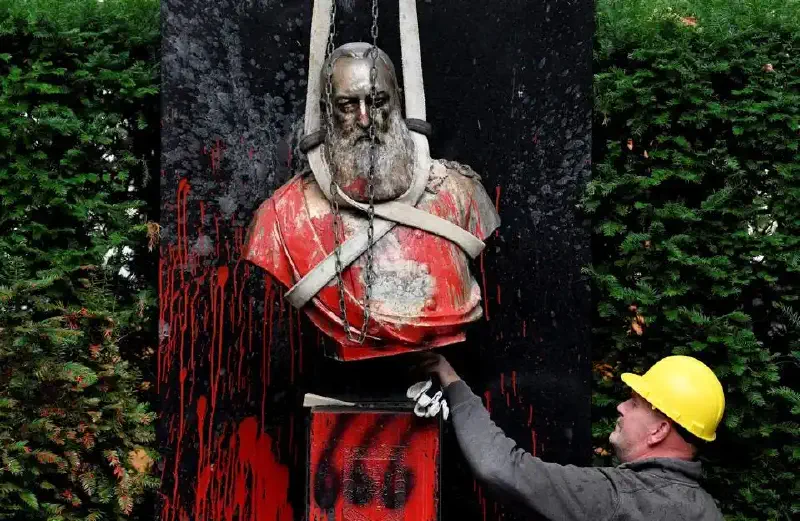
Belgium has never fully confronted its colonial past. Statues of Leopold II still stand in Brussels, though some have been defaced or removed in recent years. The Royal Museum of Central Africa, once a celebration of the "civilising mission," has been slowly reimagined as a space for critical reflection — but the process remains contested and incomplete.
Reparations have not been paid. Apologies have been grudging and conditional. The Belgian government acknowledges that "suffering was caused" but stops well short of accepting full responsibility for the deaths of millions.
The Congo Free State was not an aberration. It was not the work of a single mad king, though Leopold was certainly mad enough. It was the logical extreme of a colonial system that treated African lives as inputs to European wealth. The difference between Leopold's Congo and Britain's India or France's Algeria was not one of kind — only of intensity.
And the corporations that profited then? Many are still with us, still operating in Congo, still extracting its minerals, still repatriating earnings to European capitals. The names have changed; the structure remains.
Leopold's ghost does not walk through Brussels. It flies business class to mining conventions, where handshakes and contracts replace severed hands and quotas. The methods have improved; the purpose has not.
Infographic#
This infographic summarises key findings from the analysis of King Leopold II's rule over the Congo Free State.
References#
Baten, J., & Maravall Buckwalter, L. (2021). The influence of colonialism on Africa's welfare: An anthropometric study. Journal of Comparative Economics, 49(4), 1075–1096. https://doi.org/10.1016/j.jce.2021.04.002
Buelens, F., & Marysse, S. (2009). Returns on investments during the colonial era: The case of the Belgian Congo. Economic History Review, 62(S1), 135–166. https://doi.org/10.1111/j.1468-0289.2009.00483.x
Hochschild, A. (1998). King Leopold's ghost: A story of greed, terror, and heroism in colonial Africa. Houghton Mifflin.
Pakenham, T. (1991). The scramble for Africa: White man's conquest of the dark continent from 1876 to 1912. Random House.
Roberti, P. (2019). State capacity and repression: A model of colonial rule. European Economic Review, 119, 80–108. https://doi.org/10.1016/j.euroecorev.2019.07.003
Vanthemsche, G. (2012). Belgium and the Congo, 1885–1980 (L. Doyle & T. Doyle, Trans.). Cambridge University Press.