The Mercedes and the Mud#
In April 1990, a Rwandan peasant expressed a sentiment that captured the fundamental tension of a nation on the brink. He stated that he could not cultivate the land for the entire year while watching merchants drive Mercedes-Benz vehicles. This observation highlighted the deep economic chasm between the rural cultivators and the urban elite. Rwanda was a country characterized by extreme land scarcity and a massive, underemployed labor force. Labor was the only abundant factor of production, making it cheap and easily exploited by those in power. The Belgian colonial administration established a system to extract wealth from this labor-abundant economy by promoting coffee as a mandatory crop. This framework was not merely an agricultural choice but a tool for introducing a monetary economy into rural areas with minimal investment from the colonizer. The Rwandan elite who followed continued this pattern, realizing that coffee was the primary mechanism to control the rural population.
The Thesis of the Rational Autocrat#
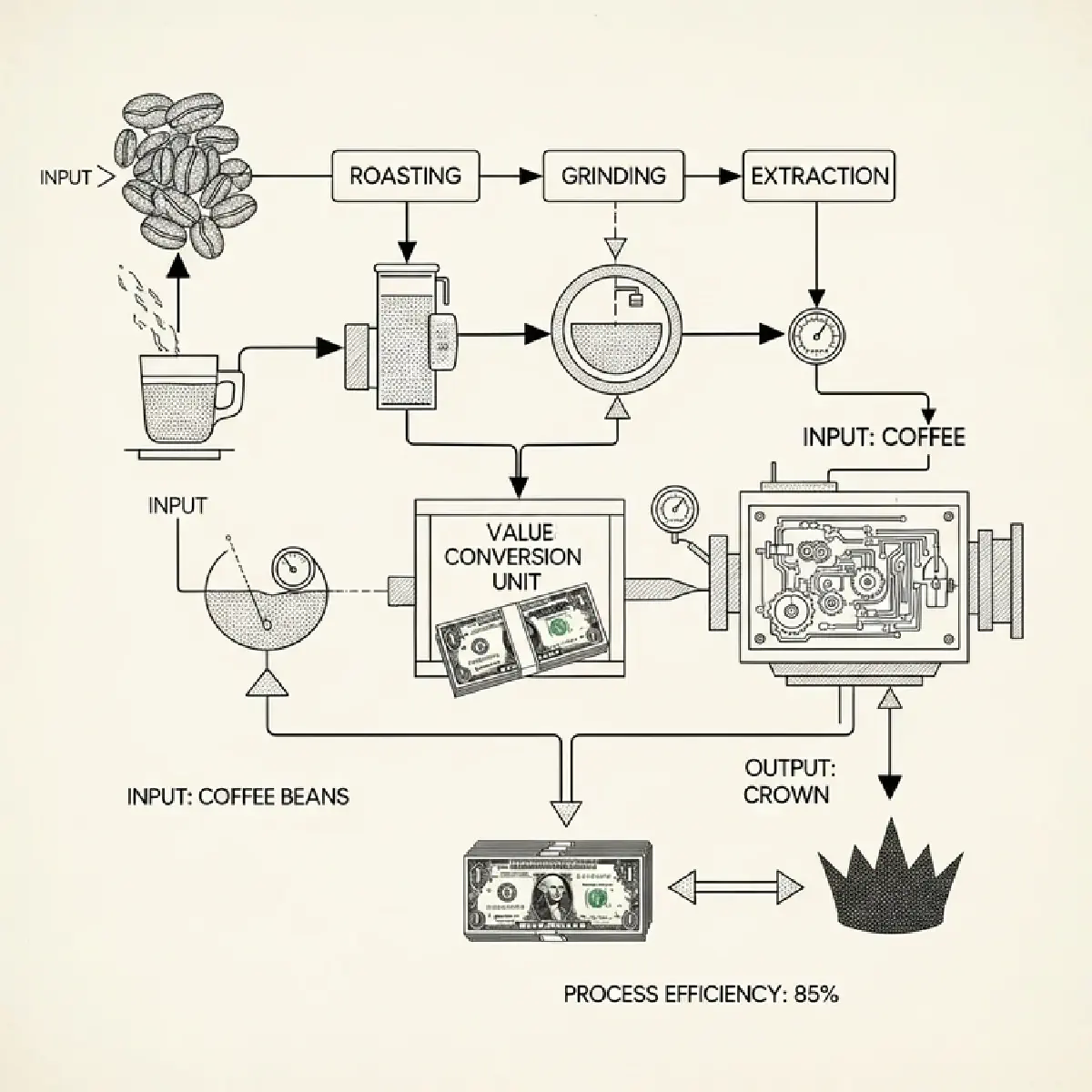
The Habyarimana regime functioned as a rational, unitary actor that utilized the coffee economy to maximize political power and personal consumption. By controlling the producer price of coffee, the dictator bought political loyalty from the peasant population during periods of high international prices. This system allowed the state to accumulate budgetary resources while simultaneously monitoring the population through a dense administrative network. The regime’s survival depended on its ability to maintain a specific equilibrium between loyalty and repression, a balance that shifted based on international market fluctuations. This analysis suggests that the eventual descent into genocide was an outcome of the dictator’s rational efforts to maintain power when economic incentives failed.
The Mechanics of Mandated Cultivation#
The Habyarimana government transformed the colonial coffee system into a centralized mechanism of state control. Every Rwandan citizen was encouraged or forced to grow coffee, and the cultivation was heavily subsidized to ensure that new plants were available at almost no cost. The state established a large administration for coffee monitoring, where monitors were assigned both advisory and policing roles. These monitors advised farmers on cultivation practices while simultaneously issuing fines to those who failed to maintain their fields. Under the Rwandan penal code of June 1978, uprooting a coffee tree was a criminal offense punishable by law. This system ensured that the state remained the monopsony buyer of the primary export, controlling 60% to 80% of state revenue depending on the year.
The Historical Divergence of the Republics#
The 1973 coup d’état that brought Juvenal Habyarimana to power was rooted in regional and economic grievances. The previous Kayibanda regime, known as the First Republic, favored Hutu from the southern region of Gitarama. The economic arm of that regime was TRAFIPRO, a state-run marketing system that controlled 27 shops and 70 coffee-buying points. Critics accused TRAFIPRO of maintaining a monopoly and diverting rents to politicians in the south. Habyarimana, representing the northern elite or Abakonde, sought to capture these lucrative business opportunities. After taking power, he consolidated authority by outlawing political parties and creating the Revolutionary Movement for Development (MRND). This new party required every Rwandan to be a member, turning the state into a totalitarian organization where all local leaders were party cadres.
The Accumulation of Power during the Boom#
The period between 1976 and 1979 was marked by a significant coffee boom on the international market. In 1977, the producer price was increased to 120 Rwandan Francs (RWF) per kg (approximately 0.54 RWF per lb), a substantial rise from the 45 RWF per kg (0.20 RWF per lb) offered in 1974. This increase in the “price of loyalty” allowed the regime to establish a strong base of support among the peasant masses. High international prices provided the dictator with the resources to increase both personal consumption and power over the population. The regime did not just consume these rents; it used them to strengthen the monitoring of coffee cultivation and to formalize the punishment for neglecting trees. During this era of plenty, the marginal cost of accumulating power was low, allowing the dictator to build a loyal following while simultaneously eliminating political rivals from the previous regime.
The Fragility of the Coffee Equilibrium#
The stability of the Habyarimana regime was inextricably linked to the value of a single commodity on the global market. As long as the international price remained high, the regime could afford to pay a producer price that secured the loyalty of the farmers while funding the state apparatus. This mutual dependence between the dictator’s budget and the supply of loyalty from the population created a precarious political economy. The state acted as the sole buyer, protecting farmers from short-term shocks but ultimately transferring resources from the agricultural sector to the urban elite. When the international quota system for coffee was abolished in 1985, and prices began to decline in 1987, the regime’s ability to “buy” loyalty was severely compromised. This economic shift signaled the end of the “golden age” and forced the dictator to seek alternative, more coercive methods to maintain his hold on the state. The transition from incentives to repression began long before the first shots of the civil war were fired.