The Laboratory of Modernity#
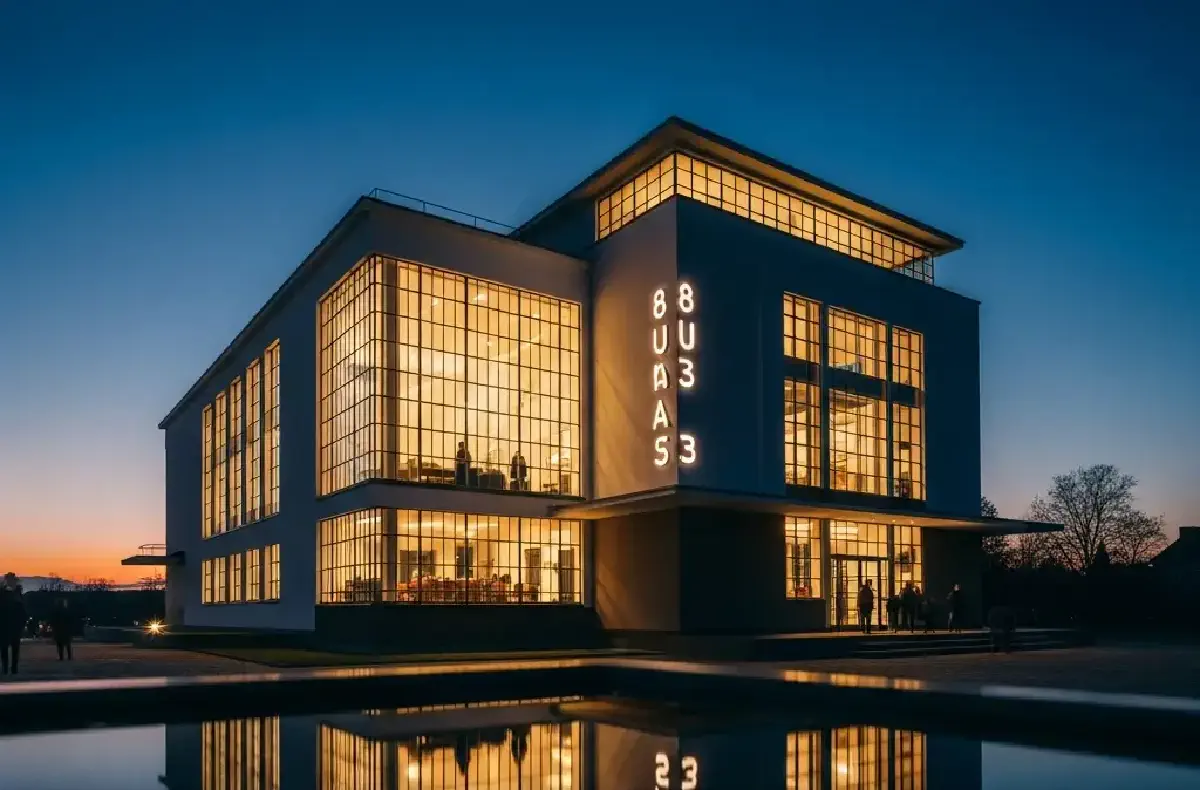
In 1925, political pressure and budget cuts forced the Bauhaus to flee Weimar for the industrial city of Dessau. Here, the school moved into a purpose-built glass and concrete building designed by Gropius that became the “flagship” of modern architecture. In Dessau, the school transitioned from a collection of craft workshops into a “university of design” focused on industrial prototypes. The goal was to develop a “grammar of design” that would optimize function for mass demand. Under the new director, Hannes Meyer, the focus shifted radically toward a social synthesis, where the designer served “the people” rather than an intellectual elite. Meyer introduced disciplines like psychology and sociology to the curriculum to better understand the “true needs” of the masses. Dessau was the era when the Bauhaus truly embraced the machine as the “normal tool of civilization”.
The Thesis of Industrial Integration#
The central claim of this post is that the Dessau phase transformed design into a systematic, scientific discipline that prioritized the “satisfaction-system” over the individual art object. This matters because it laid the groundwork for modern “product-service systems” where the value lies in the experience, not just the hardware. Bauhaus Dessau proved that “beauty of form is a question of facility of apperception,” meaning that clear, honest design helps people understand and master their world.
The Foundation of Standardization#
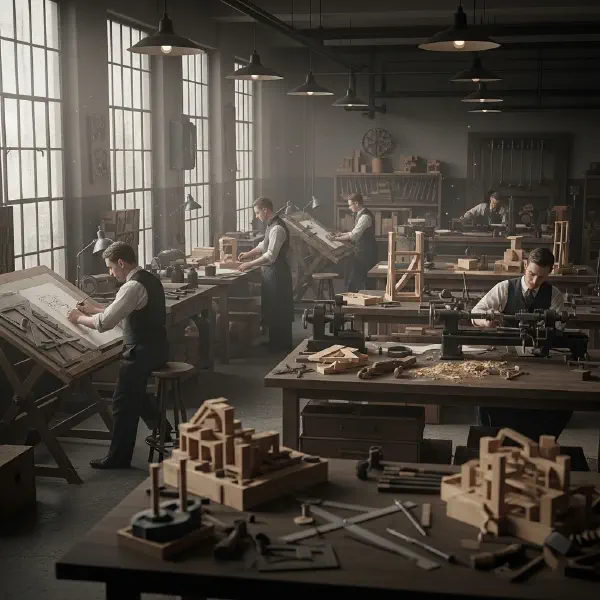
In Dessau, the Bauhaus workshops focused on “standardization, series manufacturing, and mass production” as the backbone of their activities. Designers like Wilhelm Wagenfeld were adamant that mass-produced goods should be both cheap and excellently made, ensuring that “good design” was accessible to everyone. The carpentry workshop under Marcel Breuer produced the first “type furniture”—modular units that could be combined to fit any apartment. This was a “deductive” methodology: starting from the general needs of the population and moving toward a specific, optimized solution. By using just a small range of identical components, the school achieved an “economy of means” that defined the modern aesthetic.
The Crucible of Political Utility#
The school’s focus on serving the masses made it a target for the rising Nazi party, which viewed its “International Style” as alien to German tradition. Within the school, a new tension arose between Meyer’s radical socialist agenda and Gropius’s earlier vision of artistic synthesis. Meyer’s motto was that “the designer should serve the people,” which meant prioritizing utility and cost over aesthetic “styling”. This was the era of “Scientific Management” and the “progressive assembly line,” which sought to maximize efficiency by simplifying tasks. However, this “machine-like reality” was often perceived as cold and sterile, a charge that forced designers to consider the psychological needs of the user. The crucible of Dessau showed that a purely “functionalist” approach risked forgetting that humans also need “poetry, color, and love” in their environment.
The Cascade of the Thonet Revolution#
The most visible result of the Dessau years was the massive dissemination of tubular steel furniture, most notably the chairs manufactured by the firm of Thonet. By 1930, fifty million units of the Thonet-style chair had been produced, making it one of the most successful product designs in history. This “cascade” of influence transformed the interior of the modern home into a brightly lit, clear, and bright space. The ripple effects reached far beyond furniture; the Bauhaus graphics and typography established a “visual turn” that characterizes modern branding and advertising to this day. This was the moment when design became an “everyday language” that everyone could read and understand.
The Synthesis of the Social Blueprint#
Bauhaus Dessau teaches us that “nothing big works” unless it is built on a foundation of human-centered research. It demonstrates that the role of the designer is to act as a “trained synthesist” who bridges the gap between technology and the lived experience of the user. We learn that “the best designs and products always emerge through collaboration with the manufacturing side”. The success of the Dessau years was not just in the objects created, but in the “democratizing of input” to the design process. As we face the complex “wicked problems” of the 21st century, we must return to the idea of “designing transition paths” that serve the common good. Dessau proved that when we “take the world as if it were the first day we ever arrived,” we can design a future that is truly better for all.