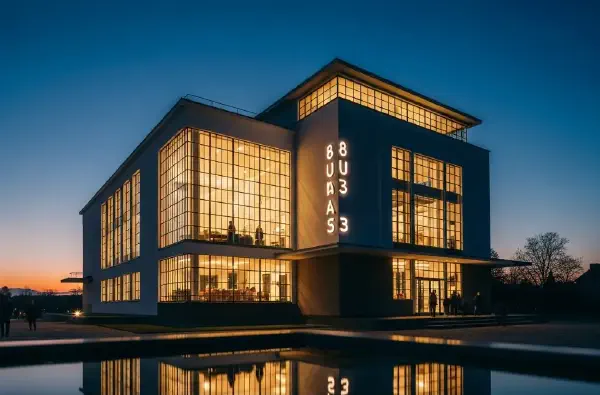
The Bauhaus was not merely a stylistic movement but a fundamental “remaking of making” intended to restore human dignity to industrialized society, with its revolutionary vision of merging art and technology.
The school’s evolution through Weimar (1919-1925), Dessau (1925-1932), and the diaspora (1933+) demonstrates how design principles adapt across technological eras while maintaining core humanistic values.
The International Style that emerged from the diaspora, while visually coherent, revealed the dangers of applying design solutions without regard to local context and the human psychological need for meaning and poetry.
Modern User Experience design and digital interfaces are direct heirs to Bauhaus functionalism, where invisible complexity enables surface simplicity—exemplified by products like the iPhone.
Sustainable design must evolve beyond market-oriented values toward “situated responsibility,” integrating systems thinking, empathy, and circular economy principles to ensure human and environmental flourishing.