For more than two centuries, nations have climbed from poverty to prosperity. The advice now given to the world’s poorest countries — open your markets, cut tariffs, invite foreign capital — sounds sensible. But the actual history of how Britain, America, and South Korea built their wealth tells a radically different story, one that the institutions dispensing that advice would prefer to forget.
Key Takeaways#
- South Korea built a world-class steel industry in the 1960s by ignoring World Bank advice and defying its own comparative advantage.
- England spent over a century protecting its wool industry with tariffs and export bans before it could compete with Dutch manufacturers.
- The United States maintained average tariffs of 40 to 50 percent on manufactured goods throughout the 19th century — the highest of any industrializing nation.
- The theory of comparative advantage tells a country what it is good at today but says nothing about what it could become tomorrow.
- A simple mathematical model shows that industries shielded by temporary tariffs follow a learning curve that eventually reaches global productivity levels, while unprotected industries collapse before they can learn.
- Finland’s restrictive foreign ownership laws created the conditions that allowed Nokia to grow from a paper mill into a global technology leader.
Opening Scene#
In 1968, a group of South Korean bureaucrats walked into a meeting with World Bank officials and made a request that sounded, by any conventional measure, absurd. They wanted to build a steel mill. Korea had no iron ore. No coking coal. No experience in heavy industry. Its per capita income was $82 — roughly on par with Ghana. The World Bank said no. Western governments refused to lend the money.
Korea built the mill anyway.
The bigger picture#
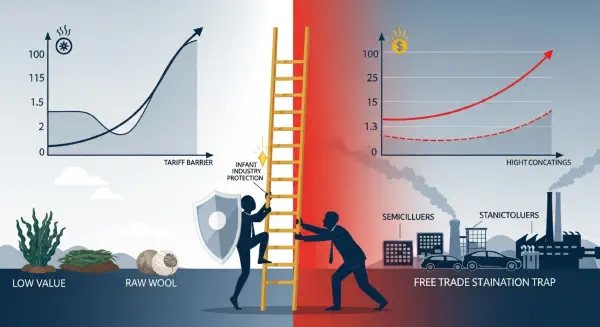
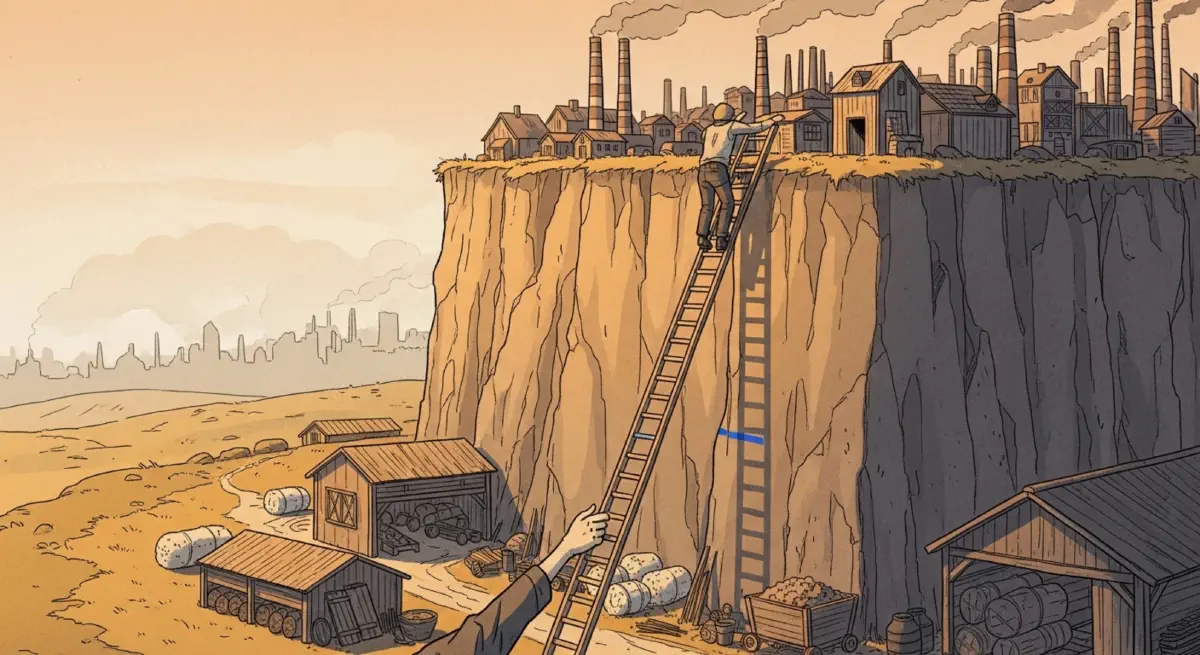
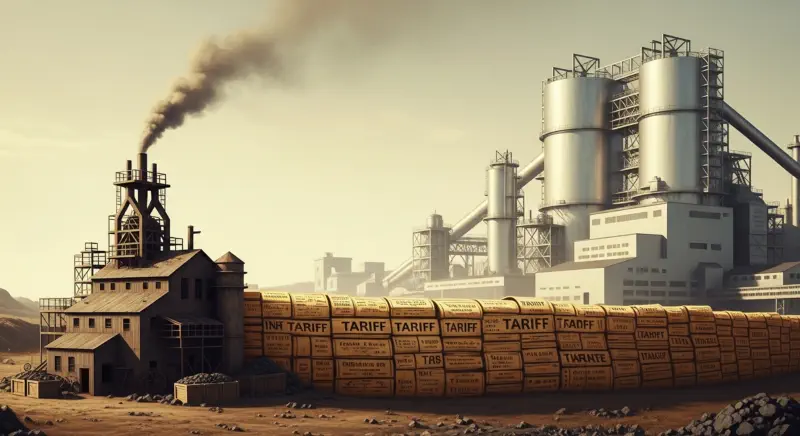
That steel mill, a state-owned company called POSCO, became one of the most efficient producers on Earth within a decade. It supplied the cheap steel that built Korea’s shipyards and car factories. But POSCO’s story is not just about one country’s gamble. It is the clearest modern example of a pattern that stretches back five hundred years: nations that got rich did so by protecting their young industries, nurturing them behind tariff walls, and only opening their borders after they were strong enough to compete. Then, almost without exception, they turned around and told everyone else to do the opposite. Economist Ha-Joon Chang calls this “kicking away the ladder.” Understanding how the ladder works — and why its rungs follow a precise mathematical logic — changes the way you think about wealth, fairness, and the rules of the global economy.
The wool king’s long bet#
The story begins not in Seoul but in London, in 1489. King Henry VII inherited an England that was, in modern terms, a developing country. Its primary export was raw wool, shipped to the Low Countries, where Dutch weavers turned it into high-value cloth and sold it back at a handsome markup. England grew the sheep. The Netherlands made the money.
Henry wanted that money. So he did something no modern economist would recommend. He taxed raw wool exports heavily, then banned them altogether. He subsidized English weavers. He even headhunted skilled workers from continental Europe to teach the English how to manufacture. The policy was expensive, inefficient, and deeply unpopular with wool merchants who profited handsomely from selling raw fleece to Dutch buyers.
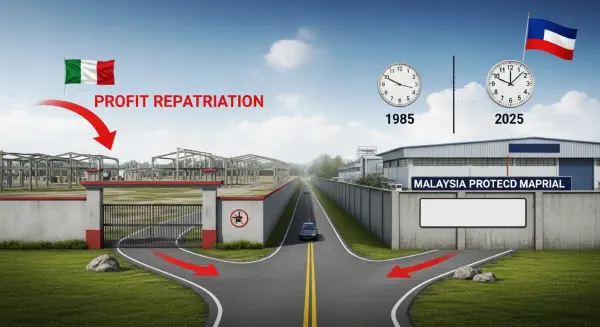
It also took over a hundred years to work. A century is a long time to ask consumers to pay more for inferior cloth. If Henry had listened to today’s free-trade orthodoxy, England might still be raising sheep. Instead, by the time Elizabeth I took the throne, English cloth was competing across Europe. Britain went on to maintain some of the highest tariffs in the industrialized world for another two centuries. It only started preaching free trade after its factories were so far ahead that open markets would lock other countries into supplying raw materials while Britain remained the world’s workshop.

Hamilton’s children#
The United States copied the playbook almost exactly. Alexander Hamilton, the first Treasury Secretary, laid out the case in his 1791 Report on Manufactures. His argument was simple and vivid: young industries in a developing country are like children. They cannot compete with the grown-up industries of advanced nations. If you send a six-year-old to work in a factory, he will fail — not because he lacks potential, but because he has not had time to grow.
That analogy cuts to the heart of the debate. The theory of comparative advantage — the intellectual foundation of modern free trade — tells you what a country is efficient at right now. Grow coffee. Mine copper. Export what you do best today. But it is a snapshot, not a forecast. It says nothing about what a country could become with twenty years of investment and protection.
America took Hamilton’s advice. For most of the 19th century, its average tariffs on manufactured imports ran between 40 and 50 percent. The country was the most protected major economy in the world. It championed free trade only after World War II, when its industrial lead was so dominant that protection was no longer necessary.
The pattern is hard to miss. Britain did it. America did it. Germany, Japan, and Finland did it. Then each one, upon reaching the top, turned around and told the next climber the ladder was dangerous.
What the math reveals#
You might wonder whether this is just a collection of historical anecdotes — interesting but not rigorous. It turns out the logic follows a precise curve. Imagine a young factory in a developing country. On day one, its productivity is a fraction of the global standard. If you expose it to full foreign competition immediately, it cannot sell a single product at a competitive price. It dies before it learns.
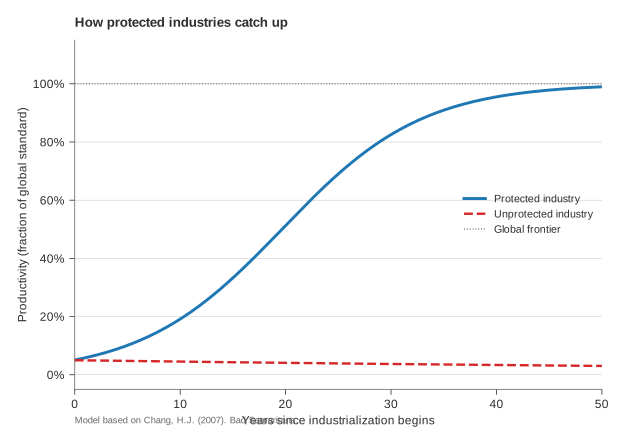
Now add a tariff wall. Behind that wall, the factory is inefficient but alive. Each year, its workers get better, its processes improve, and its productivity climbs along what economists call a learning curve — fast at first, then gradually leveling off as it approaches the global frontier. Figure 1 shows exactly this dynamic: the protected industry follows a smooth upward arc toward world-class performance, while the unprotected one stagnates and collapses.
Figure 1 — How protected industries catch up. The horizontal axis tracks years since industrialization begins; the vertical axis measures domestic productivity as a percentage of the global standard. The protected industry (blue line) follows a logistic learning curve — climbing steeply at first, then gradually leveling off as it approaches 100% of the global frontier. The unprotected industry (red dashed line) declines immediately under foreign competition and flatlines near zero. The contrast is stark: protection buys time, and time buys competence. This is the mathematical backbone of the infant-industry argument that Britain, America, and Korea each validated in practice.
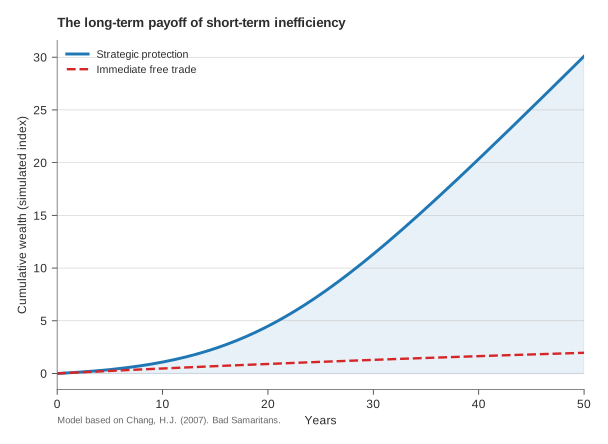
The wealth implications are even more dramatic. In the early years, protection costs consumers — they pay higher prices for inferior domestic goods. But once the industry reaches global competitiveness, the payoff compounds. Figure 2 shows cumulative national wealth under both scenarios. The protected path starts slower but eventually dwarfs the free-trade path, because the country is now exporting high-value goods like automobiles and semiconductors instead of raw seaweed and tungsten ore.
Figure 2 — The long-term payoff of short-term inefficiency. The horizontal axis shows years; the vertical axis tracks cumulative national wealth as a simulated index. Under strategic protection (blue, with shaded area), wealth accumulates slowly in the early decades — the cost of shielding an inefficient industry — then accelerates sharply once domestic productivity reaches global levels. Under immediate free trade (red dashed line), wealth grows marginally and stays flat, because the country remains stuck exporting low-value goods. The crossover point, roughly two decades in, is where the gamble of protection pays off and the protected economy permanently outpaces the liberalized one.
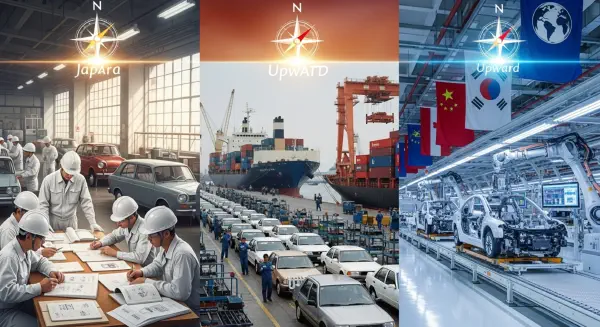
This is exactly what happened in Korea. Early Hyundai cars were so unreliable they became the punchline of American jokes. But because foreign automakers were kept out of the Korean market, Hyundai had the time and space to improve. Today it is one of the world’s largest car manufacturers.
The ladder and its missing rungs#
There is an obvious objection to all of this: protection can go wrong. Tariff walls can shelter lazy monopolies instead of hungry learners. Industries that never face competition may never improve. This is a real risk, and history offers plenty of examples — from Latin American import substitution programs that bred inefficiency to state-owned enterprises that became jobs programs rather than engines of growth.
But the distinction matters. The question is not whether protection always works. It is whether strategic, time-limited protection — with clear performance expectations and a deadline — can work. The evidence from Britain, America, Korea, and Finland says yes. When Finland restricted foreign ownership in the early 20th century, it was not trying to shut out the world forever. It was buying time for domestic companies to develop their own capabilities before global giants swallowed them whole. One of those companies started out making paper and rubber boots. Its name was Nokia.
Closing#
Today, POSCO is the sixth-largest steel producer on the planet. Hyundai sells more cars in the United States than most American brands. South Korea’s per capita income is more than 400 times what it was when those bureaucrats walked into that meeting in 1968. None of it would have happened if Korea had followed the advice it was given. The next time someone insists there is only one path to prosperity — open markets, free trade, no exceptions — it is worth asking a simple question: is that the path they actually took?
References#
- Chang, H. J. (2007). Bad Samaritans: The myth of free trade and the secret history of capitalism. Bloomsbury Press.
- Hamilton, A. (1791). Report on the subject of manufactures. United States Congress.
- Reinert, E. S. (2007). How rich countries got rich and why poor countries stay poor. Constable.