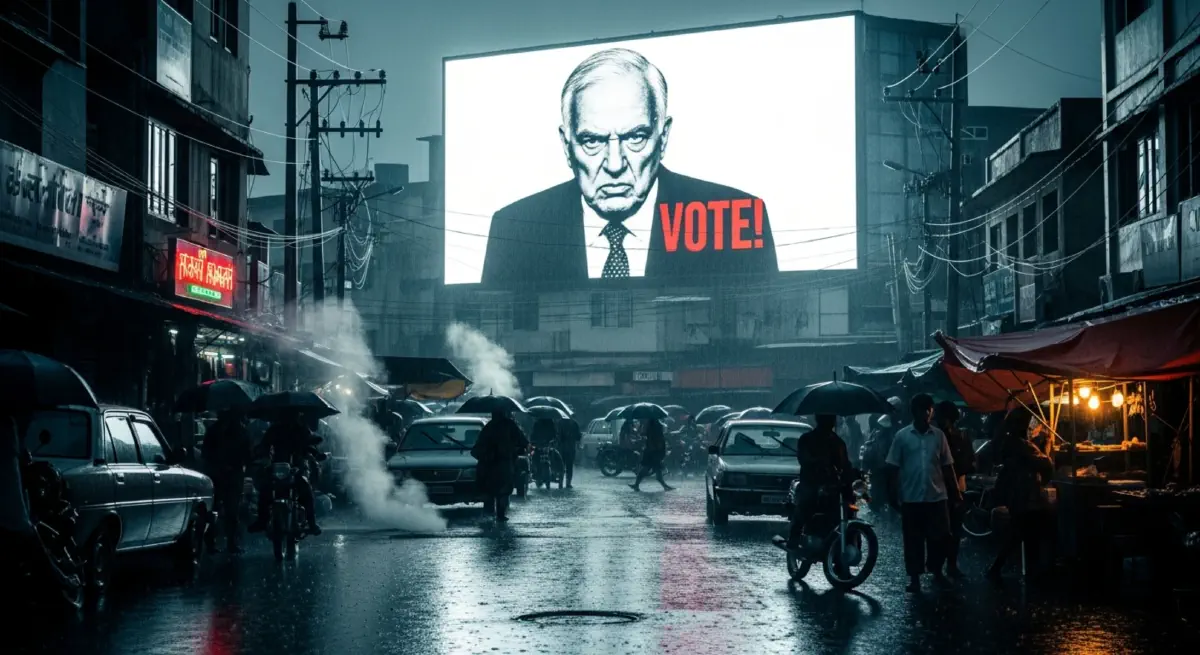
In early 2015, a team from Cambridge Analytica prepared a “viral ops” campaign video intended for the Nigerian presidential election. This was not a standard campaign advertisement; it was a “black op” designed to intimidate voters in certain regions of the country. The video contained graphic and sadistic footage of public beatings, forced genital amputations with machetes, and victims having their throats cut in ditches. The goal was to suppress turnout for Major General Muhammadu Buhari, who was presented in the video through menacing and Islamophobic imagery.
This extreme tactic illustrates the dark end of the Information Operations spectrum: when psychological profiling leads to the weaponization of fear and the suppression of democratic rights. Christopher Wylie, the whistleblower who eventually exposed these practices, described the firm as a “corrupting force” that became the face of 21st-century colonialism. While the firm’s work in the West focused on “psychographics,” its operations in Africa, Asia, and the Caribbean often involved bribery, hacking, and “honey trap” stings.
The downfall of Cambridge Analytica in May 2018 brought these global “black ops” into public awareness, revealing that the “James Bond” mystique was a reflection of a military-grade disregard for ethics. The fallout from the scandal forced a global reckoning for major technology companies and led to record-breaking fines. Yet, the underlying methodology of “voter surveillance” continues to be used by successor firms and rogue actors in the unregulated global market.
The Thesis of Systemic Democratic Collapse#
The Black Ops and Suppression Thesis argues that militarized Information Operations do not merely aim to persuade voters, but actively work to undermine democratic stability by using tactical aggression to suppress participation and corrupt institutional integrity. When these techniques are deployed without transparency or accountability, they transform civilian elections into “information warfare” zones. This creates a “New Cold War” where democratic institutions are dismantled from within, treating the electorate as combatants on a digital frontline.
The Tactical Manual of Suppression#
The firm’s “black ops” capacity included the procurement of hacked material to assist their clients. In January 2015, Cambridge Analytica hired a technically sophisticated Israeli private intelligence firm to hack the private email account and computer of Muhammadu Buhari. The hacked material was then used as “kompromat” to launch rumor campaigns about Buhari’s health and wellbeing to discredit his fitness for the presidency. These operations were often billed under the benign label of “special IT services” to hide their true nature from regulators.
Voter suppression was a primary service offered by the firm to its global clients. In Trinidad and Tobago, they designed a campaign called “Do So,” which used a fake “resistance movement” on social media to encourage young people of African descent not to vote as a form of protest. This targeted abstention campaign successfully reduced voter turnout in that specific demographic, favoring the political party representing the Indian population. In the United States, internal documents referenced “voter disengagement” as an objective, specifically targeting African American voters to discourage participation in the 2016 election.
The firm’s ethical vacuum extended to international corruption and bribery. Alexander Nix was recorded meeting with the then Minister of Health of Ghana and proposing a scheme to divert publicly funded project money toward her election expenses. In other instances, the firm attempted to entrap opposition candidates by posing as international property developers offering $1 million in campaign support in return for land concessions. These “honey trap” stings were part of a broader strategy to discredit opponents using fabricated or illicitly obtained information.
The Scramble for Digital Colonies#
The consequence of these operations was particularly severe in the Global South, where they entrenched a “colonial imprint” through data extraction and transposed digital infrastructure. Digital territories have been subjected to “conquest” by Western values and capitalist logics, recreating new values and histories that threaten to marginalize minority groups. This form of “algorithmic colonialism” extracts value from African societies while leaving little room for local control or sovereignty.
Tech industries engage in exploitative labor practices by hiring “ghost workers” in the Global South to perform critical but invisibilized tasks like data labeling and content moderation. These workers frequently endure poor conditions and unfair wages while being exposed to highly traumatic content. Furthermore, African data is often transferred to geographically distant servers for processing and profit maximization, with the economic benefits concentrating among a small number of tech elites in the Global North.
This structural dependency weakens national autonomy and self-determination. Most AI systems are trained on models from the Global North, reflecting Western values and languages while marginalizing African epistemologies and worldviews. Facial recognition systems deployed in African cities frequently misidentify darker-skinned individuals, leading to racial vulnerabilities in surveillance and policing. This normalization of undignified dispossession paves the road for the unrestrained dominance of foreign tech companies.
The Debris of the Post-Truth Era#
The fallout of the scandal confirmed the existence of “systemic vulnerabilities” in democratic systems. Elizabeth Denham, the UK Information Commissioner, warned that the company’s data protection practices were lax “with little thought for effective security measures”. Despite the collapse of Cambridge Analytica, its personnel have dispersed into successor firms like Emerdata Limited and Auspex International. This “shadow industry” of influence-for-hire remains a multibillion-dollar global market where political parties rely on the very industry they should be regulating.
The result is a population that is increasingly “wound up and angry,” manipulated by actors who know exactly what triggers fear and paranoia. Societal polarization is exacerbated by the use of “filter bubbles” and “echo chambers” that isolate individuals from opposing opinions. By algorithmically segregating society, these operations undermine the shared reality necessary for a functioning democracy. The most profound consequence is the destruction of trust in institutions and the loss of individual autonomy and dignity.
We are living in an era of “voter surveillance by default,” where personal privacy rights are systematically compromised. The $5 billion FTC fine issued to Facebook, while record-breaking, was viewed by some as perfunctory, as shares actually rose on news of the penalty. Dissenting FTC commissioners argued the fine should have been larger and that individual executives should have been held personally liable. Without meaningful accountability, the fundamental tension between the extractive data economy and individual rights persists.
Synthesis: Reclaiming the Digital Commons#
The SCL and Cambridge Analytica scandal was a “watershed moment” that exposed the absolute vulnerability of our digital ecosystem. It proved that the tools of connectivity can be repurposed for mass manipulation and voter suppression at the click of a button. The “blood” on the digital screen in Nigeria and the “Do So” campaign in Trinidad were not outliers, but the logical conclusion of a military philosophy that treats information as a weapon.
To protect the future of democracy, we must move beyond “aspirational language” and implement regulatory frameworks grounded in a “duty of care”. This requires:
- Algorithmic Accountability: Mandatory algorithmic impact assessments for systems deployed in high-stakes domains like political advertising.
- Meaningful Consent: Interactive consent interfaces that educate users about data practices rather than hide them in small print.
- Data Sovereignty: Localized frameworks for data governance that ensure populations have authority over how their data is collected and stored.
Democracy is no longer a “fragile flower,” but a system that requires expert-led safety authorities to enforce standards for user safety, just as we do for cars and electricity. We must recognize that technology is a social, national security, and consumer rights issue. The ultimate posición of war is when your adversary has no idea they are in a war. By bringing the “black ops” of Information Operations into the light, we can begin the difficult work of dismantling the digital Panopticon and reclaiming the digital commons for citizens.