The Arithmetic of Empire: How Britain Monetized India
Key Insights#
- The Unrequited Transfer: The “Home Charges” were not a trade deficit but a $7 trillion capitalization of British administrative and military costs onto the Indian taxpayer.
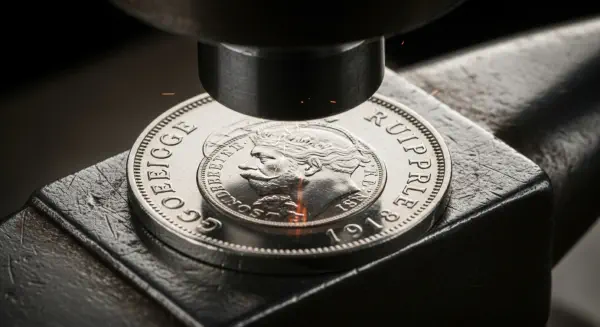
- Monetary Seigniorage: The transition to a token rupee in 1893 allowed the British Treasury to capture billions in “coinage profits” while using Indian reserves to subsidize the London money market.
- One-Way Free Trade: Indian industrialization was not outcompeted by technology; it was dismantled by an asymmetric tariff system that shut British doors to Indian goods while forcing Indian doors open.
- The Debt Trap: Railway development was a “guaranteed return” scheme where the Indian peasant bore 100% of the risk while British investors reaped 100% of the fixed 5% profit.
- The Great Liquidation: The interwar 18d. peg forced the “disgorging” of $212 billion in ancestral gold savings from Indian villages to the Bank of England to bail out the sterling system.
- The Fiscal Priority of Famine: During the worst mortality events in human history, the British state prioritized the maintenance of grain exports and tax collections over the caloric survival of its subjects.
References#
- Balachandran, G. (1996). John Bullion’s Empire: Britain’s Gold Problem and India Between the Wars. Curzon Press.
- Davis, M. (2001). Late Victorian Holocausts: El Niño Famines and the Making of the Third World. Verso.
- Keynes, J. M. (1913). Indian Currency and Finance. Macmillan and Co.
- Naoroji, D. (1901). Poverty and Un-British Rule in India. Swan Sonnenschein & Co.
- Thorner, D. (1950). Investment in Empire: British Railway and Steam Shipping Enterprise in India 1825-1849. University of Pennsylvania Press.
- Tomlinson, B. R. (1993). The Economy of Modern India, 1860-1970. Cambridge University Press.
| Table B: Visual Assets | Suggested Image Prompt | Caption | ALT Text |
|---|---|---|---|
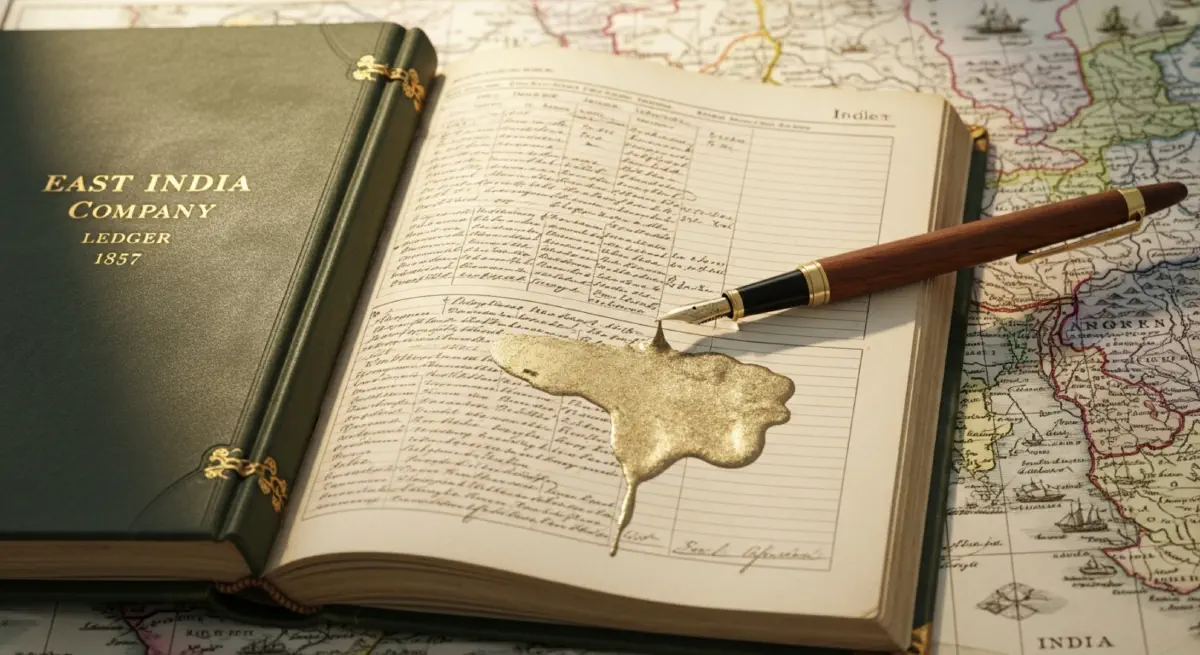
| Series Cover | A hyper-realistic 19th-century ledger book overlapping a map of India, with a fountain pen leaking gold ink across the pages. | The Arithmetic of Empire: Mapping the fiscal extraction of a subcontinent. | A vintage ledger book on an antique map of India with gold ink stains. |
| Post 1 | A silhouetted Parsi scholar (Naoroji) standing before a towering wall of British Parliamentary reports in an old London library. | Dadabhai Naoroji: The man who quantified the “bleeding” of India. | A man in 19th-century Indian attire looking at a library of books. |
| Post 2 | A close-up of a silver rupee being struck by a heavy iron press, with a ghostly gold sovereign reflected in the metal. | The Token Coin: Transforming silver into administrative profit. | A silver coin under a heavy minting press. |
| Post 3 | A split image: on one side, a handloom being broken; on the other, a massive Victorian steam-powered textile mill. | The Loom and the Ledger: The systematic deindustrialization of India. | A broken traditional loom next to a large industrial factory. |
| Post 4 | A railway track stretching into a desolate, dry horizon, with a heavy iron chain wrapped around the rails. | Fixed Obligations: The 5% guarantee that shackled Indian taxpayers. | Railway tracks disappearing into a desert with a heavy chain. |
| Post 5 | An Indian family selling gold ornaments across a counter to a faceless banker, with the London skyline in the background. | The Golden Ransom: $212 billion liquidated to save the sterling. | A hand handing over gold jewelry to a clerk with a city skyline behind. |
| Post 6 | A grain ship being loaded at a busy port while emaciated figures wait in the shadows of the crates. | The Famine Dividend: Exporting life-saving grain during the peak of collapse. | A port scene with a large ship being loaded with grain bags. |