The final march to the Pole occurred on a plateau 10,000 feet [3,048 m] above sea-level. In the rarefied air, the men faced a relentless headwind from the south. On January 4, 1912, at latitude 87° 32´ S, Scott made his final selection for the Polar Party. He chose Wilson, Bowers, Oates, and Seaman Evans to accompany him.
This five-man configuration was a late-stage deviation from the plan. The equipment and rations were all designed for four-man units. This meant the fifth man, Bowers, had to pull on foot while the others were on ski, creating an uneven and more tiring pace. The tent became dangerously crowded, and cooking took longer, cutting into essential rest time.
The Cold Snap and the Sandy Surface#
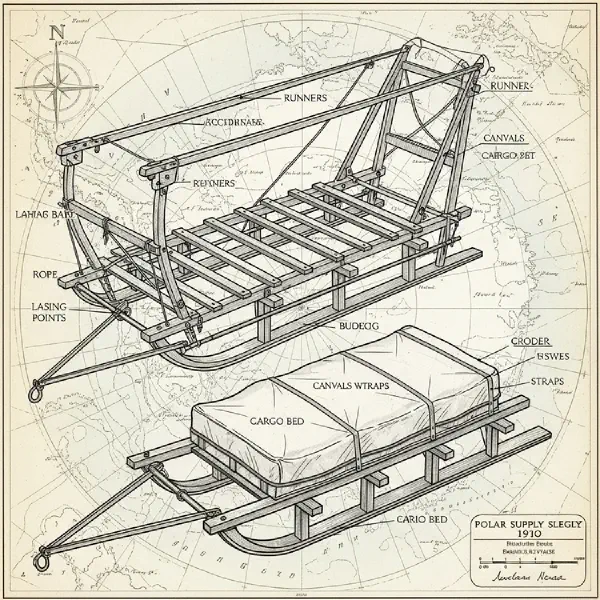
As they approached the Pole, the temperature dropped to -30°F [-34.4°C] during the day. A phenomenon of ice-crystals falling from a clear sky turned the snow surface into “sand”. This resulted in “rolling friction,” where the sledge runners could not melt the ice points to create a glide. The party found themselves pulling harder than ever before, but making only 10 to 12 miles [18.5 to 22.2 km] a day.
Foundation and Mechanism#
The metabolic demands on the plateau were extreme. The “Summit Ration” provided 4,889 calories per man, but modern analysis suggests the work performed required 8,500 calories. This 3,600-calorie daily deficit meant the men were effectively starving while they pulled. Their bodies were consuming their own muscle and fat reserves to stay warm and move the 160 lbs [72.5 kg] per man.
The Crucible of Context#
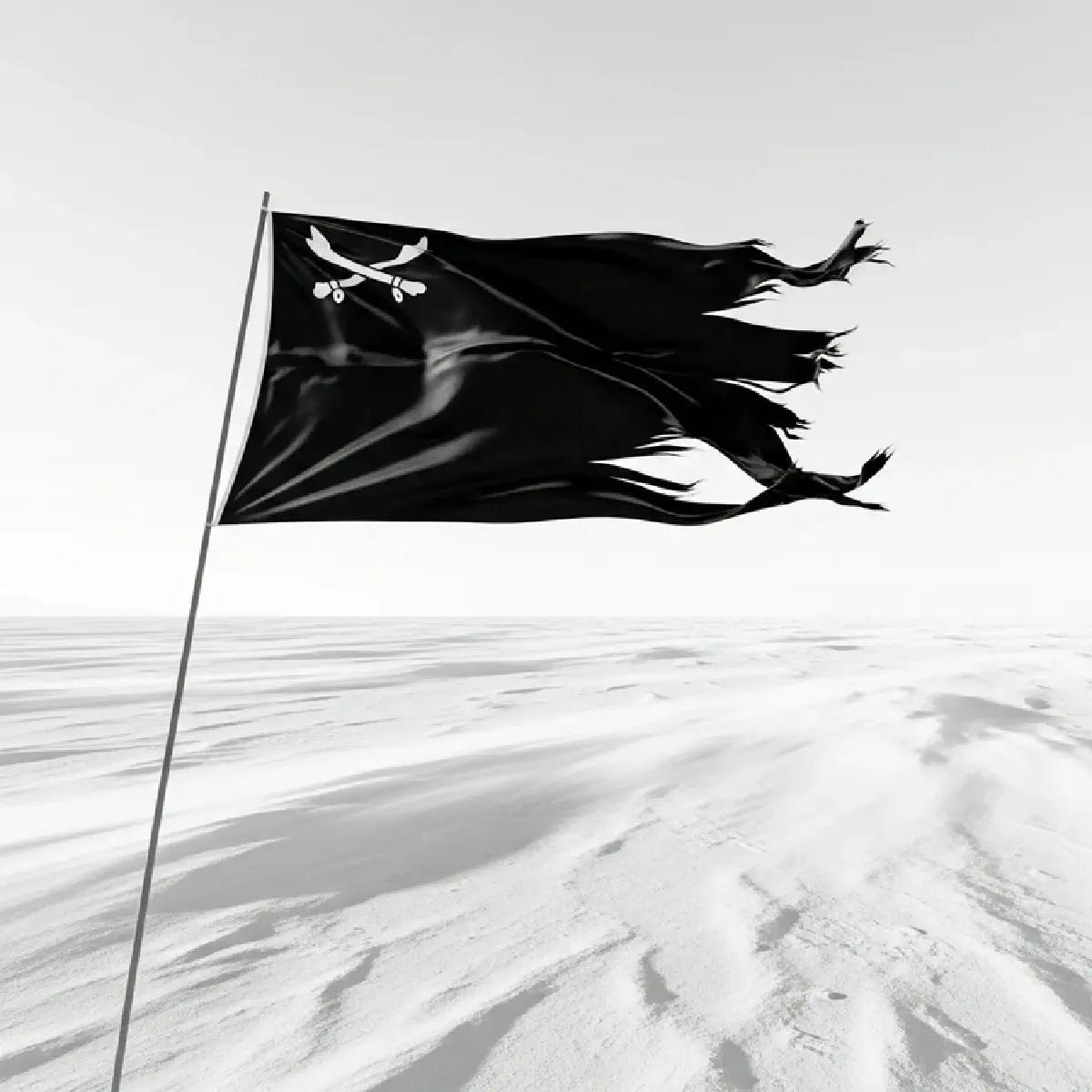
The party’s progress was haunted by the presence of Roald Amundsen. On January 16, they sighted a black flag and dog tracks on the snow. Scott realized they were not the first to arrive. This psychological blow was compounded by the physiological effects of high-altitude exertion and persistent frost-bite. Evans and Oates were particularly hard-hit by the cold.
Cascade of Effects#
The party reached the South Pole on January 17, 1912. They found Amundsen’s tent, “Polheim,” and a letter addressed to the King of Norway. The knowledge of their second-place finish replaced the anticipated triumph with a “wearisome return”. They took photographs and scientific readings, but their primary focus shifted immediately to the 800-mile [1,481.6 km] race back to base before the winter.
The Turning Point#
At the Pole, the temperature was -22°F [-30°C] with a force 6 wind. Scott described the site as an “awful place”. They had reached the geographical objective, but they were now at their physical and emotional nadir.
The return march began on January 19. They had the wind at their backs for the first time, but the surface remained treacherous. Every mile away from the Pole was a mile closer to the depôts upon which their lives depended. They were now fighting for time against an advancing and lethal Antarctic autumn.