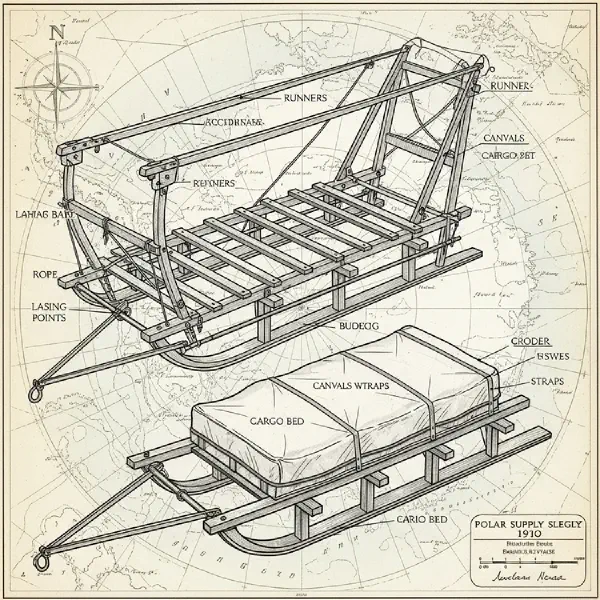
The Beardmore Glacier is one of the largest ice-streams in the world, rising from sea-level to 7,000 feet [2,133.6 m] over a distance of 120 miles [222.2 km]. On December 10, 1911, the three man-hauling teams began the ascent, dragging 190 lbs [86.2 kg] per man. The surface was characterized by deep, soft snow that buried the sledges to their cross-pieces.
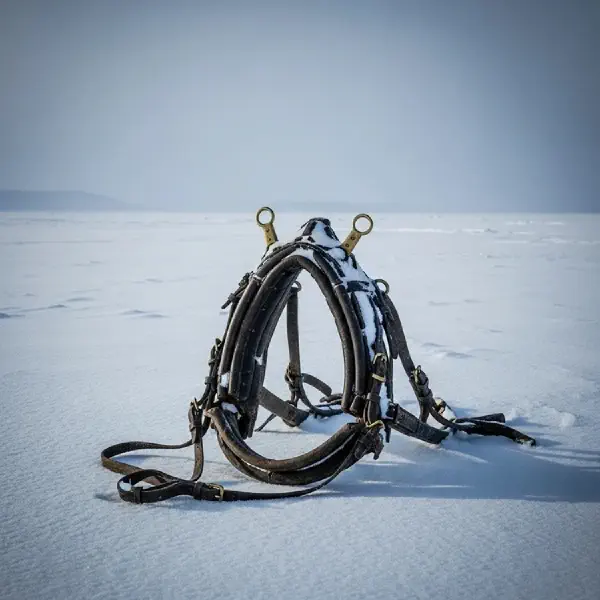
Navigation on the glacier required constant attention to “pressure” and ice-falls. Scott chose a route that hit the center of the glacier to avoid the chaotic disturbances at the edges. The men pulled for nine hours a day, divided into two sessions. Every step required a rhythmic, agonizing jerk on the harness to keep the sledge from sticking.
The Geological Archive#
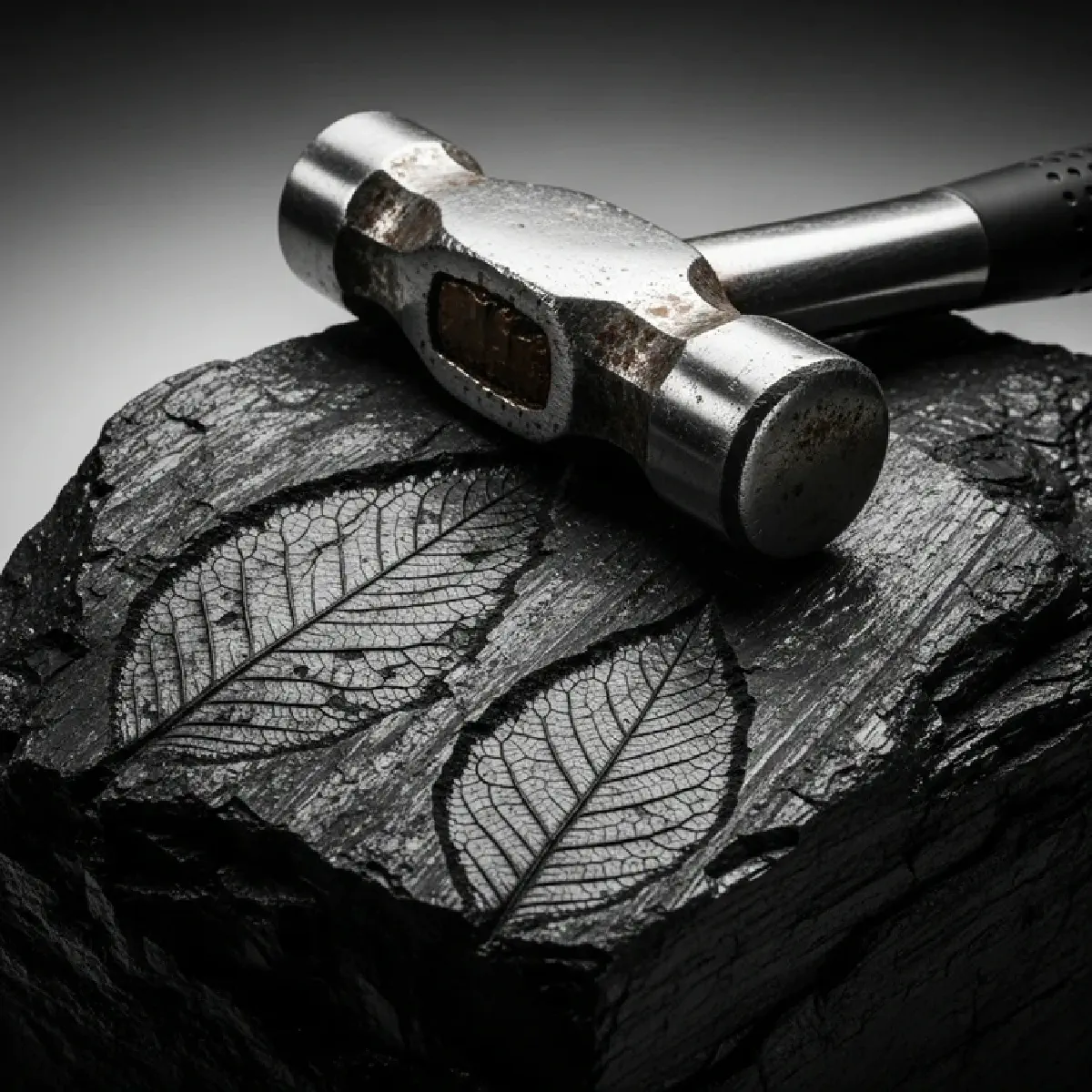
Despite the physical toll, the party maintained their scientific focus. At the foot of Mount Buckley, they found coal seams and fossilized plant remains in the sandstone cliffs. These specimens provided definitive proof that the Antarctic was once a temperate, forested land. Wilson insisted on carrying these 30 lbs [13.6 kg] of rock to the Pole and back.
Foundation and Mechanism#
The ascent utilized a three-party system. As the weight decreased through consumption, teams were sent back to base. This “supporting party” system allowed the final team to have fresh supplies at the top of the glacier. Each man was assigned a specific role in camping, ensuring the tent was up and the primus stove lit in minimum time.
The Crucible of Context#
The climb was complicated by “snow-blindness,” caused by the intense ultraviolet radiation reflected off the snow. Even with tinted goggles, half the men suffered from eye inflammation that felt like “sand in the eyes”. This forced some to pull blind, being led by their companions on the harness. Furthermore, the high altitude began to affect their respiration and sleep quality.
Cascade of Effects#
The strain of the glacier ascent began to break down the “strongest” men. Edgar Evans, a Petty Officer and a mainstay of the party, suffered a concussion from a fall and several severe frost-bites on his hands. These injuries, combined with the metabolic drain of the climb, initiated his physical collapse. The delay on the glacier, caused by the soft snow, further reduced their margin of safety for the return journey.
The Gateway and Beyond#
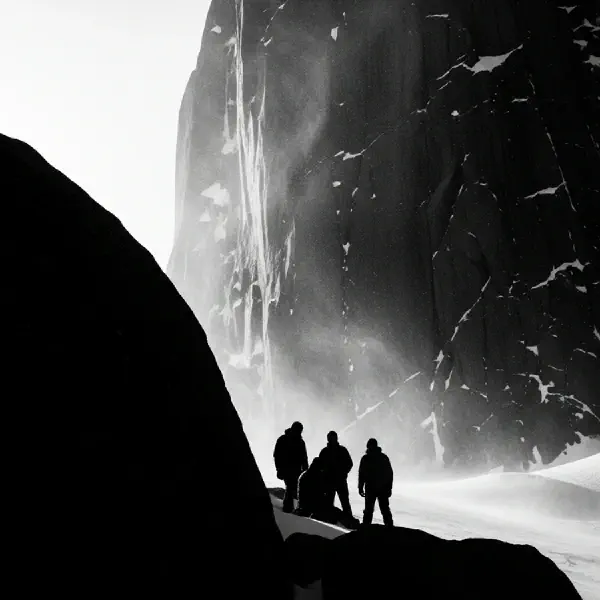
The “Gateway” at the bottom of the glacier served as the final transition point. Once through, the party left the Barrier and entered the mountains. The scenery was magnificent, with red granite peaks rising thousands of feet above the ice. But the beauty masked a lethal obstacle course of hidden crevasses.
By December 21, they reached the Upper Glacier Depôt at 7,151 feet [2,179.6 m]. Here, Scott made the difficult decision to send back the First Supporting Party, including Atkinson and Cherry-Garrard. The remaining eight men were now at the edge of the great polar plateau. They were only 290 miles [537 km] from the Pole.