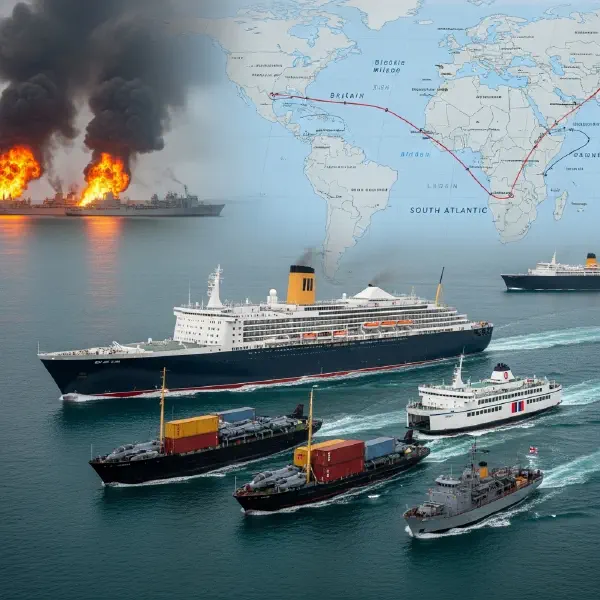
The Terra Nova arrived in McMurdo Sound on January 4, 1911, marking the end of a voyage characterized by extreme instability and mechanical failure. The ship’s antiquated design caused her to roll over 50 degrees each way during the passage through the “Roaring Forties”. A significant leak in the hull forced the crew to man hand-pumps for hours daily to prevent the vessel from foundering. Despite these setbacks, the expedition successfully landed 425 tons [385.5 metric tons] of coal and 19 ponies.
Penetrating the pack ice proved to be an unexpected logistical drain. The ship encountered 400 miles [643.7 km] of dense ice floes, resulting in a three-week delay. During this period, the engines consumed two tons of coal per day even when the ship was stationary. Scott grew increasingly anxious as he watched his fuel reserves vanish before the inland journey had even begun.
Establishing the Antarctic Base#
Once the ship reached the shore, the crew built a hut at Cape Evans measuring 50 by 25 feet [15.2 by 7.6 m]. This structure was designed with double match-boarding and seaweed insulation to maintain internal heat. It served as the operational headquarters for the 25 men of the Main Party. The site was chosen for its proximity to the Barrier and its relative protection from the heaviest glaciers.
Foundation and Mechanism#
The base camp operated as a self-sustaining scientific station during the long polar winter. It included an acetylene gas plant for lighting and separate cubicles for scientific disciplines. The team established a routine of meteorological observations, taking readings every hour. This data provided the first comprehensive look at the atmospheric conditions of the Ross Sea area.
The Crucible of Context#
The expedition faced immediate environmental resistance that challenged their operational assumptions. Killer whales, or Orca gladiator, patrolled the ice-foot and demonstrated the ability to shatter ice 2.5 feet [0.76 m] thick to hunt prey. This biological threat necessitated extreme caution when working near the open leads. Furthermore, the rapid break-up of sea-ice in February 1911 nearly derailed the initial depôt-laying mission.
Cascade of Effects#
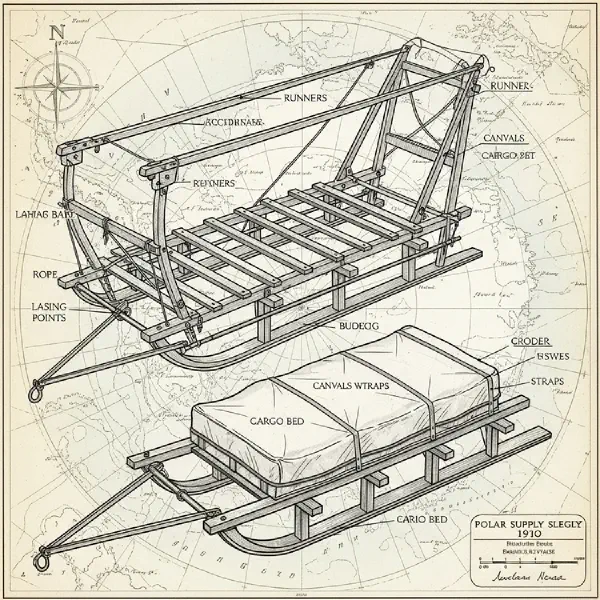
The instability of the sea-ice influenced the expedition’s long-term survival prospects. When the ice broke away at Cape Evans, the third motorized sledge was lost to the sea. This mechanical loss meant the team had to rely even more heavily on animal transport and human labor. The inability to maintain a permanent ice road between Cape Evans and Hut Point forced the team to utilize a dangerous land route over the glaciers.
The Psychological Transition#
Living at the edge of the world required a total shift in human perception. The isolation was absolute, as the post came only once a year. The men lived in a state of constant readiness, knowing that a blizzard could bury the camp in minutes. They learned to navigate by the stars and the feel of the snow beneath their feet.
This period of acclimatization was essential for the psychological preparation of the team. They transformed from a group of individuals into a tightly knit operational unit. The focus narrowed from the vastness of the Southern Ocean to the specific mechanics of survival on the Barrier. They were now physically and mentally committed to the ice.