The Dreadnought’s Illusory Protection#
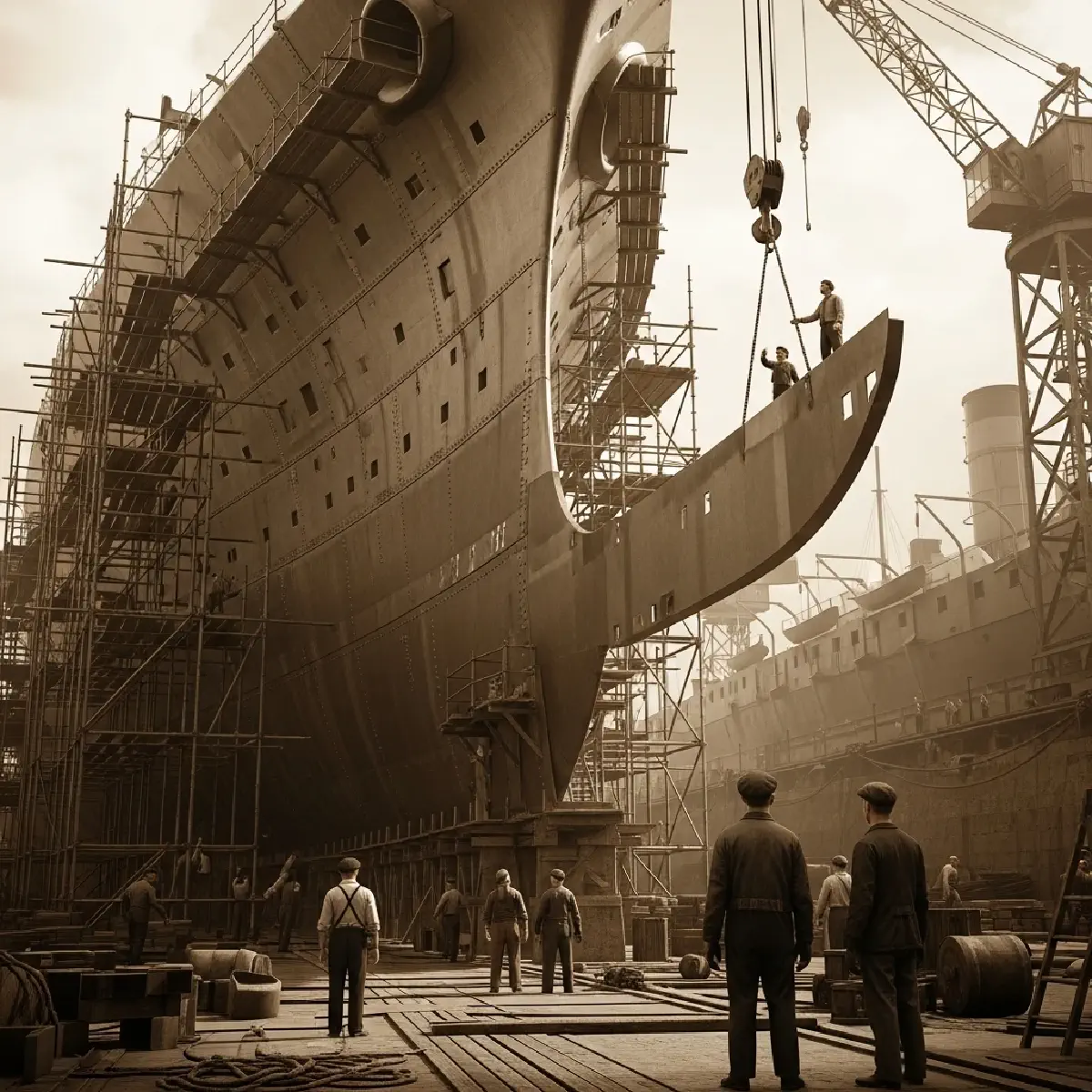
In the years preceding the First World War, European nations viewed battleships as the ultimate symbols of status and power. These “lumbering behemoths” were intended to be impregnable floating fortresses, representing the technological might of their home nations. By 1909, the Austro-Hungarian Empire realized its navy was lagging dangerously behind its neighbors, particularly the Italians. Despite being nominal allies, the Hapsburg dynasty feared that Italy would not honor its treaty obligations in a general conflict. This strategic anxiety drove the empire to commission the Tegetthoff class, a series of dreadnoughts meant to dominate the Mediterranean. However, the path to their construction was paved with political instability and financial deceit.
When Budget Wars Compromise Steel#
The Tegetthoff-class battleships were doomed by a design process that prioritized firepower over the very protection required for their survival. Political gridlock and illegal financing forced engineers to accept fatal compromises that left these massive ships vulnerable to the smallest of enemies.
The Illegal Foundations of Naval Power#
The Tegetthoff project began in the midst of a total government collapse. For over a year, the Austro-Hungarian parliament was paralyzed, making it impossible to approve any naval budgets. Fearing that the empire’s shipyards would lose their skilled workers, Admiral Rudolph Monte Cachi orchestrated a “thoroughly illegal plan” to begin construction without government approval. He secured private funding through a Rothschild-owned bank, personally assuming the lion’s share of the debt to keep the project alive. By the time a new parliament convened in 1910, two of the dreadnoughts were already under construction, forcing the government to retroactively accept the project.
The Weight of Overambitious Weaponry#
The chief designer, Sigfried Popper, faced a “crippling dilemma” of matching Italian innovations within a non-existent budget. To maximize firepower, the Tegetthoff class utilized new triple gun turrets. While theoretically efficient, these turrets were “horribly overweight” in practice. The sheer bulk of the weaponry caused the battleship hulls to warp and buckle, requiring extensive and heavy structural reinforcement. This unexpected weight gain meant that something had to be sacrificed to keep the ships afloat. In a move that would prove fatal, the designers significantly reduced the weight of the armor protection.
The Pathetic Shield of a Behemoth#
The most egregious omission in the Tegetthoff design was its lack of effective underwater protection. Despite the known threat of torpedoes from submarines and motorboats, the ships featured only 1.6 meters of total underwater defense. This consisted of a “paper-thin” 10 mm outer plating and a 25 mm torpedo bulkhead. German Grand Admiral Alfred von Tirpitz reviewed the plans and warned of these critical weaknesses, but his advice regarding the hull was inexplicably ignored. This vulnerability was exposed on June 10, 1918, when a small motorboat commanded by Captain Luigi Ritzo intercepted the Szent István. Two torpedoes easily bypassed the “frankly pathetic” defenses, causing the massive warship to capsize and sink in an ignominious spectacle.
The Cinematic Death of a Flawed Ideal#
The sinking of the Szent István, captured on film, remains one of the most dramatic records of naval failure in history. The Tegetthoff class was intended to carry Austria-Hungary to the forefront of naval power, yet it became a “conspicuous non-factor” in the war. Half of the class was sent to the bottom of the sea, not by massive enemy dreadnoughts, but by small, cheap torpedoes. The story of these ships illustrates that a “floating fortress” is only as strong as its weakest link. When political and financial desperation dictates engineering, the result is often a masterpiece of surface-level power that collapses at the first sign of real-world pressure.