In 1683, a vast Ottoman army laid siege to Vienna. It was the high-water mark of an empire that ruled from Algiers to Baghdad. Yet, within decades, this continental behemoth would watch from the sidelines as the small, rain-swept kingdoms of the North Atlantic began their conquest of the globe. The Ottomans had better guns at Vienna than the Europeans did. They had deeper treasuries and greater populations. What they lacked was a specific kind of pressure.
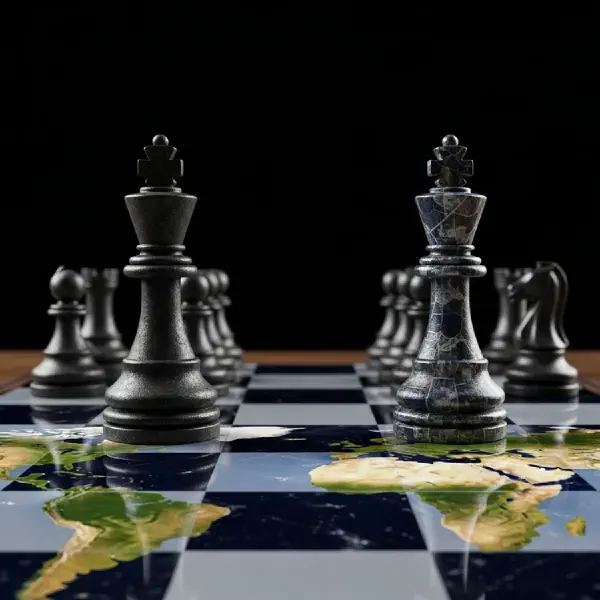
Europe was not a civilization, but a cage. A cage of two dozen major states locked in perpetual, existential combat. This fragmentation was its primal, paradoxical strength. While unified empires optimized for stability and internal control, Europe’s competing kingdoms were forced to optimize for survival through relentless adaptation. The empire that conquered the world was not born from a unified vision, but forged in the white-hot crucible of continental warfare. Its first export was not culture or goods, but a perfected system of competitive violence.
The Tournament of Survival#
From 1500 to 1815, Europe’s major powers were at war for over 90% of those years. This was not a series of conflicts but a single, continuous condition—a tournament where the price of failure was not setback, but extinction. Poland demonstrated the stakes in the late 18th century: partitioned off the map by its neighbors. This environment created a Darwinian logic that rewarded one thing above all: institutional adaptability to the demands of war.
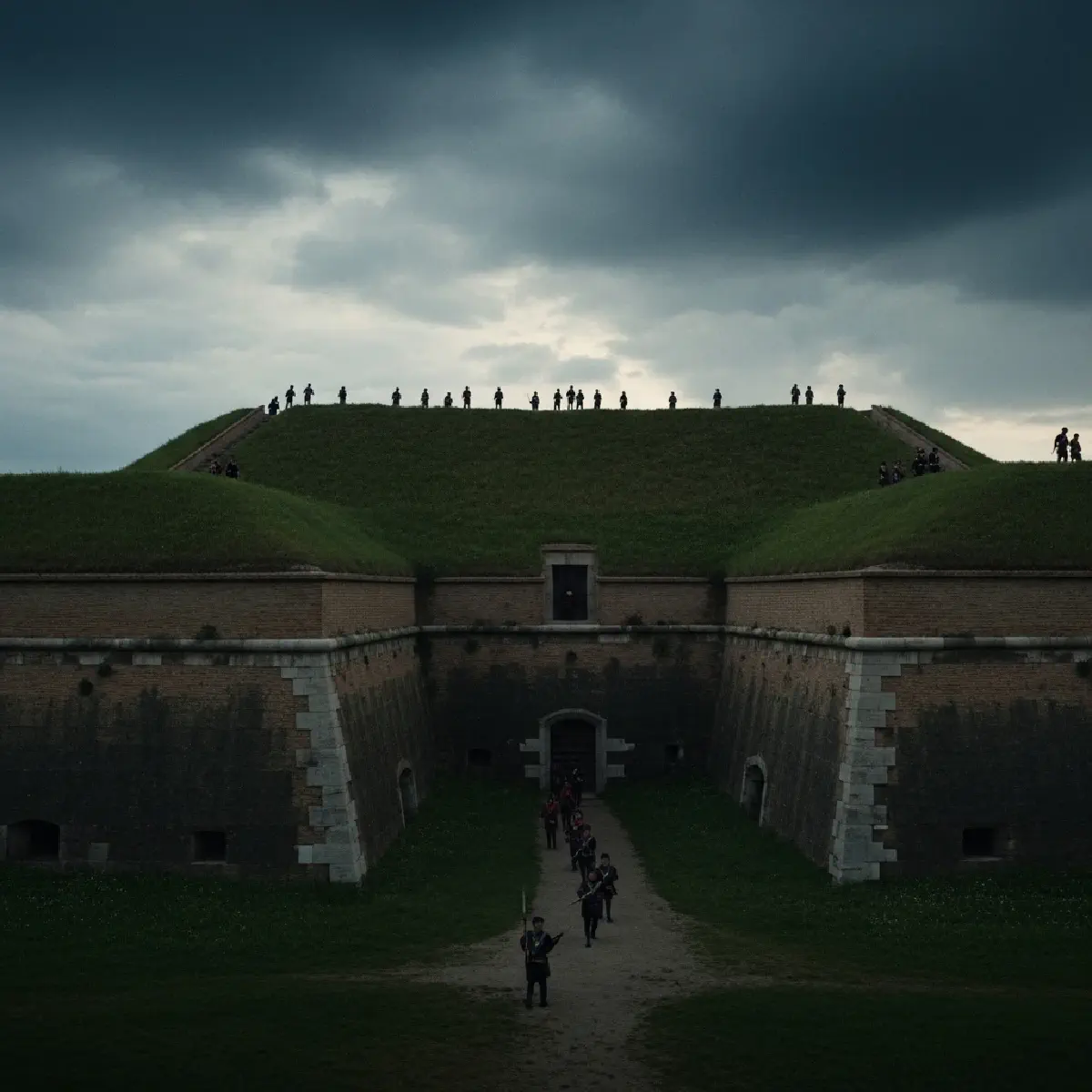
The so-called “Military Revolution” was less an event than a feedback loop. The trace italienne—star-shaped bastions—made cities ten times harder to capture. This necessitated larger, more professional standing armies. Larger armies demanded more reliable taxation and supply. Longer, costlier wars required deeper lines of credit. Each solution created new logistical problems, demanding further innovation in administration, finance, and technology. The spiral was unending and accelerated by the open, pan-European market for ideas. A Dutch financial instrument could fund a German army using Swedish cannon designs to fight the French.
This stood in stark contrast to the experience of large, unified agrarian empires. The Ming, Mughal, and Ottoman dynasties faced revolts and border conflicts, but they lacked permanent, sophisticated peer competitors at their gates. For the Ottoman Sultan, investing in a deep-water navy was a discretionary project when primary threats arrived by land. For the English king, naval dominance was non-negotiable for national survival. The European state was, by its very structure, a machine for preparing and waging the next war.
Geography of Constraint, Psychology of Expansion#
Europe’s geography amplified this dynamic. It was a peninsula of peninsulas, fragmented by mountains and rivers, yet connected by navigable seas. This created defensible political units perpetually in contact. More critically, it presented early, harsh ceilings on growth. England’s limited farmland, Portugal’s mountain barriers, and Holland’s flooded marshes were not advantages. They were severe constraints that made outward expansion a logical, even desperate, alternative to Malthusian collapse.
This generated a crucial psychological and institutional shift. While the Chinese state under the Ming Dynasty could, and did, voluntarily abandon oceanic exploration after 1433, relying on its vast internal economy, no European state possessed that luxury. External expansion became a core strategic imperative, not an adventurous choice. The pressure cooker of continental competition was thus linked directly to the motive for global exploration. The energy of internal rivalry was vented outward, across oceans.
The Emergent Blueprint for Power#
No king in 1500 envisioned a globe-spanning empire. The system evolved. The tools that emerged from this relentless tournament—the sovereign state with a monopoly on violence, the professional bureaucracy, the public debt market, the standardized armed sailing ship—were all designed for European battlefields. Yet, they accidentally possessed a world-altering property: unprecedented scalability for long-distance projection.
The caravel, refined for Atlantic exploration, was a product of Iberian rivalry. The joint-stock company, created to pool risk for distant voyages, was a financial instrument born in competitive trading states. The standardized, broadside-firing warship was the endpoint of a naval arms race in the English Channel and the Mediterranean. Each was a solution to a local European problem. Deployed in concert on a global stage, they became an unstoppable toolkit for domination.
The famous “European advantage” was never a single technology like gunpowder, which they did not invent. It was this embedded, systemic capacity for rapid military-financial innovation born of perpetual insecurity. The fragmented states of Europe, locked in a struggle for survival, had unknowingly engineered a replicable formula for power. The nation that could most consistently apply this formula—converting the chaos of competition into organized, financeable force—would not just win the European game. It would change the world. Britain did not rise despite the chaos of its home continent, but precisely because of it.