Timeline of the Scramble for Africa and its Aftermath
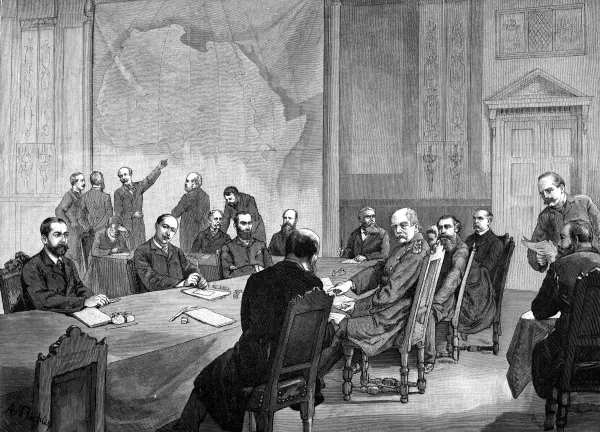
Berlin West Africa Conference
1884–85
November 1884 – February 1885
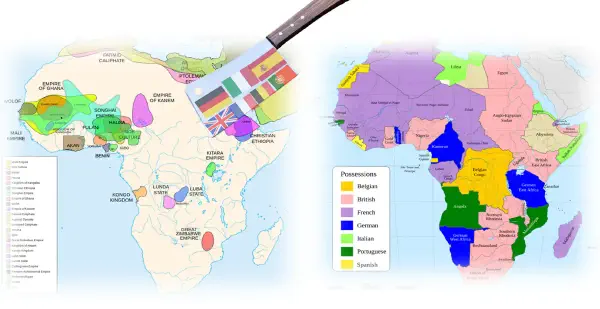
Fourteen European powers meet in Berlin without any African representative. They establish the legal doctrines of “effective occupation” and “spheres of influence,” recognise Leopold II’s personal Congo Free State, and set the rules for the coming Scramble for Africa.Brussels Convention Arms Embargo
1890
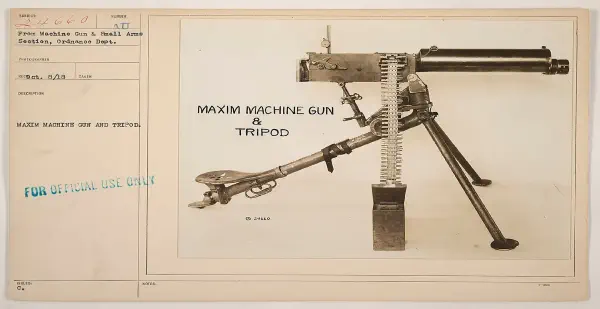
1890
The European powers sign the Brussels Convention, which prohibits the sale of modern firearms to Africans. The embargo locks in the technological advantage of European armies and helps to ensure that African states can no longer resist the conquest effectively.Ndebele Kingdom Conquered
1893
1893
Cecil Rhodes’s British South Africa Company invades Matabeleland. King Lobengula flees and dies shortly after. The company expropriates 280,000 head of cattle and establishes the white-settler colony of Southern Rhodesia.Battle of Adowa
1896
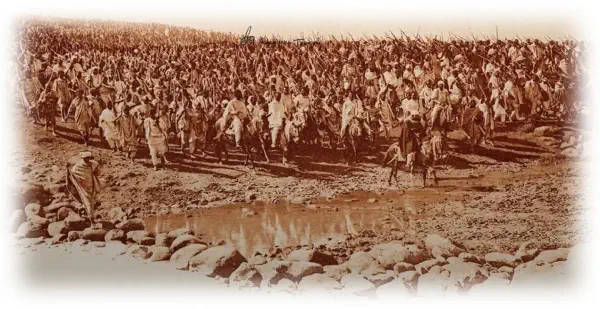
1 March 1896
Emperor Menelik II of Ethiopia crushes an Italian invasion army of 17,000 men, killing over 6,000. Ethiopia secures its independence and becomes a symbol of African resistance worldwide.Ndebele-Shona *Chimurenga*
1896–97
1896–1897
Spirit mediums mobilise Ndebele and Shona against the British South Africa Company. The rising is crushed, but the memory of the *Chimurenga* becomes a foundation myth for later Zimbabwean nationalism.Battle of Omdurman
1898
2 September 1898
An Anglo-Egyptian army under Kitchener meets the Mahdist army near Khartoum. In five hours, 11,000 Sudanese are killed against 48 British dead. The Mahdist state collapses, and Sudan falls under Anglo-Egyptian rule.Capture of Samori Ture
1898
September 1898
The Mandinka empire-builder Samori Ture, who had fought the French for sixteen years and relocated his entire state eastward, is captured in a surprise raid. His empire is dismantled and he dies in exile in 1900.Anglo-Boer War
1899–1902
1899–1902
Britain defeats the two Boer republics, incorporating them into the Union of South Africa in 1910. African hopes for a more liberal post-war order are dashed as racial segregation deepens.Herero and Nama Genocide
1904–07
1904–1907
After uprisings in German South West Africa, General von Trotha orders the extermination of the Herero. Between 75 and 80 per cent of the Herero are killed. The Nama suffer comparable losses in what is now considered the first genocide of the twentieth century.Majï Majï Rebellion
1905–07
1905–1907
A prophet, Kinjikitile Ngwale, unites over twenty ethnic groups in southern Tanganyika with sacred water promised to turn bullets to water. The German colonial army crushes the rising; up to 300,000 people die, mostly from famine caused by a scorched-earth campaign.Bambata Rebellion
1906
1906
A new poll tax provokes a Zulu uprising in Natal. The British colony suppresses the revolt after nearly two years; Bambata is killed and his body dismembered as a warning.Hut Tax Rebellion, Sierra Leone
1898
1898
The Temne and Mende rise against a five-shilling tax on houses. The British deploy troops from Lagos to crush the rebellion, which threatens Freetown itself.Italo-Turkish War and Annexation of Libya
1911–12
1911–1912
Italy seizes Tripolitania and Cyrenaica from the Ottoman Empire. Sanusiyya-led resistance continues for another twenty years, led by ‘Umar al-Mukhtār until his execution in 1931.National Congress of British West Africa
1920
March 1920
Lawyers, doctors and journalists from Nigeria, the Gold Coast, Sierra Leone and the Gambia meet in Accra and petition King George V for elective representation. The Colonial Office rejects their demands, but the Congress spearheads constitutional agitation for a decade.Kimbanguist Movement Begins
1921
1921
Simon Kimbangu, a Baptist catechist in the Belgian Congo, begins a healing ministry that turns into mass defiance. Followers refuse taxes and labour, and Kimbangu is imprisoned for life. Kimbanguism becomes one of the largest independent churches in Africa.Forced-Labour Scandal in Liberia
1930
1930
A League of Nations inquiry finds high government officials involved in shipping indigenous Liberians to Fernando Po as forced labourers. President King and Vice-President Yancy resign. Liberia narrowly escapes being placed under international administration.Italian Invasion of Ethiopia
1935
3 October 1935
Mussolini launches a full-scale invasion with aircraft, tanks and poison gas. The League of Nations fails to impose effective sanctions. Addis Ababa falls in May 1936, and Emperor Haile Selassie goes into exile, galvanising pan-African outrage and fuelling the independence movements.