Why Liberia and Ethiopia escaped the Scramble and what their survival cost them#
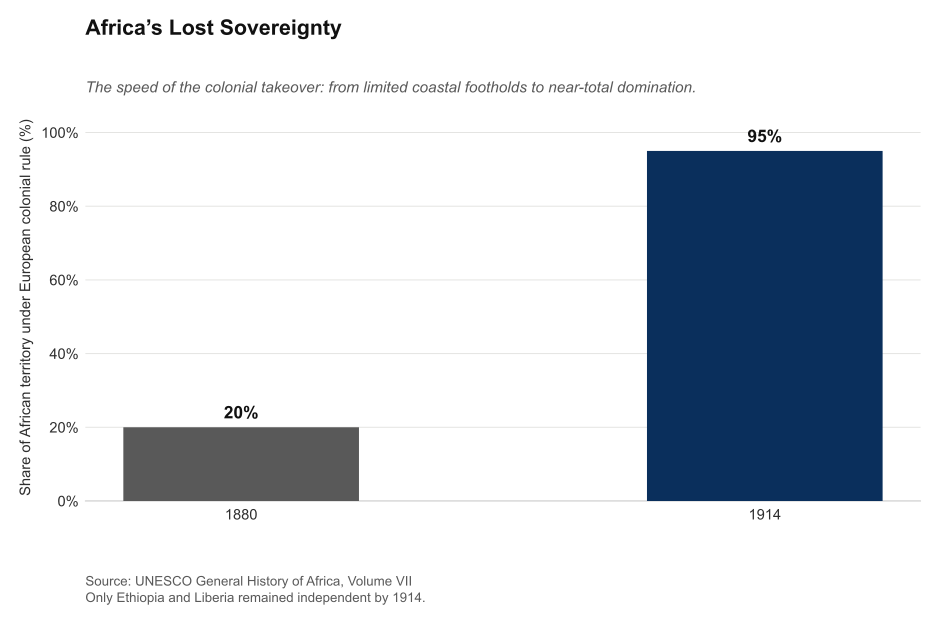
In the spring of 1891, Emperor Menelik II of Ethiopia dispatched a circular letter to the crowned heads of Europe. It was a remarkable document, at once a declaration of territorial ambition and a warning against encroachment. "I have no intention at all of being an indifferent spectator," Menelik wrote, "if the distant Powers hold the idea of dividing up Africa, Ethiopia having been for the past fourteen centuries an island of Christians in a sea of Pagans." He then defined his empire's borders—generously, to say the least—and concluded with a line that has echoed through the decades: "Ethiopia has need of no one; she stretches out her hands unto God." Five years later, his army shattered an Italian invasion at the battle of Adowa. Across the continent, the small West African republic of Liberia, founded by freed American slaves, watched the European scramble with mounting dread. It had no army to speak of, no modern arms, no powerful patron willing to guarantee its borders. It survived, but at a cost that hollowed out its sovereignty almost as thoroughly as formal colonization would have done. The two African states that preserved their independence were not anointed by fortune; they paid for it, in blood and treasure and pride, and their survival, however heroic, exposed the ruthless logic of the imperial order.
The warrior king and the arsenal of independence#
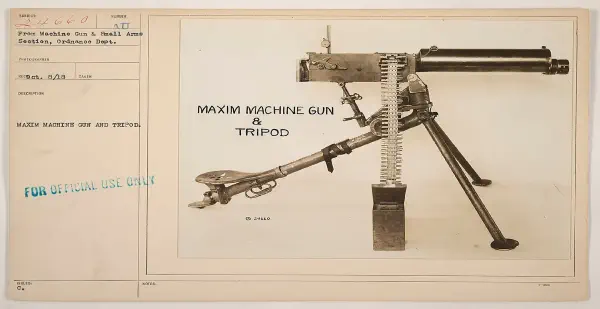
Menelik’s victory at Adowa was not a fluke. It was the product of a decade of meticulous preparation by a ruler who understood, perhaps better than any other African monarch, that survival in the age of the Maxim gun required the ruthless modernization of the state’s instruments of violence. While Samori Ture was fighting his lonely war in the west, Menelik was assembling an arsenal.
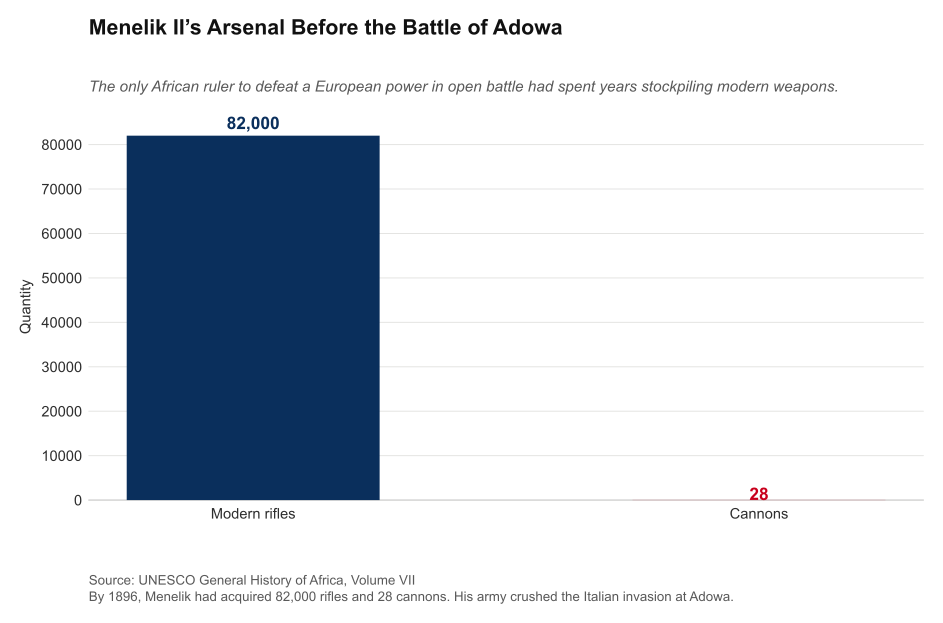
As king of Shoa, Menelik had spent the 1880s expanding southward and eastward into Oromo and Somali territories, using Italian-supplied firearms to build an empire that more than doubled the size of the Ethiopian state. The revenues from these conquests—ivory, gold, slaves, and tribute—were channelled into the purchase of modern weapons. Menelik was an astute shopper on the international arms market. He acquired Gras rifles from France, repeating rifles from Russia, and even, indirectly, weapons from Italy itself, whose government was simultaneously trying to reduce Ethiopia to a protectorate while its merchants sold the means of resistance. By 1895, when the Italian crisis came to a head, Menelik had assembled an arsenal of 82,000 modern rifles and 28 pieces of artillery.
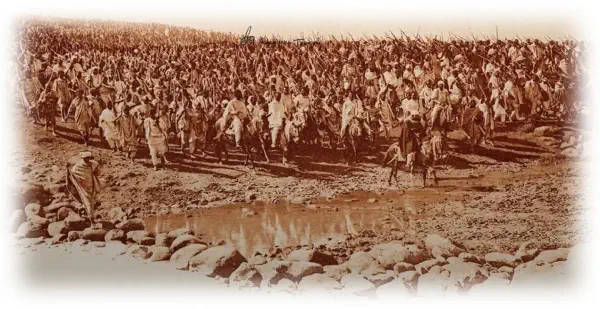
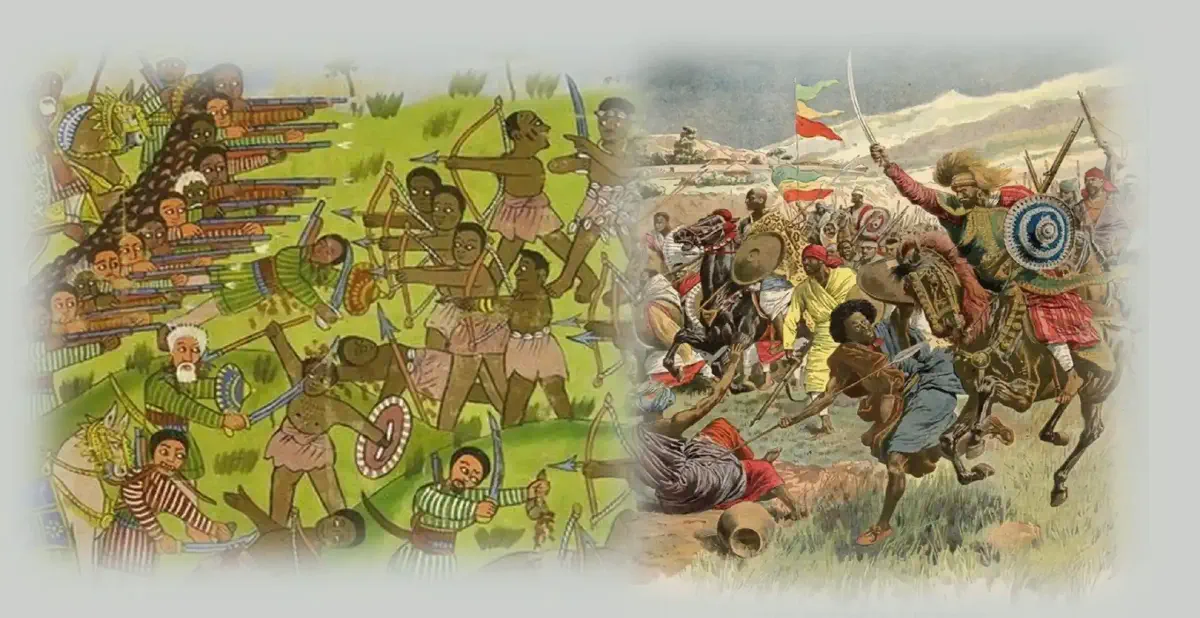
The General History of Africa records the images/africa-lost-sovereignty with a certain understated wonder. "He spoke from a position of strength," it observes of Menelik’s 1893 repudiation of the Treaty of Wuchale, "for he was by then in possession of 82,000 rifles and twenty-eight cannon." This was not a feudal levy armed with spears and antique muskets. It was one of the largest armies on the continent, equipped to fight a European enemy on something approaching equal terms. When the Italian expeditionary force under General Baratieri advanced into Tigre in early 1896, it encountered an Ethiopian host of perhaps 100,000 men, a substantial portion of whom carried weapons that were the equal of the Italians’ own.
The battle of Adowa, fought on 1 March 1896, was a catastrophe for Italy. The Italian force of 17,000 men, of whom 10,596 were Italian regulars and the remainder Eritrean auxiliaries, was routed with losses of over 6,000 dead, including 261 officers, and nearly 2,000 captured. Forty per cent of the fighting force was destroyed. It was the greatest defeat inflicted by an African army on a European power since Hannibal, and it sent a shockwave through the chancelleries of Europe. The peace treaty of Addis Ababa, signed in October 1896, annulled the Wuchale treaty and recognized "the absolute independence of Ethiopia."
Menelik’s stockpiling of modern weapons was the key to his victory, and the images/africa-lost-sovereignty tell the story with stark clarity: 82,000 rifles, 28 cannons, and a strategic patience that allowed him to choose the moment of battle. The Italian commander, by contrast, had no accurate maps and was moving through unfamiliar terrain, harried by a population whose loyalties lay firmly with the emperor. The General History notes that Menelik "had the support of the local population, whose patriotism had been intensified by the fact that the Italians had been expropriating Eritrean land for the settlement of their colonists." The Ethiopian victory was a triumph of arms, but it was also a triumph of political mobilization, the product of a ruler who had managed to unite the fractious nobility of the highlands behind a common cause.
The republic that bartered its territory#
If Ethiopia’s survival was a story of guns and national mobilization, Liberia’s was a story of paper and penury. Founded in 1822 by the American Colonization Society as a refuge for freed American slaves, Liberia had declared its independence in 1847. Its government was modelled on that of the United States, with a president, a legislature, and a constitution. Its ruling elite, the Americo-Liberians, numbered perhaps 20,000, a tiny minority of the total population, which included a diverse array of indigenous peoples who had little loyalty to the Monrovia government.
Liberia’s claim to territory was expansive but almost entirely theoretical. On paper, the republic stretched for 960 kilometres along the coast and some 400 kilometres inland, allegedly as far as the Niger River. In reality, the government’s authority extended only a few dozen miles beyond the coastal settlements, and its treasury was chronically empty. The Liberian state had no professional army worthy of the name, only a poorly trained militia and, after 1908, a Frontier Force of a few hundred men. It had no modern artillery, no navy beyond a couple of gunboats, and no capacity to defend the vast hinterland it claimed.
When the European scramble began in earnest in the 1880s, Liberia’s weakness was immediately apparent. Britain, which had long-standing commercial interests on the Liberian coast, annexed the Vai chiefdoms to Sierra Leone in March 1882. Liberia protested, dispatching a "Memorandum and Protest" to the nations with which it had treaty relations, but to no effect. The United States, to which the Liberians had looked for protection, advised acquiescence. In 1885, an Anglo-Liberian agreement fixed the boundary at the Mano River, to Liberia’s substantial disadvantage.
France was even more aggressive. In May 1891, French forces annexed the territory between the Cavalla and San Pedro rivers in south-eastern Liberia, exploiting the discontent of the local Grebo and Kru peoples with Monrovia’s trade policies. The Liberian government, "helpless and powerless," in the words of the General History, concluded an agreement in December 1892 that fixed the boundary with the Ivory Coast at the Cavalla River, ceding the entire Cavalla-San Pedro district and a large slice of the undefined hinterland. In return, France "relinquished her vague claims" to three ports on the Liberian coast that it had never effectively occupied.
The territorial haemorrhage continued. In 1907, President Arthur Barclay, acutely conscious of his country’s peril, travelled to London and Paris to seek guarantees for Liberia’s sovereignty. He was rebuffed. The French government drew up, "almost unilaterally," a boundary agreement that gave France a further slice of Liberian territory beyond the Makona River and committed Liberia to establish military posts on the new frontier—posts that the French would be allowed to occupy if the Liberian government proved incapable of garrisoning them itself. Barclay initially refused to sign, but was compelled to do so after the United States government, to which he had appealed, advised him that "if we rejected it, the French would likely make further encroachments and we would eventually suffer material loss of territory."
Britain, not to be outdone, insisted on acquiring the Kanre-Lahun district, which had been occupied by a British force from Sierra Leone in 1902. The matter was settled by an Anglo-Liberian treaty in January 1911, by which Britain retained the Kanre-Lahun district and ceded to Liberia a much less desirable territory in exchange for £4,000 in "compensation." By the time the Scramble was over, Liberia had lost roughly a third of the territory it had claimed on the eve of the partition. The General History’s verdict is blunt: "Liberia survived the British aggression but was mutilated and anguished."
The bankers take control#
Territorial loss was not the only cost of survival. Liberia’s chronic insolvency gave the European powers a second avenue of penetration, subtler but no less damaging. In 1871, the Liberian government had contracted a loan of £100,000 from British financiers on harsh terms. In 1906, it borrowed another £100,000. Both loans were secured against the customs revenues, which were the state’s only significant source of income. In 1912, a new loan of $1.7 million was contracted from European banks to redeem the earlier debts. The management of the customs was handed over to an International Receivership, composed of an American receiver-general and French, British, and German assistants. The Liberian government was left with the residual "internal revenue," which was largely consumed by the salaries of its own officials.
The First World War deepened the crisis. The withdrawal of German traders, who had handled roughly three-quarters of Liberia’s external commerce, caused a collapse of trade. The price of coffee, the country’ principal export, plummeted. The government, unable to pay its officials or service its debts, faced bankruptcy. In 1926, the American rubber magnate Harvey Firestone obtained a ninety-nine-year lease on up to a million acres in Liberia and a $5 million loan from the Finance Corporation of America, with the backing of the United States government. The loan was to be used to pay Liberia’s foreign debts, to construct roads, hospitals, and schools, and to develop the country’s infrastructure. The real effect was to place Liberia’s finances under American control, a condition that the United States, in the spirit of the Monroe Doctrine, was increasingly willing to enforce.
The Firestone deal was a bargain of desperation. It gave the American company effective control over Liberia’s fiscal policy, since the loan repayments consumed a large share of the government’s revenues. It tied Liberia’s economic development to the fortunes of a single commodity and a single foreign investor. And it opened the door to a new and more humiliating form of external intervention, which would reach its nadir in the forced labour crisis of the late 1920s.
The scandal and the League#
In 1929, reports began to circulate in the international press alleging that senior Liberian officials, including the vice-president, were involved in the recruitment and export of indigenous Liberian labourers to the Spanish island colony of Fernando Po. The practice was not formally slaving—the labourers were ostensibly contracted—but the conditions under which they were recruited, transported, and employed were indistinguishable from the slave trade that the European powers had, by treaty, long since abolished. The British government, which had long sought to weaken Liberia’s sovereignty as a means of protecting its own interests in Sierra Leone, seized on the scandal with enthusiasm.
President Charles D. B. King, in a moment of either reckless confidence or genuine misjudgment, appealed to the League of Nations to investigate the charges. The League dispatched a commission of inquiry under Dr. Cuthbert Christy, a British dentist. The Christy Commission, which conducted its investigation over four months in 1930, concluded that while no formal slave trading existed, "labour was wastefully and forcibly recruited for public works, private use and for export with the collaboration of the Liberian Frontier Force and high government officials." The report also found the general administration of the hinterland unsatisfactory and recommended that Liberia be placed under a "capable and warmhearted white administration."
The consequences were immediate and devastating. The British and American governments demanded the resignations of President King and Vice-President Allen Yancy. Both stepped down in early December 1930. The new administration of President Edwin Barclay faced a diplomatic crisis of the first order. Britain pressed for the establishment of an international governing commission over Liberia, which would have effectively ended its sovereignty. The League dispatched a second commission, which drew up a "Plan of Assistance" that would have installed foreign specialists as provincial commissioners and a "Chief Adviser" appointed by the League with sweeping powers over the Liberian government.
Barclay, who was perhaps the most able diplomat Liberia ever produced, managed to parry the threat. He accepted the principle of League assistance but rejected the specific proposals that would have surrendered Liberia’s sovereignty. The League, its attention increasingly absorbed by the Manchurian crisis and the rise of European fascism, eventually let the matter drop. A new agreement with the United States in 1935 restored Liberia’s fiscal autonomy, reducing the interest on the Firestone loan and guaranteeing that the cost of government would be the first charge on the country’s revenues. The Barclay administration had survived, but the price of survival had been the exposure of the Liberian state as a hollow shell, incapable of defending its own territory or controlling its own officials. The General History notes that Liberia’s survival "was more of a miracle than a reflection of its internal strength."
The Guns of 1935#
Ethiopia’s survival, which had seemed so triumphant in 1896, faced its ultimate test in 1935. The Italy of Mussolini, humiliated at Adowa, had not forgotten. The Duce craved revenge, and the establishment of a Fascist empire in East Africa became a central obsession of his regime. From the late 1920s, Italian policy shifted from peaceful penetration to the preparation for war. In 1933, the commander-in-chief of the Italian colonies, Marshal Emilio De Bono, received secret orders from Mussolini to prepare for an invasion. The following year, a border clash at the oasis of Wal Wal, deep inside Ethiopian territory, provided the pretext.
The diplomatic theatre that followed was a study in the bankruptcy of collective security. Emperor Haile Selassie, who had succeeded to the throne in 1930, appealed to the League of Nations, invoking the Covenant that Italy itself had signed. The League, after months of deliberation, imposed limited economic sanctions on Italy, but deliberately excluded oil, the one commodity that Mussolini could not do without. In December 1935, the British and French foreign ministers, Samuel Hoare and Pierre Laval, proposed a secret plan that would have ceded large parts of Ethiopia to Italy. When the plan leaked, Hoare was forced to resign, but the damage was done. The League had demonstrated that it would not act to protect an African state from a European predator.
The Italian invasion, launched on 3 October 1935, was an overwhelming display of modern military power. The Ethiopian army, though larger, was poorly equipped compared with the force it had faced in 1896. Haile Selassie’s efforts to modernize the state’s armed forces had advanced, but he had nothing to match the tanks, aircraft, and poison gas that the Italians deployed. The Italian commander, Marshal Badoglio, employed mustard gas with devastating effect, bombing hospitals, Red Cross units, and civilian villages in defiance of international law. The Ethiopian army was routed. Addis Ababa fell on 5 May 1936, and the Emperor fled into exile.
The conquest of Ethiopia was not, in the end, a victory for Italian arms so much as a demonstration of the powerlessness of the African state in a world system that did not recognize its right to exist. The League’s failure to protect Ethiopia was a turning point in the history of the colonial order. It exposed the hollowness of the principle of collective security and the depth of European racism. It convinced African nationalists, and the black diaspora, that the only security for African independence was African power. And it provided a generation of future leaders with a moment of radicalizing clarity.
The General History records the reaction of a young Ghanaian student then in London, Kwame Nkrumah. Seeing a placard declaring "Mussolini invades Ethiopia," Nkrumah later wrote, "At that moment it was almost as if the whole of London had suddenly declared war on me personally. For the next few minutes I could do nothing but glare at each impassive face wondering if these people could possibly realise the wickedness of colonialism, and praying that the day might come when I could play my part in bringing about the downfall of such a system. My nationalism surged to the fore; I was ready to go through hell itself, if need be, in order to achieve my object." The seed of Ghana’s independence, and of the African revolution that followed, was planted in that moment of fury.
The price of survival#
The two African states that kept their flags flying through the era of partition paid a heavy price. Ethiopia won its sovereignty on the battlefield in 1896, but it could not protect it in 1936. The Italian occupation, which lasted five years, was a brutal parenthesis that demonstrated the fragility of even the most celebrated African monarchy. Haile Selassie’s restoration in 1941, by British and Ethiopian forces, was a vindication, but it was also a reminder that Ethiopian independence was not entirely its own. The Emperor’s diplomatic triumph in securing the return of his throne was real, but it was won in the councils of the allies, not on an African battlefield. Ethiopia had survived, but it had learned that survival depended on the sufferance of powers whose interests were never aligned with its own.
Liberia’s experience was bleaker still. It survived the Scramble not through strength but through its very weakness, which made it useful as a buffer and a convenience. Its territory was carved away by its European neighbours. Its finances were taken over by foreign receivers. Its sovereignty was repeatedly threatened by the predatory diplomacy of Britain and France. It was saved, in the end, by the United States, which belatedly recognized that a formal European protectorate over Liberia would damage American commercial interests and offend the sensibilities of the African-American community. But the price of that protection was a dependence that rendered Liberian sovereignty largely nominal. The indigenous population, which had been excluded from political power by the Americo-Liberian elite, bore the brunt of the forced labour system and the economic extraction. When the independent African states emerged in the 1960s, Liberia was one of the poorest and most unequal societies on the continent.
The General History is not sentimental about the fate of the two survivors. "Granted the military weakness of Liberia, and, above all, her internal dislocation, due partly to her own economic weakness and the active interference of Europeans in her internal affairs," it concludes, "the surprising fact is not that Liberia survived anguished and emaciated, but that she survived at all." The same might be said of Ethiopia, which survived the Scramble, fell briefly to Fascist aggression, and rose again, but at a cost that is still being reckoned.
The survival of Ethiopia and Liberia was a source of hope and inspiration for Africans across the continent and across the diaspora. The victory at Adowa, the image of a black king addressing the crowned heads of Europe as an equal, the very existence of a Christian African empire of great antiquity—these were talismanic symbols in a world that denied the very humanity of the African. The General History observes that the Ethiopianist movement in South Africa, the pan-African circles of London and New York, and the nascent nationalist organizations in West Africa all drew sustenance from the fact that "Ethiopia shall stretch forth her hands unto God." The survival of the two independent states was a political fact, but it was also a psychological resource, a standing refutation of the ideology of white supremacy that underpinned the colonial project.
Yet the two survivors were also object lessons in the limits of independence under the conditions of the global imperial order. They were free, but they were not equal. Their sovereignty was recognized, but it was not respected. Their internal affairs were scrutinized, criticized, and manipulated by powers that would not have tolerated similar treatment in return. The banker, the bishop, and the king had each, in their own way, preserved a measure of African autonomy in a world determined to extinguish it. But the price of that preservation had been high, and the legacy of that price would shape the post-colonial order in ways that the heroes of 1896 could not have anticipated. The independence that was so fiercely defended in the age of the Scramble would, in the end, have to be won all over again, and it would be won not by kings or republics but by the peoples of the continent, whose patience with their own rulers would prove, in the fullness of time, to be as limited as their patience with the colonizers. The unfinished conquest had left a continent that was nominally free but structurally unfree, and the struggle to transform that freedom into something more than a diplomatic formality continues to this day.