The hidden history of the anti-colonial struggle fought not with guns, but with new gods, old traditions, and the written word#
In July 1905, a peasant named Kinjikitile Ngwale began to preach a message of extraordinary power in the Matumbi highlands of southern Tanganyika. He had been possessed, he said, by the spirit of Hongo, a snake divinity, and had been given a sacred water called maji that would turn the bullets of the Germans into water. The message spread along the caravan routes with the speed of a bush fire. Within weeks, messengers carrying vials of the sacred water had mobilized more than twenty different ethnic groups across an area of some 26,000 square kilometres. When the rising erupted in the last week of July, its scale astonished the German authorities. The Majï Majï rebellion, as it came to be known, was crushed with a brutality that killed an estimated 250,000 to 300,000 people, mostly through the scorched-earth famine that followed the military campaign. Kinjikitile and his assistant were hanged on 4 August. But the idea that had animated the rebellion—that Africans of different languages and chiefdoms could unite against a common oppressor—did not die with its prophet. It seeped into the soil of Tanganyikan politics and lay dormant for a generation, until it re-emerged in the mass nationalism of the 1950s. The Majï Majï rebellion was a military failure of the most catastrophic kind. It was also the first stirring of a political consciousness that would, in time, sweep the continent.
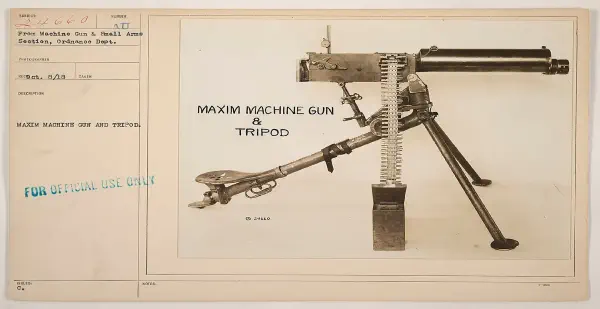
The conquest of Africa was not complete when the last independent kingdom fell. The colonial state was a brittle thing, thinly spread, dependent on African intermediaries whose loyalty was never absolute. The physical occupation was achieved, but the minds and spirits of the colonized remained unconquered. In the decades between the Scramble and the Second World War, a new kind of resistance emerged, one that did not rely on spears and muskets but on the cultural and intellectual resources that Africans had managed to preserve, adapt, and invent. The prophet who promised divine protection, the Christian convert who founded an independent church, the newspaper editor who denounced the abuses of the district commissioner in elegant Victorian prose—these were the new foot soldiers of a struggle that was fought in the realm of ideas, symbols, and collective identity. The colonizers had the Maxim gun; the colonized, increasingly, had the pulpit, the hymn book, and the printing press.
The prophets of revolt#
African traditional religion had always been a resource for political mobilization. Shrines, cults, and spirit mediums served as centres of authority that often transcended the boundaries of individual chiefdoms. The colonial assault on these institutions—the burning of shrines, the denigration of ancestor worship, the replacement of traditional courts with European magistrates—was felt as an attack on the moral order itself. It was therefore natural that the earliest and most potent forms of anti-colonial resistance were framed in the language of religious renewal.
The Mwari cult in Southern Rhodesia provides a classic example. The Shona people had for centuries consulted the oracle of Mwari, a high god whose voice was mediated by priests at a network of shrines in the Matopo hills. When the British South Africa Company imposed its hut tax, its forced labour, and its arbitrary justice in the 1890s, the priests of Mwari became the organizers of rebellion. The Chimurenga of 1896–97, which united Ndebele and Shona against the white settlers, was coordinated by spirit mediums such as Mukwati, Kagubi, and the female prophet Nehanda. The mediums promised that Mwari would turn the white man’s bullets into water, a claim remarkably similar to Kinjikitile’s promise in Tanganyika a decade later. The rebellion was suppressed—Nehanda was hanged, Kagubi died in custody—but the Mwari cult survived, its authority if anything enhanced by its association with resistance. When the nationalist movement emerged in the 1950s, its leaders consciously invoked the memory of the Chimurenga.
The Majï Majï rebellion was the most spectacular of the prophetic uprisings, but it was not an isolated phenomenon. The General History of Africa catalogues a wave of such movements across the continent: the Mahdist state in the Sudan, which held out against the British for fourteen years and inspired millenarian revolts well into the twentieth century; the Sanusiyya brotherhood in Libya, which sustained a guerrilla war against the Italians from 1911 to 1932; the Nyabingi cult in the Rwanda-Uganda borderlands, which defied three colonial powers for nearly two decades; the Mumbo cult in western Kenya, which proclaimed that "all Europeans are your enemies" and promised their imminent disappearance. Each of these movements was, in its own way, an attempt to create a new kind of political community, one that transcended the ethnic divisions that the colonizers exploited so effectively. The prophets did not speak for a particular chiefdom or lineage. They spoke for a people united by suffering and by a common enemy.
The efficacy of these movements was, in military terms, negligible. The sacred water did not stop the German machine guns. The Mahdist army was annihilated at Omdurman. The Sanusiyya fighters were eventually bombed and starved into submission. But the witness of the prophets served a different purpose. It preserved, in the darkest years of the colonial occupation, a memory of defiance. The names of the martyrs—Kinjikitile, Nehanda, the Mahdi—became talismans for later generations. The colonial state, for all its strength, could never entirely extinguish the spiritual authority that the prophets had claimed.
The independent church as a place to feel at home#
If the prophetic movements drew on the resources of traditional religion, a second wave of religious resistance drew on the very faith that the missionaries had brought. By the early twentieth century, the mission churches were well established across much of the continent. Their schools had produced a generation of Africans literate in European languages and conversant with the Bible. But the mission churches were also deeply compromised. They were instruments of colonial culture, teaching that African customs were heathen, African music was demonic, and African political authority was illegitimate. African Christians who accepted the faith found themselves alienated from their own communities without being fully accepted into the white-dominated churches. The response was to found their own.
The independent church movement, which began in South Africa in the 1880s with the secession of Nehemiah Tile from the Methodist mission, had become a continent-wide phenomenon by the inter-war period. In the Belgian Congo, Simon Kimbangu, a Baptist catechist, began a healing ministry in 1921 that rapidly attracted thousands of followers. Kimbangu explicitly challenged the colonial state: his followers refused to pay taxes, withdrew their labour from European enterprises, and chanted the slogan "Congo for the Congolese." The Belgian authorities, terrified of a mass uprising, arrested Kimbangu in September 1921, condemned him to death, and, under international pressure, commuted the sentence to life imprisonment. He died in prison in 1951, having spent thirty years in solitary confinement. Kimbanguism did not die with him. It went underground, spreading through the villages of the lower Congo and across the border into French territory and Angola. By the time of independence, it was the largest independent church in Central Africa, with a membership in the millions.
In West Africa, a parallel movement took shape around the figure of William Wadé Harris, a Liberian prophet who walked through the Ivory Coast and the Gold Coast between 1910 and 1915, preaching a message of Christian renewal and calling on his converts to abandon traditional charms. Harris was deported by the French authorities, but his movement, the Église Harriste, survived his expulsion and became one of the largest churches in the Ivory Coast. In Nigeria, the "Aladura" or prayer churches, which emphasized healing, prophecy, and a distinctively African style of worship, proliferated from the 1920s onward. In South Africa, the Ethiopianist movement—named for the biblical prophecy that "Ethiopia shall stretch out her hands unto God"—combined Christian theology with a demand for African self-government in church and state. The General History notes that by 1932, there were 320 independent African churches in South Africa alone. A decade later, the number had surpassed 800.
The independent churches were not primarily political organizations. They did not issue manifestos or field candidates. But their social and psychological significance was immense. They provided "a place to feel at home," in the phrase of the Kenyan historian B. A. Ogot, for Africans who had been dispossessed and disoriented by the colonial order. They restored dignity to African cultural forms, incorporating drumming, dancing, and traditional styles of worship into Christian liturgy. They created arenas of leadership for African men and women who were excluded from authority in both the colonial state and the mission churches. And they bore witness, in their very existence, to the proposition that Africans could govern their own spiritual affairs without European tutelage. In a colonial situation that denied Africans any meaningful autonomy, the independent church was a zone of freedom. The colonial authorities understood this perfectly well, which is why they persecuted the Kimbanguists, monitored the Ethiopianists, and suppressed the Watchtower movement wherever it appeared. The independent church was a school for self-rule, and its graduates would go on to populate the leadership of the nationalist movements that emerged after 1945.

The pen and the press#
The prophetic movements and the independent churches reached the masses. A third strand of anti-colonial resistance reached, in the first instance, only a tiny elite. This was the world of the African lawyer, the African journalist, the African clergyman who had been educated at a mission school and sometimes at a European or American university. These men—and they were, with vanishingly few exceptions, men—were products of the colonial system, fluent in the language of the colonizer, versed in English or French law and literature. Their world was small: the coastal towns of West Africa, the administrative centres of East and Southern Africa, the occasional student in London or Paris. But their influence was disproportionate. They were the first Africans to articulate a critique of colonialism in terms that the colonial authorities could not dismiss as the ravings of witch-doctors. They were the first to demand, not the return of some idealized pre-colonial past, but a place at the table of the modern world.
Edward Wilmot Blyden, the Liberian-born intellectual who spent much of his career in Sierra Leone and Lagos, was the pioneering figure. In a series of books and lectures from the 1880s onward, Blyden argued that Africans had a distinctive civilization, rooted in their communal institutions and spiritual values, which was in some respects superior to the acquisitive individualism of the West. He called for the establishment of an African university that would teach African languages and Islamic culture alongside the European classics. He insisted that Christianity as practised by the white missionary had been corrupted by racism and that Africans must reclaim the faith for themselves. Blyden’s vision of a regenerated Africa, proud of its own heritage and equal to any nation, was an inspiration to a generation of intellectuals. His influence can be traced through the pages of the West African press, the speeches of the early nationalist leaders, and the sermons of the independent church movement.
The press was the great weapon of this early elite. By the turn of the century, a network of African-owned newspapers stretched along the West African coast: the Lagos Weekly Record, the Gold Coast Leader, the Sierra Leone Weekly News, the African Times. These papers were small, often short-lived, heavily dependent on the patronage of a few wealthy subscribers. But they provided a platform for sustained criticism of colonial policies. They denounced the land bills that threatened African property rights. They exposed the corruption of colonial officials. They demanded African representation on legislative councils and access to the higher ranks of the civil service. They celebrated African achievement, chronicling the careers of the first African doctors, lawyers, and bishops. And they nurtured a sense of a common West African identity that transcended the boundaries of the individual colonies.
The Aborigines’ Rights Protection Society, founded in the Gold Coast in 1897, was the institutional expression of this press-and-petition politics. When the British proposed a land bill that would have transferred control of "waste lands" to the colonial government, the society organized a delegation to London, briefed sympathetic members of parliament, and succeeded in having the bill withdrawn. It was the first major victory for African constitutional agitation, and it demonstrated that a well-organized pressure group could, on occasion, defeat the colonial administration on its own legal ground. The society’s methods—the petition, the delegation, the pamphlet, the newspaper campaign—would become the standard repertoire of African nationalist politics for the next half century.
The National Congress of British West Africa, which met in Accra in March 1920, was the high-water mark of this elite, inter-territorial politics. Delegates from Nigeria, the Gold Coast, Sierra Leone, and the Gambia gathered to draft a petition to the King-Emperor. The congress was dominated by lawyers and businessmen: J. E. Casely Hayford of the Gold Coast, author of Ethiopia Unbound and the most distinguished West African intellectual of his generation; Dr. Akiwande Savage of Nigeria; F. W. Dove of Sierra Leone. They demanded elected representation on legislative councils, a West African court of appeal, a university, and the Africanization of the senior civil service. They were careful to affirm their "unfeigned loyalty" to the Crown. They were asking, in effect, for the rights of British subjects to be extended to educated Africans, and for the colonies to be governed with African participation rather than by executive fiat.
The Colonial Office received the delegation courteously and then ignored its recommendations. The governor of Nigeria, Sir Hugh Clifford, dismissed the congress as a "self-appointed congregation of African gentlemen" who did not speak for the masses. The powerful paramount chief of Akyem Abuakwa, Nana Sir Ofori Atta, publicly dissociated the traditional rulers of the Gold Coast from the congress’s demands. The congress limped on through the 1920s, holding sessions in Freetown, Bathurst, and Lagos, but its influence steadily waned. Casely Hayford’s death in 1930 deprived it of its most effective spokesman, and by the mid-1930s it had effectively ceased to exist.
Yet the congress was not a failure. It had forced the colonial authorities to introduce elective representation, if only on a limited franchise, in Nigeria (1923), Sierra Leone (1924), and the Gold Coast (1925). It had created networks of communication and solidarity among the educated elite of four British colonies. It had established a political language—the language of citizenship, representation, and rights—that would be taken up by the next generation. And it had demonstrated, as the prophetic movements could not, that Africans were capable of organizing on a trans-territorial scale and challenging the colonial state on its own terms. The congress was the bridge between the resistance of the chiefs and the nationalism of the masses.
From elite to mass: the youth movements of the inter-war years#
The economic catastrophe of the Great Depression transformed the political landscape. The commodity prices that sustained the colonial economy collapsed. African farmers, who had been integrated into the cash economy through taxation and the forced cultivation of export crops, saw their incomes evaporate. The educated clerks and teachers who had been the backbone of the congress found their salaries cut or their jobs abolished. The returned soldiers who had fought for the Allied powers in the First World War discovered that their service counted for nothing in the colonial order. In the Gold Coast, the cocoa farmers organized a series of hold-ups, refusing to sell their crops until the European firms raised their prices. In Lagos, a young journalist named Nnamdi Azikiwe began publishing the West African Pilot, a newspaper that blended nationalist agitation with a populist style that appealed to the growing class of urban workers and market women. In Sierra Leone, I.T.A. Wallace Johnson, a trade unionist who had studied in Moscow, founded the West African Youth League, which organized dock workers and railwaymen and attacked the colonial administration with a virulence that would have been unthinkable a decade earlier.
The youth movements that emerged across British West Africa in the 1930s—the Nigerian Youth Movement, the Gold Coast Youth Conference, the Young Senegalese Club—were a new phenomenon. Their leaders were younger, less deferential, and more willing to mobilize mass support than the elderly lawyers who had dominated the National Congress. They demanded universal suffrage, free primary education, and the rapid Africanization of the civil service. Some of them, like Wallace Johnson, flirted with socialism and pan-Africanism. Their rhetoric was sharper, their tactics bolder, their vision of the future more expansive. They did not seek the abolition of colonial rule, not yet. But they sought its radical transformation, and they were prepared to organize strikes, boycotts, and mass demonstrations to achieve it.
In East Africa, the same pattern of youth-led, mass-oriented politics was emerging, though under far more repressive conditions. Harry Thuku, a young clerk in Nairobi, founded the East African Association in 1921, uniting Gikuyu, Luo, and Maasai in a campaign against forced labour, the kipande pass system, and the alienation of African land. Thuku was arrested in 1922, and the protest outside the police station where he was held ended in a massacre: twenty-one Africans were shot dead by colonial police. Thuku was deported, and his association fragmented. But the Kikuyu Central Association, which succeeded it in 1924, kept the flame of protest alive, sending Jomo Kenyatta to London in 1929 to present a petition on the land question. Kenyatta would remain in Britain for the next sixteen years, studying, writing, and building connections with the pan-African and anti-colonial movements. When he returned to Kenya in 1946, he was no longer the young secretary of a local ethnic association. He was a nationalist leader of continental stature.
The youth movements of the inter-war period did not achieve their immediate goals. The colonial administrations were too strong, the African electorate too small, the economic leverage of the colonized too limited. But the movements created something more durable than any legislative victory. They created a generation of leaders who had learned the skills of political organization, the disciplines of public debate, and the arts of mass mobilization. They created newspapers and parties and trade unions that would provide the institutional framework for the mass nationalism that erupted after 1945. And they created a political consciousness that was no longer bounded by the ethnic group or the colonial territory but aspired to an African identity that was modern, proud, and determined to be free.
The legacy of spiritual and intellectual resistance#
The anti-colonial struggle was not fought only on the battlefield. It was fought in the shrines of the Mwari cult and the churches of the Kimbanguists, in the newsrooms of the Lagos Weekly Record and the debating halls of the National Congress of British West Africa. The prophets who promised divine deliverance, the preachers who founded independent congregations, the journalists who exposed colonial abuses, the lawyers who drafted petitions to the King-Emperor—these were the pioneers of a struggle that would culminate, half a century later, in the independence of dozens of new nations.
Their methods were different from those of the military resisters, but their goal was the same: the recovery of African dignity and autonomy. The Majï Majï rebels who marched against German machine guns and the West African lawyers who argued for elective representation were engaged in a common project, even if they would not have recognized each other as allies. Both were asserting, in their own ways, the right of Africans to control their own destiny. Both were demonstrating, to themselves and to the world, that the colonized were not passive objects of European rule but active agents of their own history.
The colonial state, for all its strength, could never entirely silence these voices. The prophet could be hanged, the independent church leader imprisoned, the newspaper editor seduced or deported. But the ideas they had articulated could not be erased. They circulated in the mission schools, in the barracks of the colonial army, in the marketplaces of the coastal towns, in the congregations of the independent churches. They were carried by migrant labourers returning from the mines to their villages, by students returning from their studies abroad, by the pamphlets and newspapers that passed from hand to hand in defiance of the colonial censors. The conquest of Africa, which had seemed so complete in 1914, was beginning to unravel, not because the colonized had acquired better weapons, but because they had acquired a new sense of themselves. The prophet, the preacher, and the press had created a political consciousness that no amount of coercion could extinguish, and the day would come when that consciousness would demand the surrender of the colonial state itself.

Conclusion#
The period between the two world wars was the high noon of colonialism in Africa, but it was also, paradoxically, the seedtime of its destruction. The military resistance of the Scramble era had been crushed. The colonial state seemed impregnable. Yet beneath the surface of colonial order, a new kind of politics was taking shape. It was a politics that drew on the deepest resources of African culture—the religious imagination, the communal ethic, the oral tradition—and fused them with the borrowed instruments of the colonizer: the Christian Bible, the English language, the printing press, the legal petition. The hybrid that emerged was something genuinely new: an African modernism that was neither a rejection of the West nor a capitulation to it but a selective appropriation of its tools for the purposes of liberation.
The prophets of Majï Majï and the priests of Kimbangu, the lawyers of the National Congress and the youth leaders of the 1930s, did not live to see the independence they had laboured for. Some died in prison, some in exile, some in obscurity. But their work was not in vain. They had created a language of protest, a tradition of organization, and a network of solidarity that would be taken up by the next generation. When the Second World War shattered the prestige of the colonial powers and unleashed the forces of anti-colonial nationalism across Asia and Africa, the new generation of leaders—Nkrumah, Azikiwe, Kenyatta, Senghor—did not have to start from nothing. They inherited a rich legacy of intellectual, spiritual, and political resistance, forged in the decades when the struggle had seemed hopeless. The prophet, the preacher, and the press had kept the flame alive, and when the time came, it was a fire that would consume empires.