How explorers, missionaries, and a conference room in Berlin delivered a continent without firing a shot#
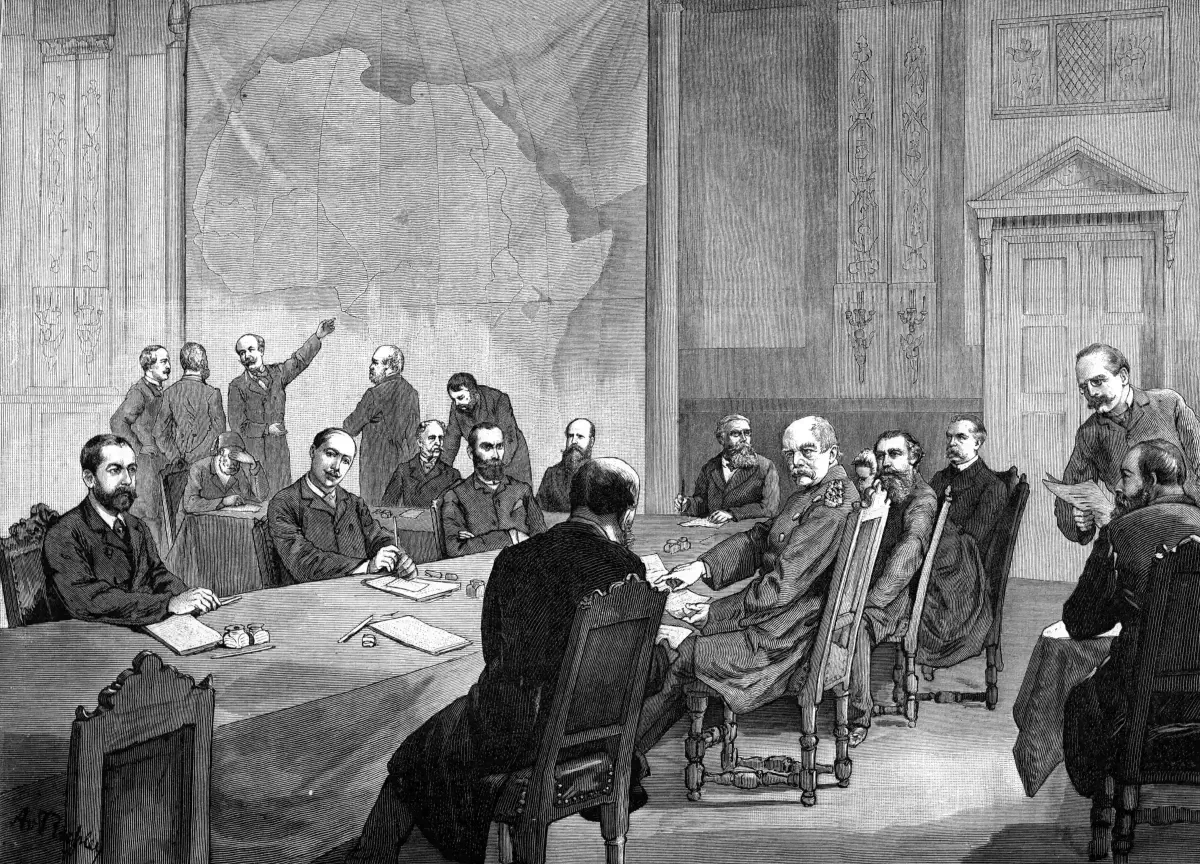
In February 1885, the General Act of the Berlin West Africa Conference was signed by fourteen European powers. Its 38 articles regulated free trade on the Congo and Niger rivers and laid down quaintly bureaucratic rules for future territorial claims. Not a single African ruler was in the room. By the time the delegates packed their trunks, they had invented a legal language—spheres of influence, effective occupation, hinterland—that would, within a generation, extinguish the sovereignty of nearly every African state. The continent was not so much conquered as legally rewritten, and the pens that did the rewriting were guided by explorers and missionaries who had spent decades mapping not just the rivers and mountain passes but the political fissures of the societies that lived along them.
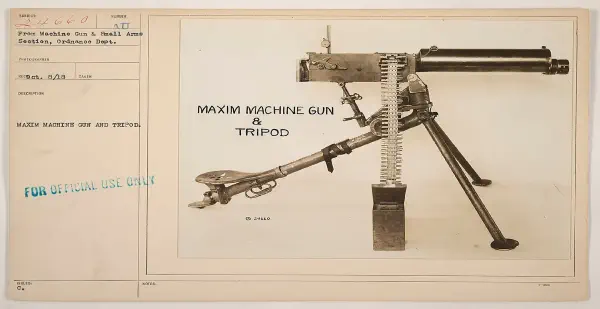
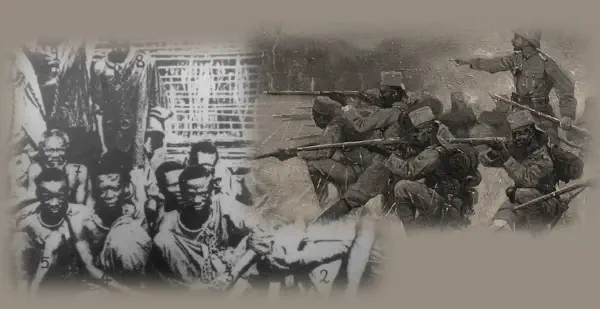
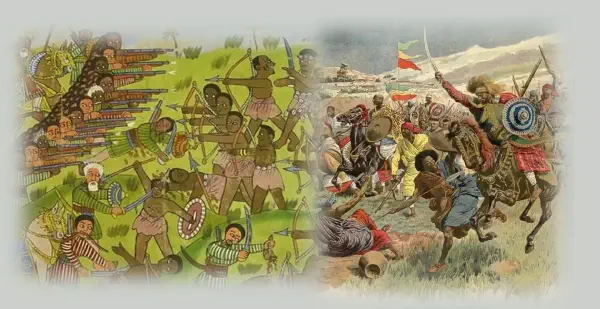
The conquest of Africa is often imagined as a series of dramatic military campaigns: lines of askaris advancing through the bush, cavalry charges against Maxim guns, the sack of royal palaces. Those campaigns were real and bloody, but they were the final act of a drama whose first scenes were played out in libraries, mission stations, and the negotiating halls of European capitals. The true conquest of Africa began with the accumulation of knowledge and the fabrication of paper claims. Without that preparatory work, the military victories would have been impossible, or at least far more costly. The Scramble for Africa was, above all, an information war, and it was won by the side that knew the map.
The Intelligence Asymmetry#
By the 1870s, European knowledge of Africa had reached a tipping point. The travels of men like David Livingstone, Henry Morton Stanley, and Savorgnan de Brazza had filled in the blank spaces on the map. The Niger River, the Great Lakes, the Congo basin, the upper Zambezi—all had been traced, sounded, and reported back to the geographical societies of London, Paris, and Brussels. European governments and private investors could now assess the commercial and strategic value of the interior with reasonable precision. They knew where the navigable waterways were, which kingdoms controlled the trade routes, and where resistance was likely to be fierce or light.
African rulers had no equivalent intelligence network. They remained largely unaware of the scale of European industrial power, the intensity of inter-imperial rivalries, or the speed with which European military technology was advancing. The General History of Africa, Volume VII emphasizes this asymmetry bluntly: "thanks to the activities of European explorers and missionaries, Europeans were by 1880 far more knowledgeable about Africa and its interior... than Africans were about Europe." This was not a neutral exchange of information. It was a one-way flow that systematically empowered the invaders and left the invaded vulnerable to surprise.
The explorers themselves were often transparent instruments of imperial ambition. Henry Morton Stanley, the Welsh-born journalist who famously tracked down Livingstone, was hired by King Leopold II of Belgium in 1879 to establish stations along the Congo River. Stanley’s mission was framed as humanitarian and scientific, but its real purpose was to stake a territorial claim for Leopold’s private venture, the International African Association. Over five years, Stanley signed more than 400 treaties with local chiefs, each of which, in his own words, transferred sovereignty to the association. The chiefs, who had no concept of European treaty law, believed they were granting hospitality or trading rights. Leopold, meanwhile, presented the treaties to other European powers as proof of his legal claim to the entire Congo basin.
Savorgnan de Brazza performed a similar service for France. In 1880, he concluded a treaty with Makoko, a chief of the Bateke people, which placed a vast territory on the north bank of the Congo under French protection. Brazza’s treaty was a direct challenge to Leopold’s ambitions and a major factor in precipitating the Berlin Conference. The treaty was signed in a language Makoko could not read, under terms he could not possibly have understood. Yet under European international law, it was binding. The map of Central Africa was being redrawn not by armies but by signatures on pieces of paper that one party had no means of interpreting.
The Missionary as Vanguard#
Explorers provided the geographic intelligence; missionaries provided the cultural and psychological penetration. The nineteenth-century missionary movement was animated by genuine religious zeal, but it was also, in practice, a form of imperial reconnaissance. Mission stations were the first permanent European settlements in many parts of the interior. They gathered detailed knowledge of local languages, political structures, and social tensions. They also, crucially, lobbied their home governments for annexation.
The General History notes that "most missionaries were of the firm persuasion that if there was to be European intervention, then it should come from their own countries." They saw colonial rule as the only effective means to suppress the slave trade, end internecine warfare, and open the continent to Christianity and commerce. In East Africa, missionaries actively urged the British government to declare a protectorate over Uganda to save the nascent Christian community from Muslim and traditionalist rivals. In Central Africa, the Scottish missionary David Livingstone’s call for "Christianity, commerce, and civilisation" became a slogan for imperial expansion. In South Africa, the London Missionary Society’s John Mackenzie campaigned tirelessly for British protection of Tswana territories against Boer encroachment, providing the diplomatic ammunition for the eventual establishment of the Bechuanaland Protectorate.
But the missionaries’ most profound impact was on the internal cohesion of African societies. Their preaching attacked the spiritual and ritual foundations of chiefly authority. Ancestor cults were denounced as heathenism, royal shrines as idolatry, initiation rites as barbarism. In Madagascar, the destruction of the royal sampy (charms) by Christian converts in 1869 shattered the ideological basis of the Merina monarchy. In Buganda, the conversion of young pages and chiefs to Christianity and Islam created competing factions at the very heart of the kingdom, weakening the kabaka’s ability to resist British encroachment. The General History observes that missionary activity "struck at the very roots of African society and called on the different classes for appropriate adjustment." That adjustment, more often than not, favored the Europeans.
Mission schools produced the first generation of Africans literate in European languages. That literacy was a double-edged sword. It created a corps of interpreters, clerks, and catechists who were indispensable to the colonial enterprise. It also created a class of men who were culturally alienated from traditional authority and who, at least initially, saw colonialism as a progressive force. Tiyo Soga, the first African ordained by the United Presbyterian Church, described his Xhosa countrymen as "poor infatuated countrymen" and welcomed British rule as "the future salvation of my countrymen, both in a physical and moral point of view." Such sentiments were not uncommon among the early mission-educated elite across the continent. They provided colonialism with a veneer of African consent, even as the vast majority of the population resisted or endured.
The Berlin West Africa Conference: The Rules of the Game#
The diplomatic scramble that culminated in the Berlin Conference was triggered by the collision of Leopold’s Congo ambitions with French and Portuguese claims. Portugal, which had ancient coastal holdings in Angola and Mozambique, proposed an international conference to settle the Congo dispute. The German chancellor, Otto von Bismarck, seized the initiative and convened the meeting in Berlin, not out of a particular interest in Africa but to assert Germany’s status as a major European power and to forestall a Franco-British war over African spoils.
The conference sat from November 1884 to February 1885. Its main achievement was the General Act, which established a framework for future European annexations in Africa. The document contained three crucial provisions. First, the Congo basin was declared a free-trade zone, with free navigation for all nations on the Congo and Niger rivers. This was a victory for British commercial interests and a way of ensuring that no single power monopolized access to the interior. Second, the conference recognized Leopold’s International Association as the sovereign government of the Congo Free State, a vast territory of 2.3 million square kilometers that Leopold would rule as his personal fiefdom. Third, and most consequential, the General Act stipulated that any future annexation of African coastlines must be "effectively occupied" and formally notified to other signatory powers.
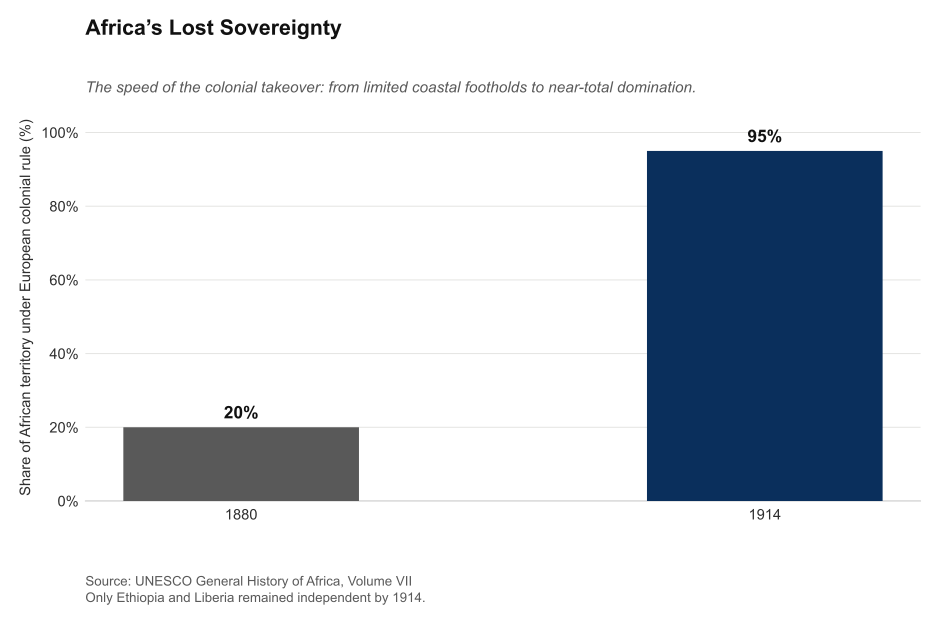
This last provision, the doctrine of effective occupation, is often misunderstood. It did not mean that Europe would now refrain from seizing African territory; it meant the opposite. It meant that paper claims based on ancient treaties or discovery were no longer sufficient. A power that wanted to assert sovereignty over an African territory had to demonstrate real administrative control on the ground. The immediate effect was to accelerate the Scramble, as each power raced to convert its paper spheres of influence into actual occupation before its rivals could do the same. What followed was not a peace conference but a starter’s pistol.
The General Act also gave birth to the notorious "hinterland doctrine." If a European power occupied a stretch of coast, it could claim the interior behind it, often to an unlimited distance, until it met another European claim. This doctrine was a legal absurdity, as the British prime minister, Lord Salisbury, himself acknowledged: "The modern doctrine of Hinterland, with its inevitable contradictions, indicates the uninformed and unstable condition of international law as applied to territorial claims resting on constructive occupation or control." Yet it was precisely the legal basis on which most of Africa was partitioned. The map was drawn in straight lines from the coast, cutting through watersheds, language groups, and political boundaries that had existed for centuries.
The Treaty Industry#
With the rules established, the paper partition began in earnest. Between 1885 and 1900, hundreds of treaties were signed between European agents and African rulers. Some were straightforward commercial agreements. The great majority were political, transferring sovereignty, land, or mineral rights in exchange for promises of protection, gifts of arms, or annual stipends. The methods used to obtain them ranged from deliberate deception to outright forgery.
The British proconsul Frederick Lugard, who would later become the governor-general of Nigeria, was disarmingly candid in his private diary about the treaties he negotiated with African chiefs: "No man if he understood would sign it, and to say that a savage chief has been told that he cedes all rights to the company in exchange for nothing is an obvious untruth. If he has been told that the company will protect him against his enemies, and share in his wars as an ally, he has been told a lie." Lugard’s own treaties with the kabaka of Buganda in 1890 and 1892 were imposed after a British Maxim gun had decided the outcome of the religious wars in the kingdom. Mwanga, the kabaka, had previously instructed his ambassadors: "I do not want to give them my land." The treaties made him a British puppet.
The Rudd Concession of 1888 is perhaps the most famous example of a fraudulent agreement. Charles Rudd, a business associate of Cecil Rhodes, obtained a monopoly on mineral rights in Matabeleland and Mashonaland from King Lobengula of the Ndebele. The negotiations were lubricated by the presence of the missionary John Moffat, who posed as a neutral adviser to the king. Moffat introduced Rudd and his companions as "honourable and upright men." Lobengula signed the concession in exchange for £100 a month and a thousand rifles. He believed he was granting a limited mining concession; the document, as interpreted by Rhodes and the British government, transferred sweeping economic and territorial rights. When Lobengula discovered the deception, he dispatched envoys to Queen Victoria to repudiate the agreement and ordered the execution of the induna who had counselled him to sign. It was too late. Rhodes had already secured a royal charter for his British South Africa Company, which proceeded to occupy Mashonaland in 1890 and crush the Ndebele kingdom three years later.
In the Niger Delta, the British consul Harry Johnston used a different tactic. King Jaja of Opobo, one of the wealthiest and most powerful merchants of the oil rivers, had refused to submit to British trade regulations and had sent a delegation to the Foreign Office in London to protest. Johnston, realizing that Jaja could not be defeated in open battle without significant cost, invited him aboard a British warship in 1887 under a promise of safe conduct for negotiations. Once on board, Jaja was arrested, summarily tried, and deported to the West Indies. His kingdom was absorbed without further resistance.
The French were equally adept at the treaty game. In 1880, they signed an agreement with Ahmadu, the ruler of the vast Tukulor empire in the Western Sudan, which recognized his sovereignty in exchange for trade concessions and annual payments of arms. The French government refused to ratify the treaty. A decade later, the empire was invaded and dismantled, its capital at Segu captured by the ambitious Colonel Louis Archinard. The treaties served their purpose: they froze the African state in a posture of negotiation while French forces concentrated on other fronts. When the time was ripe, the treaties were simply torn up.
The Demographics of Deception#
The human cost of this paper conquest was staggering, though it is often measured only in the later military campaigns. The treaty system itself triggered demographic crises well before the armies marched. In the Congo Free State, Leopold’s concession companies, empowered by his sovereignty recognized at Berlin, imposed a brutal rubber-collection regime. Villages were assigned quotas, and failure to meet them was punished by hostage-taking, mutilation, and summary execution. The population of the territory, according to the General History, collapsed by roughly half during the first four decades of colonial rule.
In French Equatorial Africa, a similar concessionary system was established in 1899. Forty enormous monopoly companies were granted control over vast territories, with the right to exploit all natural resources for thirty years. The result was a catastrophic population decline. In Gabon alone, the Fang population fell from an estimated 140,000 to 65,000 between 1922 and 1933. The French Congo-Océan railway, built to give these companies access to the coast, consumed the lives of some 20,000 forced labourers between 1921 and 1934.
These were not the incidental casualties of a developmental project. They were the direct product of a legal regime that had transferred sovereignty from Africans to European corporations in a conference room in Berlin, without a single African voice raised in protest. The treaties that made this possible were, in Lugard’s own words, "utter fraud." Yet they were accorded full diplomatic recognition by every European chancellery.
The Borders That Still Bleed#
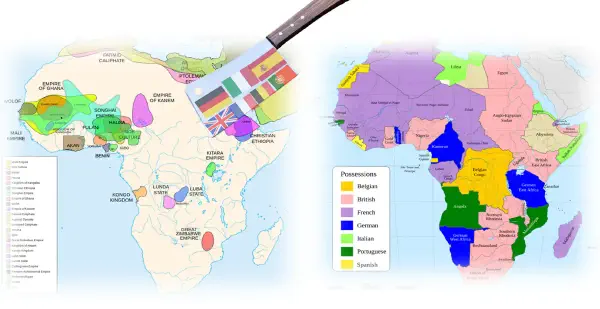
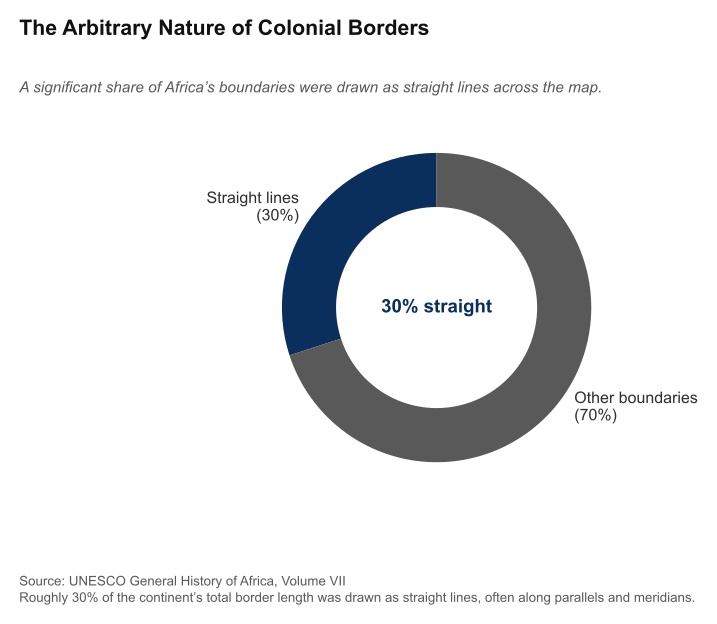
The ultimate legacy of the paper partition is the political map of modern Africa. That map was not drawn by Africans; it was drawn by French, British, German, Portuguese, and Belgian diplomats who had often never set foot on the continent. They used compasses and rulers, not ethnographic surveys. The General History estimates that roughly 30 percent of Africa’s total border length consists of straight lines. These lines slice through watersheds, ethnic homelands, and ancient trade routes with the indifference of a geometric abstraction.
The Somali people were carved into five different territories: British, Italian, and French Somaliland, Ethiopia, and Kenya. The Bakongo were split among French, Belgian, and Portuguese colonies. The Ewe found themselves straddling the border between British and French mandates in Togo. These divisions were not merely administrative inconveniences; they were sources of enduring political instability. The Ogaden war between Somalia and Ethiopia, the irredentist claims of the Ewe unification movement, and the chronic conflict in the Great Lakes region all trace their origins to decisions made in European capitals between 1885 and 1900.
The hinterland doctrine was particularly absurd in its application. A colonial power that seized a small stretch of coast, often no more than a few trading posts, could claim jurisdiction over a hinterland extending hundreds of miles inland, until it encountered another European claim. In West Africa, the French claimed the entire Western Sudan on the basis of a few treaties on the Senegal river and a handful of forts on the Guinea coast. The British did the same from their bases in Lagos and the Gold Coast. The result was a frantic race to send expeditions into the interior to make these paper claims physically real before a rival power could do the same. That race, not any African threat, was what drove the military conquests of the 1890s.
The Conference Room and the Continent#
The Berlin Conference was not a partition of Africa. It did not draw a single boundary line. But it provided the legal, ideological, and procedural framework without which the partition could not have occurred. It established that Africa was a legal vacuum, terra nullius, whose peoples had no standing in the family of nations. It legitimated the principle that sovereignty could be acquired by a signature on a piece of paper, even if one party to that signature had no comprehension of what was being signed. It set in motion the competition that would drive the military phase of the Scramble.
The conference also exemplified the peculiar alliance of force and fraud that characterized the entire colonial project. The diplomats in Berlin were careful to dress their work in the language of humanitarianism. The General Act contained pious resolutions about the suppression of the slave trade and the moral welfare of Africans. This was not hypocrisy in the simple sense; it was a necessary ideological cover. The European publics who were being asked to support colonial expansion needed to believe that their governments were engaged in a civilizing mission, not a land grab. The Berlin Act provided that cover, and the missionaries and explorers who had supplied the intelligence for the partition were its most enthusiastic advocates.
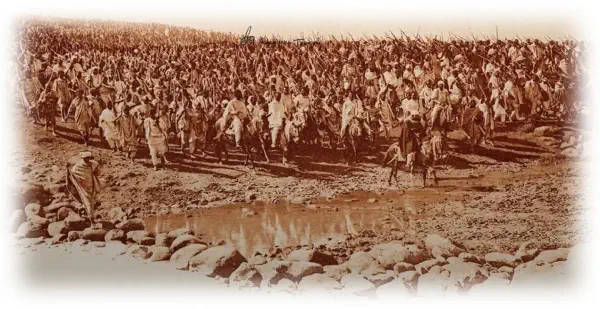
The tragedy of the African position was not that African rulers failed to resist. They resisted fiercely and persistently, as the subsequent articles in this series will document. The tragedy was that they were fighting a battle whose terms had already been defined by their enemies. The sovereignty they were defending had already been extinguished on paper, in a language they could not read, by a legal system they had no reason to understand. The map that ruled their lives had been drawn by men who had never left London, Paris, or Berlin, and who would never set foot on the continent whose destiny they had decided.
Conclusion: The Unfinished Conquest#
The conquest of Africa began long before the first shot was fired. It began with the explorer’s boot on the riverbank, the missionary’s prayer in the village square, and the diplomat’s pen in the conference room. These were the instruments of an information war that Europe won decisively by the 1880s. The military campaigns that followed were, from a strategic perspective, mopping-up operations. They were conducted against opponents who had been systematically disarmed, divided, and delegitimized by a paper conquest that was already complete.
The legacies of that paper conquest are still visible today. The borders drawn in Berlin and its successor conferences remain the borders of independent African states, defended with ferocity by governments that have inherited the colonial insistence on territorial integrity. The ethnic divisions exacerbated by missionary policy and treaty-making continue to fuel political competition. The legal doctrines of sovereignty and ownership that were imposed in the 1880s have shaped the continent’s economic dependence on commodity exports and foreign capital.
The mapmakers who never left London conquered Africa not because they had better guns, though they did, but because they had better information and a legal system that allowed them to turn that information into property. The Africans who signed their treaties could not know that they were surrendering their sovereignty. The Europeans who drafted those treaties knew exactly what they were doing. As Lugard wrote, "No man if he understood would sign it." The conquest of Africa was an act of immense violence, but its first blow was struck with a pen, in the quiet of a European office, on a map that was already covered with imaginary lines.