History and Critical Analysis

History and Critical Analysis


Historical case studies examining power structures, geopolitics, conflict, and political economy — tracing the patterns of empire, statecraft, warfare, and governance that continue to shape the present.


Series & Articles
#

The Displacement Economy: What Happens to People Who Survive

A five-part series examining the system-level failure hidden behind displacement statistics: 117 million people forcibly displaced worldwide, a median exile duration exceeding 20 years, and an international framework built around a crisis it was never designed to make permanent.

The Dictator's Calculus: How Habyarimana Used Coffee to Buy Power and Genocide to Keep It

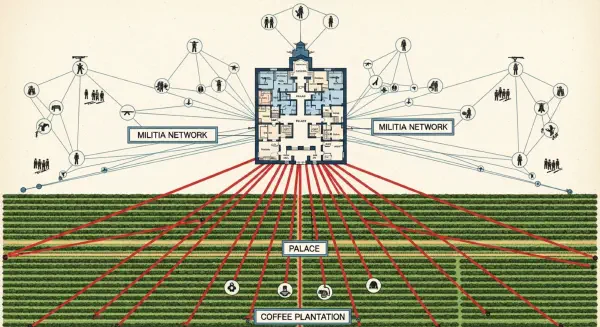
A five-part series using Wintrobe's loyalty-repression model and Verwimp's commune-level data to show that the Rwandan genocide was not the explosion of ancient hatreds but the rational outcome of a budget constraint the dictator could no longer meet.

The Commodity Curse: How What You Grow Decides How You're Governed

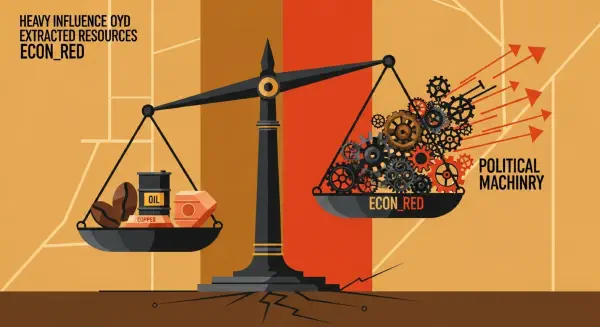
A five-part series examining why the countries best endowed with natural resources are so frequently the worst governed, and how the arithmetic of commodity dependence — not culture, not climate, not colonial history alone — explains the pattern.

The Peace That Never Came: Measuring the True Scale of Modern War

A four-part series tracing the arc from Cold War-era academic optimism about declining conflict, through 25 years of contradicting data, to two new metrics — the Human Cost Index and Casualty Rate — that expose the true human cost and velocity of asymmetric modern war.

The Edible Idol of Empire

This three-part series examines how the United States turned democracy from a political principle into the moral packaging of imperial power. It traces the machinery beneath that language—institutions, law, finance, and force—and shows how these structures sustained hierarchy while preserving the image of universal order. It concludes by arguing that Trump did not create this contradiction, but exposed it by openly consuming the very myth America once sold to the world.

The Invisible Hegemon: Deciphering the Architecture of Global Control

Deciphering the Architecture of Global Control, provides a critical investigation into how the concepts of development and globalization have been utilized as strategic tools for United States hegemony and world domination. Drawing from the analytical framework of Henry Veltmeyer, the series challenges the conventional narrative of global progress, framing it instead as a sophisticated system of imperial extraction and political containment


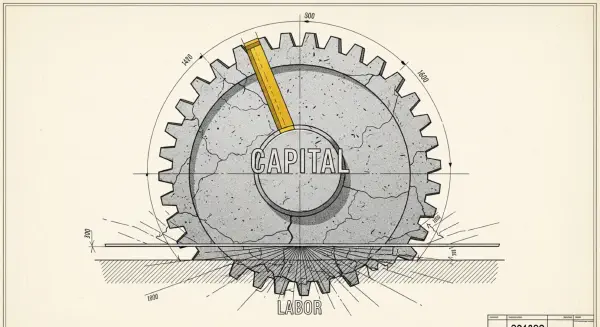
The Debt Architecture: How Sovereign Borrowing Became a Mechanism of Permanent Extraction

A five-part series examining how the arithmetic of dollar-denominated borrowing, a fragmented creditor landscape, and an international restructuring architecture designed for a different era combine to trap developing economies in a cycle of debt that systematically displaces spending on health and education.

The Vermilion Bird's Flight: How the Tang Dynasty Burned

A sweeping historical analysis of how Tang China's very success created the centrifugal forces that would tear it apart over 150 years. This series traces the empire's long descent through the An Lushan Rebellion, eunuch ascendancy, peasant uprisings, and eventual fragmentation into warlord kingdoms. It argues that the Tang did not fall to external invaders but decomposed from within—a cautionary tale about prosperity's hidden costs and the institutional contradictions that can bring down even the mightiest civilizations.


The Crescent and the Ganges: Eight Centuries of the "Andalusia of the East"

A comprehensive historical exploration of eight centuries of Islamic rule in India, from the Umayyad governors to the fall of the Mughal Empire, examining the cultural, political, and spiritual synthesis that created one of history's greatest civilizations.

The Predator's Calculus: Power, Deception, and the Choice to Resist

An exploration of the fundamental mechanisms through which powerful entities—corporations, states, and institutions—maximize their interests. Drawing on historical examples and systemic analysis, it reveals how coercion, exchange, and deception operate as tools of power, how institutions often serve to legitimize predation rather than constrain it, and what effective resistance requires in the face of such dynamics.

The Spectacle of Control: A Critical History of the Sports-Industrial Complex

This series examines the evolution of sports from survival-driven physicality to a commodified spectacle that serves economic and political interests. Through historical analysis, it reveals how mechanization birthed sublimated labor, engineered tribalism, and created mechanisms of social control and distraction.

The Fighter Jet and the State: A Tale of Two Systems

A critical analysis of how defense procurement decisions reveal deeper theories of state value, sovereignty, and economic welfare through the lens of two contrasting fighter jet programs.

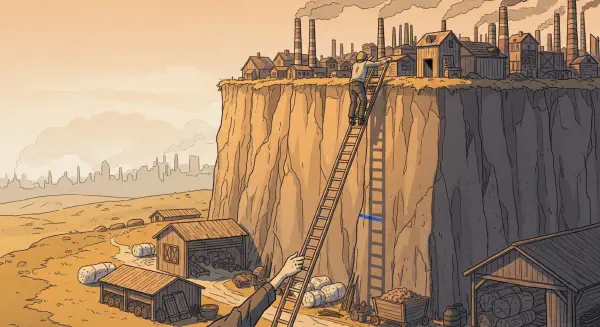
The Great Enclosure: How Neoliberalism Turned Citizens into Consumers

A systemic X-ray of neoliberalism, turning citizens into consumers, a tollbooth economy extracting rent from essentials, and shifting blame onto individuals. The fix, a restoration story built on cooperation, commons, and participatory democracy.

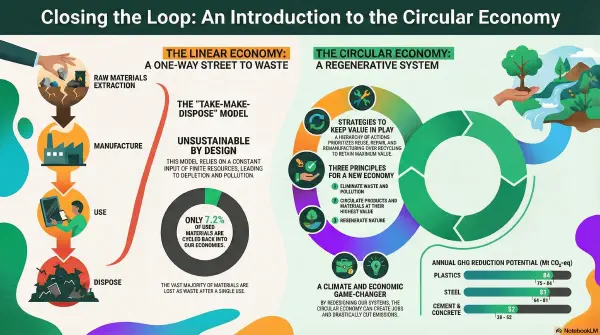
The Invisible Economy: How Ancient Societies Mastered Circularity

Exploring how ancient civilizations developed sophisticated circular economic systems through recycling, reuse, and resource optimization, revealing practices that modern economies are rediscovering.

The Resource Curse: Why Oil Wealth Destroys Nations – And How One Country Escaped

Most oil-rich nations suffer economic decline, corruption, and political instability. Norway did the opposite. Here's the counterintuitive economics of why natural wealth usually destroys nations – and the specific policies that made Norway the exception.

How a Fighter Jet Paid for Itself: The Hidden Economics of Military Spending

Military spending looks like a black hole for taxpayer money. But economic analysis of the Swedish Gripen jet reveals a counter-intuitive truth: the civilian spillovers were so valuable they paid for the entire program – and then some.

The Architecture of Rot: How the Digital Economy Was Designed to Decay

A two-part forensic analysis of enshittification — the structural decay of digital platforms — tracing its mechanism, its institutional enablers, and the legal scaffolding that makes perpetual extraction possible.

The Invisible Empire: Colonization of the Mind and the Long War for Consciousness

A historical exploration of how colonization shaped not just territories but minds, examining the mechanisms of mental subjugation and the ongoing struggle for decolonization in a globalized world.

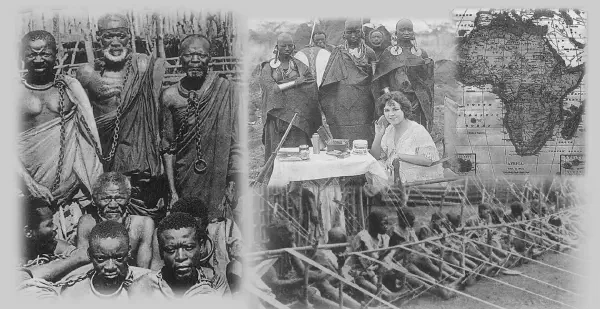
The Architecture of Cognitive Dependency: Structural Legacies of the Colonial Project

A critical examination of how colonialism created permanent psychological and institutional structures that persist long after formal independence, trapping former colonies in cycles of intellectual and economic dependency.

The Imperial Balance Sheet

For most of the nineteenth century, British politicians debated whether empire paid. The question was never cleanly resolved. This series applies cost-benefit analysis to the imperial project — not as a moral verdict, but as a fiscal one. Who bore the costs? Who captured the gains? The ledgers have answers that the speeches avoided.

Occupation Without Armies: The Architecture of Permanent Dependency

A structural analysis of how colonial extraction survived decolonisation by trading armies for financial institutions — and why a country's engineering capacity, not its legal status, determines whether it is truly free.

Colony to Collapse: A Psychological Autopsy of the Neoliberal Era

A historical-psychological post-mortem that traces neoliberalism to colonial rent-seeking in Madeira. It frames atomization as a neurobiological assault fueling authoritarian killer clowns and uses complexity theory to show deregulation turning networks into mutual incendiary devices. The answer, a politics of belonging built on commons and public luxury.

The Master and the Machine: Mohamed Ali’s Brutal Blueprint for Egypt

A historical analysis of Mohamed Ali Pasha's industrialization and state-building in Egypt, examining the human cost of his brutal 'New Order' and the systematic extraction of Upper Egypt.

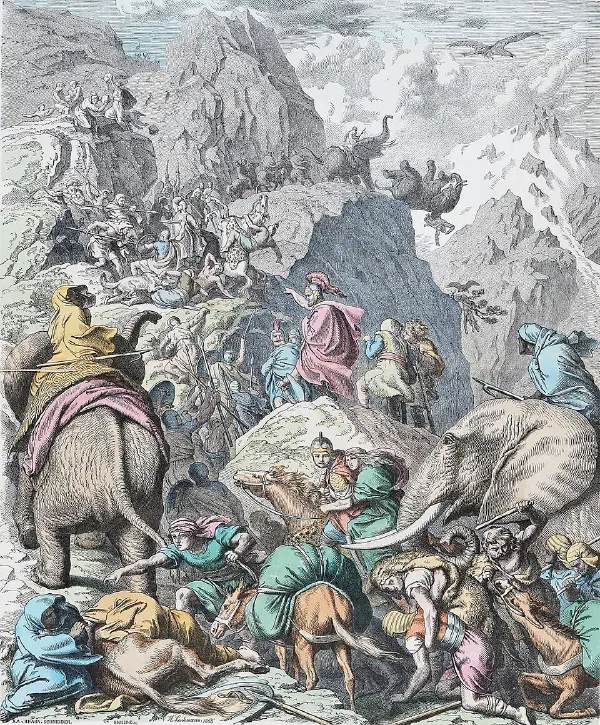
The Genius Who Could Not Win: Hannibal, Rome, and the Limits of Tactical Brilliance

An exploration of how Hannibal's unparalleled battlefield genius ultimately succumbed to Rome's systemic resilience, offering timeless lessons on the interplay between individual brilliance and institutional strength.

The Specter of Hegemony: Deconstructing the Colonized Brain

A critical exploration of how intellectual captivity persists beyond formal decolonization, examining the pedagogical, ideological, technological, and globalization mechanisms that perpetuate Western dominance over the minds of formerly colonized nations.