At some system complexity level, every additional feature generates more failure modes than it closes — measured by the Complexity-Reliability Inversion Point.
Documents the organisations that enforce complexity budgets and architectural simplicity mandates, demonstrating that CRIP management is achievable as a design discipline rather than an accident.
Applies CRIP analysis to US hospital clinical protocol systems, showing that ICU alarm fatigue and medication error rates are measurable manifestations of protocol complexity exceeding its management envelope.
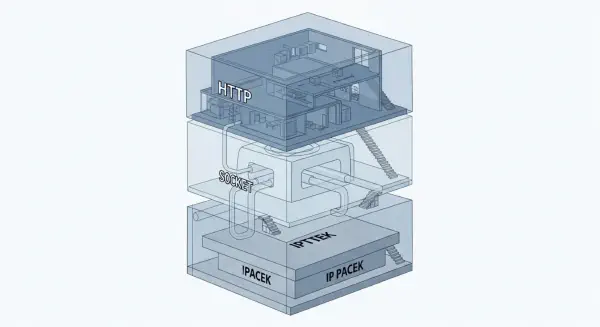
Examines how Linux, TCP/IP, and Git maintained sub-CRIP complexity through deliberate architectural choices that bounded module interaction — contrasted with equivalent monolithic systems.
Introduces the Complexity-Reliability Inversion Point and applies it to the NASA Shuttle specification and Boeing 737 MAX MCAS, establishing the meta-pattern of CRIP-crossing disasters.
Exploring how the Bajau sea nomads use ingenious, low-cost traps made from scavenged materials to successfully hunt the biologically advanced mantis shrimp.
Examining the mantis shrimp's extraordinary visual system and how it drives the evolutionary divergence between spearers and smashers in an arms race of sensory and physical adaptations.
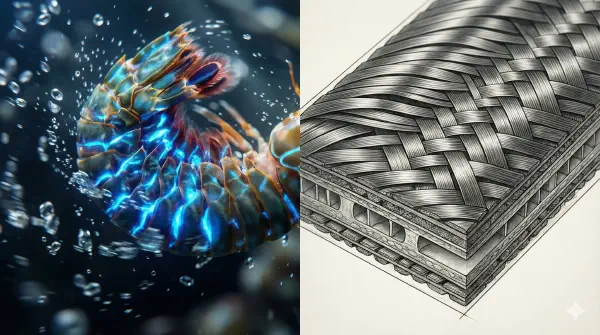
Exploring the mantis shrimp's extraordinary adaptations—from energy-dissipating armor to hyper-complex vision—and their applications in bio-inspired engineering and design.
Exploring how mantis shrimp dissipate catastrophic impact energy through integrated behavioral and morphological adaptations, inspiring new composite materials.