
The Calling of Mobility#
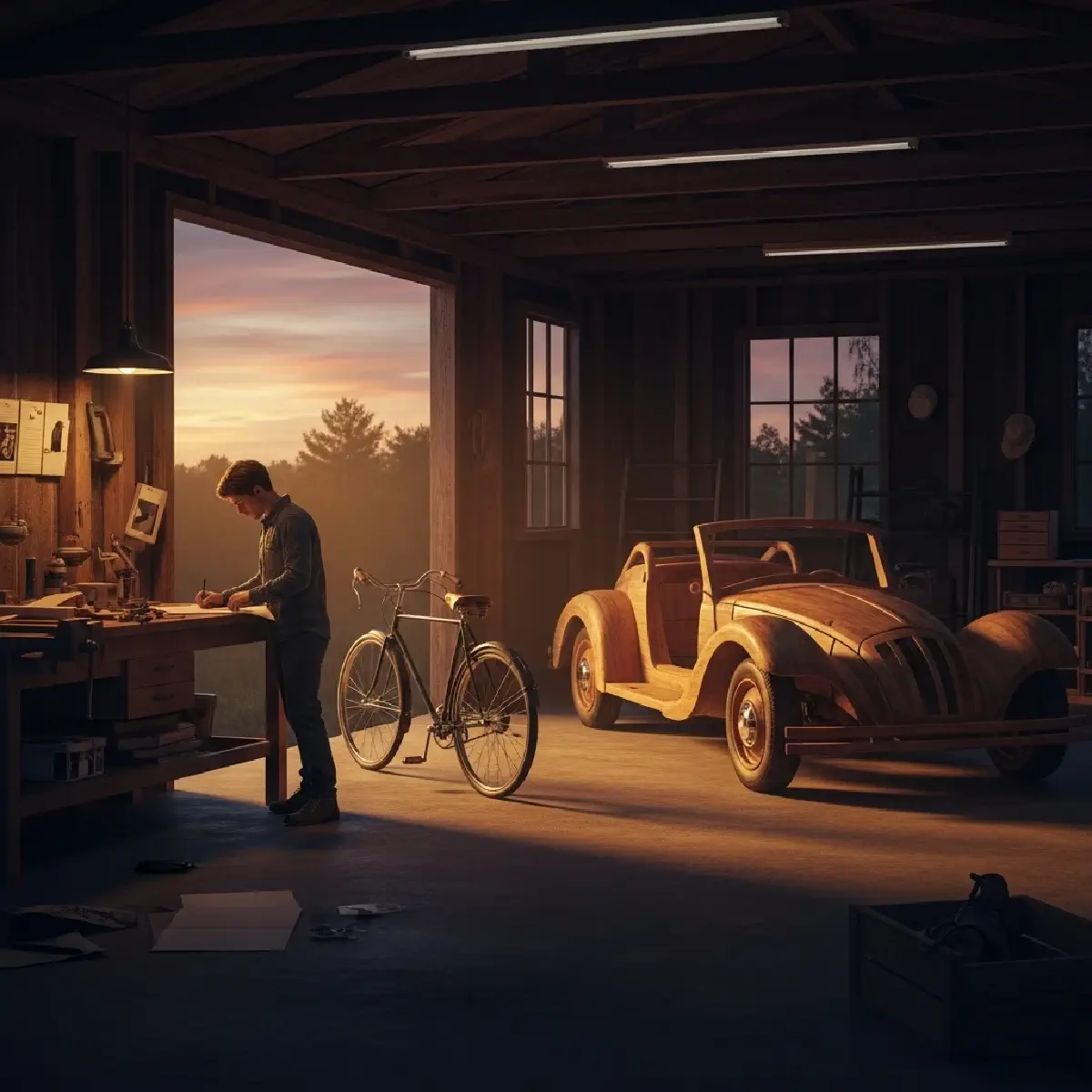
For the rare few, vehicle design is not merely a career path but a deep-seated calling that manifests shortly after a child masters the motor skills of walking. This unrelenting drive to create things that move often begins with a first bicycle or skateboard, linking personal independence to the magic of mobility. In the professional realm, this translates into a journey that starts with an intended destination—a finished product—but is ultimately defined by a transformative learning process. Because no two projects are identical, the designer must reject universal templates in favor of unique strategies that interpret complex technical challenges through an aesthetic lens. The first module of this creative endeavor is not about sketching lines, but about articulating the fundamental “why” behind a vehicle’s existence.
The Thesis of Intentional Invention#
Strategic vehicle design posits that a successful product is the synthesis of personal vision, business viability, and a profound empathy for the user’s emotional journey. This matters because true innovation often provides solutions to “latent needs” that customers are not yet aware they possess, yet will find crucial as their usage scenarios evolve.
The Mechanism of Identified Opportunity#
The design process initiates with “identifying opportunity,” a phase that requires a completely open mind where radically divergent ideas are entertained to reach unexpected solutions. Brainstorming serves as a semi-formalized exercise to drain the mind of possibilities, often captured succinctly on Post-it notes to foster creative discussion and synergy. To move a project from a nebulous vision to concrete action, designers must establish measurable goals and analyze their own portfolios for deficiencies using tools like SWOT analysis. This methodology identifies Strengths, Weaknesses, Opportunities, and Threats to ensure the designer is not merely a “stylist” who risks irrelevance when trends shift. By looking back at the history of an object, designers avoid repeating past failures and instead gain a 360-degree situational awareness of the competitive landscape they are entering.
The Crucible of Strategic Risk#
Design differs from art because it is a calculated blend of personal vision and a unique experience offered to a specific user. While a designer might be an arbiter of style, becoming overly associated with a single trend can transform a perceived strength into a liability as soon as the market moves on. Furthermore, a SWOT analysis has inherent shortcomings because competitive landscapes are fluid and volatile; what works as an anchor today may be a weight tomorrow. This necessitates a diverse portfolio and a willingness to stretch one’s creative wings across different product types, such as moving from sports cars to SUVs. Even legendary manufacturers now produce sedans and high-riding vehicles to maintain a broader presence and business diversity in the global marketplace.
The Cascade of Emotional Connection#
When organizations like Chrysler investigated classic American wooden wagons to inspire the Dodge Kahuna concept, they were seeking a strategic move to court controversy and rebel against mainstream minivan norms. Ralph Gilles, Head of Design at FCA Global, notes that designers do not just follow taste but actually inform it, acting as “taste-makers” in a $1 billion corporate wager. This process involves showing ideas to people not to measure if they like them, but to measure the “tension”—the dichotomy between those who love a design and those who find it offensive. This calculated risk is part of the corporate DNA, as being more relevant than competitors requires a reason for purchase beyond mere utility. If a designer fails to anticipate these obstacles, they risk producing a product that is viewed as “trash” rather than “treasure” due to misguided assumptions outside their scope of influence.
The Synthesis of Purposeful Design#
The spark of vision concludes with the realization that design is the most powerful tool given to man to shape his products and himself. Success is achieved by deconstructing meaningful human experiences and asking which aspects were pleasurable and which were awkward or difficult. By launching a project with empathy, the designer ensures the work resonates on an emotional level, which is the most transformative component of the creative process. We must remember that while success can be “boring,” the instructional power of failure provides the reflective review necessary for continuous improvement. As we look forward, the challenge is to maintain emotion in the face of autonomous technology and the potential commodification of transportation. Designers must remain the guardians of aesthetics and personal statements in a world of visual pollution.