
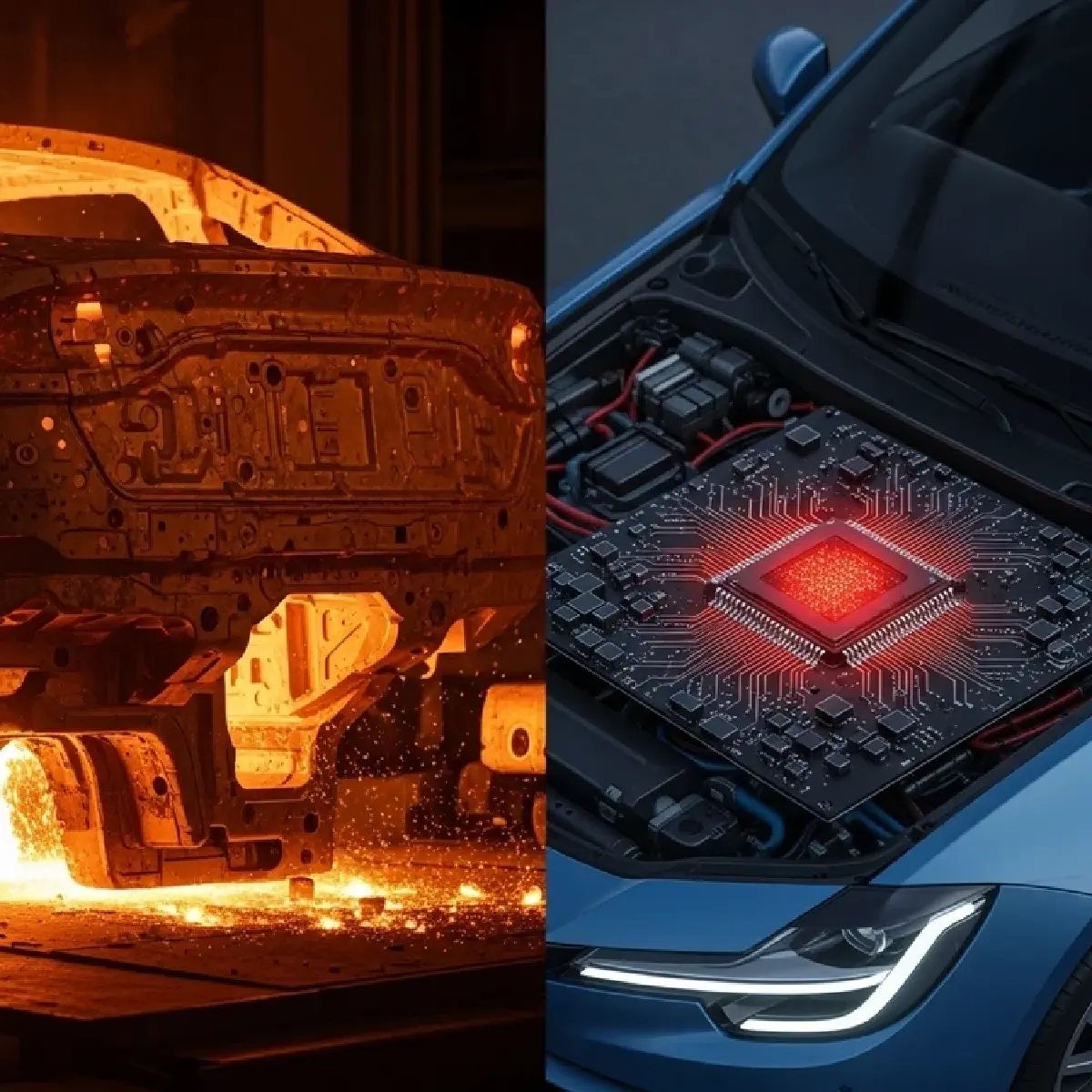
The cumulative effect of losing superior technologies and embedding controlling architectures is systemic fragility. An industry that cannot easily assimilate the best solution becomes brittle, inefficient, and resistant to necessary change. This fragility manifests in three core ways: monoculture risk, innovation debt, and cascading failure.
First, technological monoculture. When one standard dominates—like the internal combustion engine or a specific software architecture—the entire system becomes vulnerable to common threats. The 2011 Thailand floods exposed this. The disaster inundated industrial estates that produced a vast portion of the world’s automotive hard disk drives and specialized imaging sensors. Because the global industry had converged on these single sources for key components, the disruption cascaded through nearly every manufacturer, halting production lines worldwide for months. A diversity of technologies and suppliers is a resilience measure; a monoculture is a systemic risk multiplier.
Second, the accumulation of innovation debt. This is the technical and strategic cost of consistently choosing the compatible solution over the optimal one. Each compromise—using an older, less efficient engine family to share tooling; sticking with a proprietary bus architecture to avoid re-training engineers—adds a layer of debt. The system becomes a palimpsest of suboptimal choices, each defended by sunk costs and institutional inertia. When a disruptive moment arrives, like the shift to electrification, the debt comes due all at once. Companies must spend billions not just on new technology, but on escaping the gravitational pull of their own accumulated compromises.
The Cascading Consequence: Case Study of the Dieselgate Pathway#
The Volkswagen Dieselgate scandal is a classic endpoint of this innovation debt and path dependence. Faced with the impossible trade-off of meeting stringent US NOx emissions standards while delivering the fuel efficiency and performance customers expected, VW engineers hit a wall. The optimal technical solutions (like large urea injection systems) were expensive and complex.
The corporate culture and product strategy, however, were locked into a path. Diesel was the core of VW’s fuel-efficiency marketing in the US. Admitting the technical limit would have meant scrapping a billion-dollar strategy. So, they chose a software “defeat device”—a systemic cheat that recognized test conditions and changed engine performance. This was not just fraud; it was the catastrophic result of a system that could not admit a fundamental design trade-off. The need to preserve a chosen technological path at all costs led to a failure that cost the company over €30 billion and shattered its reputation. The superior solution (electrification or a different technology mix) was available, but the path-dependent commitment to diesel made it unthinkable until it was too late.
The Electric Inflection: Repeating or Breaking the Pattern?#
The electric vehicle transition presents a historic opportunity to break these cycles—or repeat them with new actors. The early fragmentation of charging plugs is a classic standards war in the Betamax mold. The shift towards gigacasting—using massive single casts for vehicle structures—creates incredible manufacturing efficiency but also introduces new single-point fragility. A flaw in a gigacast die or a disruption at the single factory producing it could halt an entire model line.
Most critically, the industry risks creating a new software dependency monoculture. As cars become “computers on wheels,” the choice of operating system and electronic architecture will dictate their future. Will the industry coalesce around a few open, interoperable platforms, or will it splinter into proprietary walled gardens controlled by automakers or tech giants? The latter would repeat the Betamax error at a systemic level, locking consumers into digital ecosystems and potentially stifling the kind of third-party innovation that flourished around the open PC standard.
Conclusion: Engineering for the Ecosystem#
The history of the “Betamax of the Road” teaches that Vehicle Engineering & Lifecycle Design cannot be evaluated in isolation. A design is not just a collection of parts solving technical problems. It is a political entity navigating power structures , a financial entity weighed against legacy investments, and a compromised entity bound by physical and economic trade-offs .
The superior technology often fails because it is just that—a technology. The victor is usually the technology-plus-system: the solution bundled with the right licensing model, the savvy ecosystem strategy, the leverage of existing scale, or the fortuitous timing that aligns with a regulatory shift.
For innovators, the imperative is clear: engineer the machine, but also engineer its path to adoption. Map the patent landscapes. Model the supply chain dependencies. For policymakers and industry leaders, the lesson is about fostering resilient diversity—avoiding standards that create single points of control and recognizing that a market with multiple, competing technological pathways is not inefficient; it is antifragile. The goal should not be to pick a single winner, but to create a landscape where the best ideas, from any source, have a fighting chance to prove themselves on the road.