The Winter Morning at Hyde Park Corner#
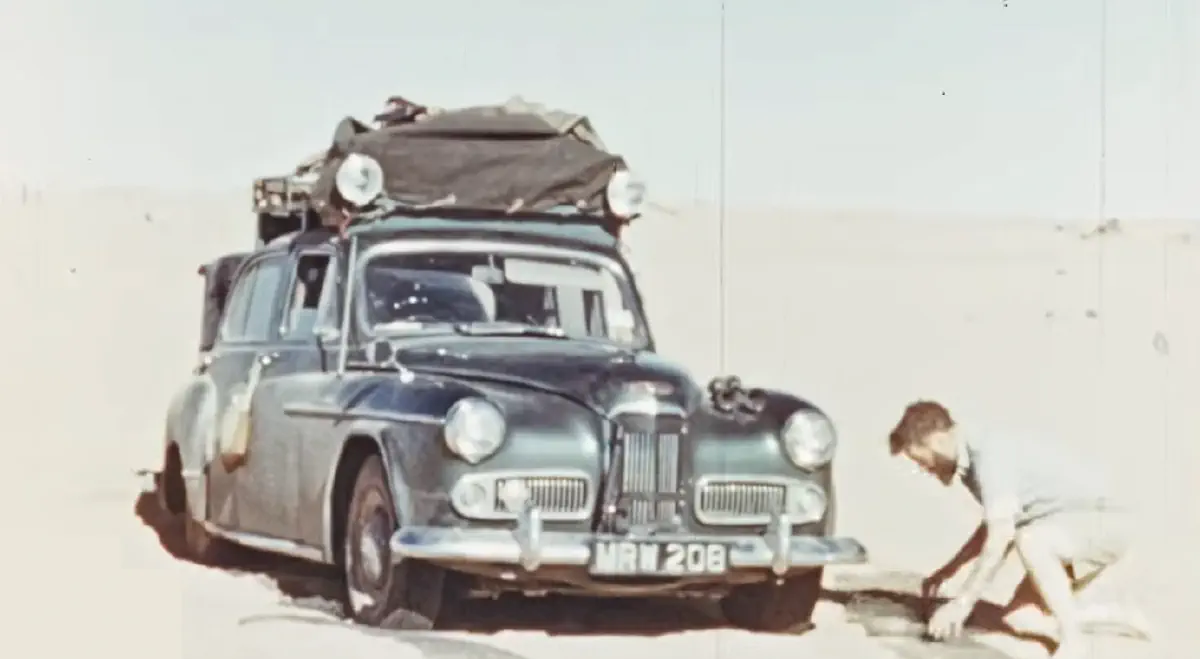
On a bright winter morning in 1952, the ancient buildings of London echoed with a sound that would soon be lost to the shifting sands of the Sahara. Three men—George Hinchliff, Arthur Longman, and Robbie Walshaw—sat within a heavily laden vehicle at Hyde Park Corner, preparing for a journey that most contemporaries viewed as a fool’s errand. This was not a leisurely tour of the Commonwealth, but a sanctioned, record-breaking attempt to reach Cape Town, 10,500 miles away, crossing some of the most unforgiving terrain on the planet.
The leader, George Hinchliff, was no stranger to this specific brand of madness. He already held the record for the run at 21 days, 19 hours, and 45 minutes, but he returned with a more powerful tool: the new 4-liter Humber Super Snipe. As the car weaved through London’s friendly traffic, the team faced a daunting reality. They were moving from the paved certainty of British roads toward a "dark continent" defined by 9,000 miles of desert, jungle track, and mountain pass.
The mission was ostensibly to prove the powers of a car designed specifically for Britain’s overseas customers. Yet, beneath the veneer of a publicity stunt lay a brutal experiment in mechanical durability and human resolve. The road ahead promised to test every weld, piston, and axle of the Super Snipe against the environmental extremes of the equator. It was a journey reserved for adventurers, but timed with the cold precision of the Royal Automobile Club of South Africa.
The Thesis of Mechanical Pre-eminence#
The 1952 record run was far more than a feat of endurance; it was a high-stakes stress test of post-war British automotive engineering that prioritized ground clearance and torque over traditional luxury. By successfully navigating the "sea of stones" and the mud of the Congo in just 13 days, the Humber Super Snipe demonstrated that systemic reliability is not merely a product of over-engineering, but of designing for the inevitable failure of infrastructure. This achievement signaled a pivotal moment where vehicle architecture had to bridge the gap between industrial civilization and the primitive, often hostile, realities of global logistics.
The Architecture of an Overseas Workhorse#
The 4-Liter Foundation and High-Clearance Logic#
The Humber Super Snipe utilized a 4-liter engine that represented a significant departure from smaller, more delicate British engines of the era. This displacement was not merely for top-end speed on the long, straight roads of France, but for the low-end grunt required to drag a heavily laden vehicle through the "arid quagmire" of the Sahara. In 1952, a vehicle of this caliber might cost a consumer roughly $3,500, a significant investment that demanded performance across disparate climates (this pricing information is external to the provided transcript).
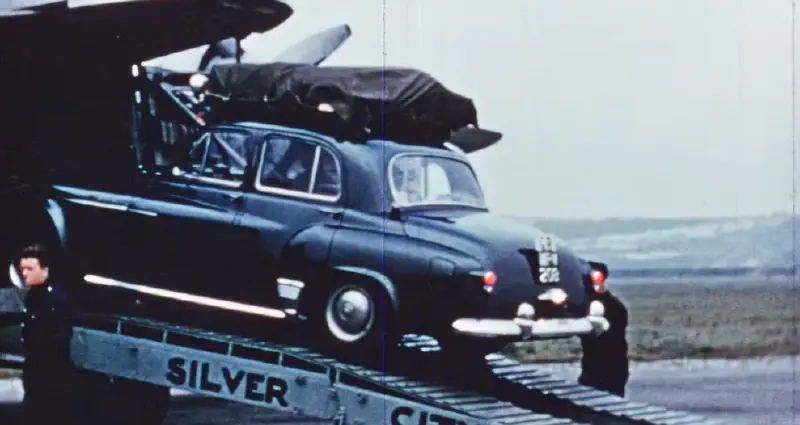
Engineering for the African interior required more than just power; it required a fundamental rethink of vehicle height and protection. The Super Snipe was intentionally designed with significant ground clearance to negotiate 17 primitive ferries and the "corduroy" roads of the Congo, which consisted largely of floating tree trunks. Without this specific design-for-maintenance and design-for-extreme-utility, the vehicle would have been bottomed out by the first landslide in the Atlas Mountains or the first high-noon tunnel of elephant grass.
Reliability in this context was a thermodynamic battle against the shimmering heat of the Tropic of Cancer. The car’s cooling system had to manage 100-percent concentration from the driver while the wheels spun uselessly in crusted sand. Every time the car stopped "axle deep," the mechanical systems were subjected to the abrasive ingress of sharp sand that cut through skin and metal alike. The engineering success of the Humber lay in its ability to maintain internal integrity while its exterior was being literally scoured by the desert.
The Crucible of Context: Risks and Interdisciplinary Trade-offs#
The journey reached its most critical point less than 100 miles after the oasis at Tamanrasset. A flying stone—a common hazard on the "sea of stones"—pierced the petrol tank, threatening the entire mission. Here, the team faced a brutal economic and survivalist trade-off: they carried 45 gallons of fuel and 12 gallons of water. To save the fuel from the damaged tank, Hinchliff made the bold decision to throw away their entire 12-gallon water supply to use the water tank for fuel storage.
This decision highlights the intersection of engineering limits and human psychology. In the Sahara, water is life, but in a record-breaking run, fuel is the only path to the next well. Hinchliff’s choice was a calculated risk based on the mechanical confidence he had in the Super Snipe’s 500-mile range. If the car failed before the next well, the lack of water would have turned the mechanical failure into a human disaster.
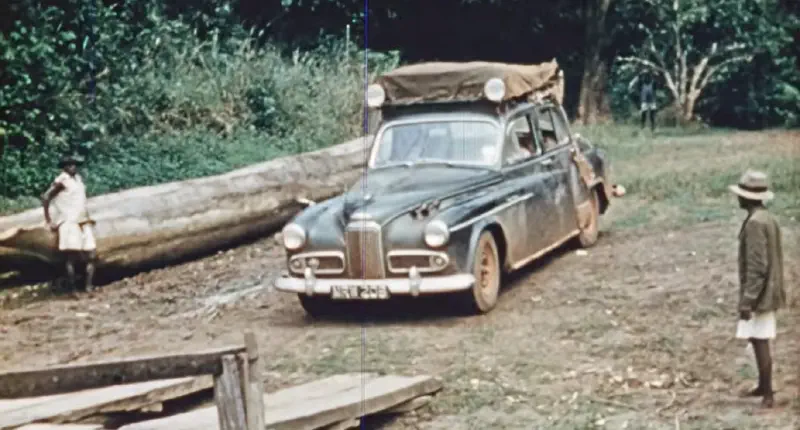
Beyond the desert, the team encountered the "social dynamics" of the Congo and the Rhodesias, where manpower replaced horsepower. Crossing the Congo required the assistance of 40 natives in dugout canoes and a platoon of soldiers to navigate primitive ferries. This logistics chain was a fragile network where "bulldozing the opposition" and using "well-placed leverage" were as important as the car’s engine timing. It was an interdisciplinary challenge where the machine had to be adapted to a world where time often stood still.
The Cascade of Effects: From Mud to the Union#
The ripple effects of this journey were seen in the transition from the steamy darkness of the equatorial forests to the "twin tarred strips" of the Rhodesias. As the team moved southeast, the Super Snipe transitioned from a low-speed mud-crawler to a high-speed cruiser, holding 90 mph whenever the road was straight enough. The car had to breathe through the thick dust of northern Rhodesia, a test of air filtration and engine sealing that few vehicles of the time could withstand.
The record itself—13 days, 9 hours, and 6 minutes—was a staggering improvement over Hinchliff’s previous time. This achievement did more than just fill the order books for the Rootes Group; it proved that the "modern African" was rapidly becoming transport-minded. The sight of the Super Snipe racing past local hikers and British bicycles was a harbinger of a new era of mobility dependence on the continent.
Ultimately, the journey ended at Sheer House in Cape Town, under the shadow of the final mountain range. The 10,500 miles had transformed the Super Snipe from a "new car" into a "scroll of modern achievement". It had survived the floodwaters, the 17 ferries, and the 75-hour crossing of the Sahara, proving that vehicle engineering could successfully bridge the gap between the "ancient buildings" of London and the "rich vast landscapes" of the Union.
The Synthesis of Speed and Survival#
The 1952 Trans-African run stands as a testament to the era before infrastructure was a global guarantee. It reminds us that the true measure of a vehicle’s engineering is not how it performs on a pristine highway, but how it responds when the "signposts are merely occasional piles of stones". The Humber Super Snipe’s success was not an accident of history but a result of a design philosophy that embraced the "rough crossing" as its primary environment.
The decision to sacrifice water for fuel at Tamanrasset remains the ultimate metaphor for this era of exploration. It represents the cold, analytical core of the adventurer: the understanding that when the system fails, the only way forward is through mechanical reliability and the ruthless prioritization of resources. In a world that is now increasingly defined by urban form and "infrastructure lock-in," the 13-day dash to the Cape serves as a reminder of the raw potential of the motorcar as a tool for total freedom.
As we look toward the future of mobility, we must ask if our modern, software-defined vehicles could survive the "sea of stones" without a satellite link or a paved road. The names of Hinchliff, Longman, and Walshaw are etched into history not just for their speed, but for their willingness to trust their lives to four liters of British steel and the stubborn purpose of the North Country. Their journey was, and remains, a journey for adventurers only.