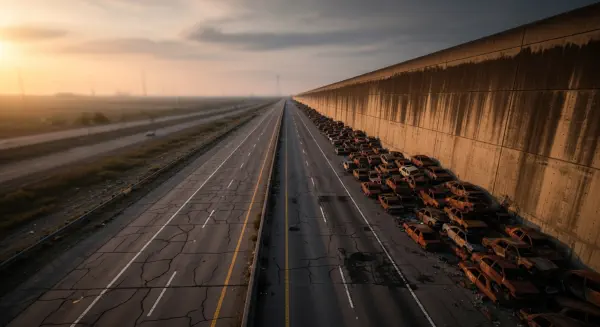
On a sweltering August afternoon in 2003, a high-voltage power line in northern Ohio, sagging into an overgrown tree, shorted out and shut down. Over the next 90 minutes, a series of software bugs, human errors, and inadequate system alarms failed to contain the fault. The failure cascaded across the U.S. Northeast and Canadian Ontario, collapsing the entire regional grid. Fifty-five million people were plunged into darkness. Among the most immediate casualties was mobility. Gas station pumps, dependent on electricity, went silent. Traffic lights went dark, creating gridlock. Subways and trains halted. In Detroit, the Big Three automakers idled 55 plants. The Great Blackout was a stark demonstration of a fundamental truth: modern society does not merely use the automotive system; it is a system of systems in which automobility is a deeply embedded, critical node. A failure in one infrastructure—the electrical grid—triggered an immediate, catastrophic failure in another—transportation.
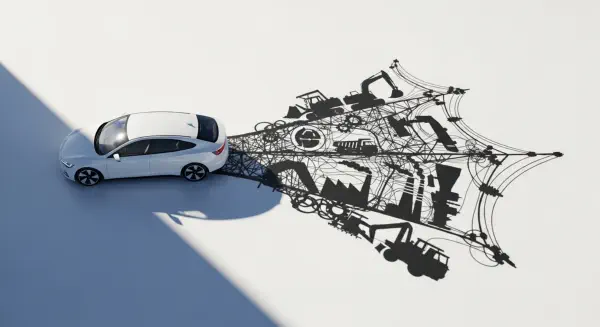
This incident prefigured the central vulnerability of the 21st century: the cascade of dependency. We have engineered a world where the automotive system is not standalone. It is the circulatory system of a body that depends on reliable electricity for fuel (whether gasoline pumping or EV charging), on digital networks for navigation and operation, and on just-in-time logistics for its own maintenance. These systems are tightly coupled, with little slack or buffer between them. A shock in one propagates rapidly to the others, not in linear sequence, but in complex, often unpredictable feedback loops. The fracture points in engineering, supply chains, and infrastructure are not isolated; they are interconnected fuses on the same circuit board. When one blows, it can overload the next.
This final synthesis reveals that the greatest risk is not a defective car or a broken supply chain in isolation. It is the convergence of failures across these interdependent systems. It is a cyberattack on a logistics firm that halts parts shipments just as a natural disaster takes out a key semiconductor plant. It is an extreme heatwave that forces grid brownouts, simultaneously disabling EV charging and air conditioning in vehicles, stranding vulnerable populations. This is the landscape of systemic fragility: where efficiency gains in each subsystem have been traded for resilience at the total system level, creating a perilous house of cards.
The Interdependence Matrix#
The Energy-Mobility Nexus#
The most critical dependency is between transportation and energy. The historic model was one-way: oil refined into gasoline powered cars. Today, it is a two-way, increasingly electric nexus. EVs draw power from the grid, making transportation vulnerable to grid failures. Conversely, mass, unmanaged EV charging threatens grid stability, as seen in California’s flex alerts. The vehicle-to-grid (V2G) vision, where cars stabilize the grid, promises synergy but currently describes a new point of failure: a compromised fleet could be used in a cyberattack to destabilize the power network.
The dependency is also material. Both EVs and renewable grid infrastructure (wind turbines, solar panels) require overlapping critical minerals (copper, lithium, rare earths). A supply shock here creates a double-bind, crippling both the solution and the problem it is meant to solve simultaneously.
The Digital Nervous System#
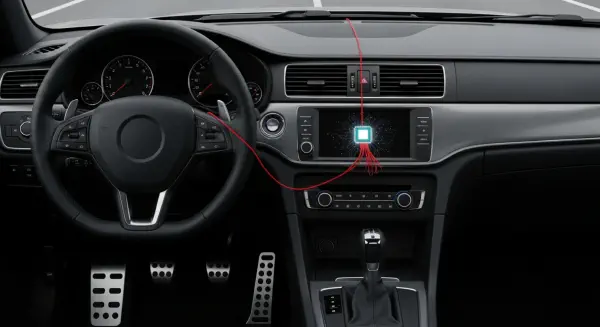
Modern mobility runs on data. Commercial logistics are managed by global routing software. Traffic lights are coordinated by centralized intelligent systems. Personal navigation depends on real-time maps and connectivity. This digital layer creates a single point of epistemological failure. A major outage at a cloud provider like AWS, a ransomware attack on a city’s traffic management center, or the jamming of GPS signals could cause paralysis far beyond the scale of a physical accident.
The 2021 ransomware attack on Colonial Pipeline, which carries 45% of the U.S. East Coast’s fuel, did not physically damage a pipe. It attacked the billing system. The mere fear of supply interruption triggered panic buying, which itself created real shortages and social disruption. The digital attack on information flow precipitated a physical and behavioral crisis.
The Social Amplification of Failure#
Mobility Poverty as a Vulnerability Multiplier#
Systemic failures do not impact everyone equally. The cascade of dependency weighs heaviest on those experiencing mobility poverty—individuals who are fully dependent on a fragile system with no buffer. For the affluent, a gas shortage is an inconvenience; for a low-wage worker who must drive 40 miles to a shift, it is catastrophe. An EV owner with a home charger has resilience during a daytime grid stress event; the apartment-dwelling EV owner reliant on public chargers does not.
The infrastructure trap (Part 3) ensures that these vulnerable populations are often spatially stranded in car-dependent areas with poor alternatives. When the automotive system fails, they have no fallback. This turns a logistical failure into a humanitarian one, eroding access to jobs, healthcare, and food.
The Erosion of Redundant Skills#
Tightly coupled, automated systems erode the human skills and decentralized knowledge needed to cope when they fail. The mechanization and digitalization of repair (Part 1) means fewer people can fix a stranded vehicle. Reliance on digital navigation degrades innate wayfinding ability. In a major, prolonged systemic failure—a multi-regional blackout, a severe cyber-warfare event—this loss of generalist, analog competency could significantly hamper recovery. We have optimized society for smooth operation, not for graceful degradation.
The Inevitability of the Cascade#
The drive for efficiency, integration, and growth has wired our critical systems together without installing adequate circuit breakers. The cascade is not a possibility; it is an inevitability given a large enough shock. The question is one of scale and recovery.
The 2011 Tōhoku earthquake and tsunami in Japan provided a grim preview. It damaged auto parts factories, which halted global production (Supply Chain Fracture). It triggered the Fukushima nuclear disaster, causing power shortages that hampered recovery efforts (Energy-Mobility Nexus). It destroyed roads and ports (Infrastructure Fracture). The recovery was heroic but was aided by Japan’s unique social cohesion and technical expertise—resources not guaranteed elsewhere.
Towards Anti-Fragility#
Acknowledging the cascade is the first step toward building anti-fragility—systems that gain from disorder. This does not mean abandoning technology but deliberately designing for failure. It means:
- Introducing Strategic Redundancy: Maintaining dual-fuel capability (e.g., plug-in hybrids) during grid transition; ensuring critical transportation nodes have backup power.
- Building Decentralized Capacity: Supporting local repair economies, fostering walkable/bikeable neighborhoods as resilience assets, and developing micro-grids.
- Creating System Buffers: Re-evaluating the religion of just-in-time for critical components; storing strategic reserves of essential materials.
- Mandating Interoperability and Open Standards: Preventing digital lock-in that turns convenience into vulnerability.
The fracture points are now societal. The cascade of dependency means that the next automotive recall, chip shortage, or hurricane will not be a sector-specific news story. It will be a test of our entire way of life. The car long ago ceased to be just a means of transport. It has become the keystone in a fragile arch of dependencies. And when the keystone cracks, the entire structure trembles.