
The Silhouette of Authority on the Highway#
In the social landscape of Cold War Czechoslovakia, the appearance of a Tatra 603 on a public road was never a casual event. It was a signal of the state’s physical presence. While a Volkswagen Beetle or a Fiat Multipla represented the growing mobility of the Western middle class, the Tatra 603 signaled the movement of a “ważna figura” (important figure). The car’s unique aesthetic—the rounded, aerodynamic curves and the deep black finish—earned it the nickname “Black Whale,” but it functioned more like a mobile office for the vanguard of the Communist Party.
The car’s role as a representative limousine created a distinct social hierarchy that was enforced by both policy and production limits. It was the preferred vehicle for diplomats, politicians, and members of the special services. In Poland, East Germany, and Czechoslovakia, the arrival of a 603 meant that the mechanisms of power were in motion. This was not a vehicle designed for the family weekend; it was a vehicle designed to project an image of a sophisticated, modern, and high-performance state to the rest of the world.
The Material Culture of the Socialist Elite#
The internal features of the Tatra 603 were specifically curated to provide a level of luxury that was inaccessible to the general population. These material choices reinforced the social distance between the passengers and the public.
Comfort as a Tool of Governance#
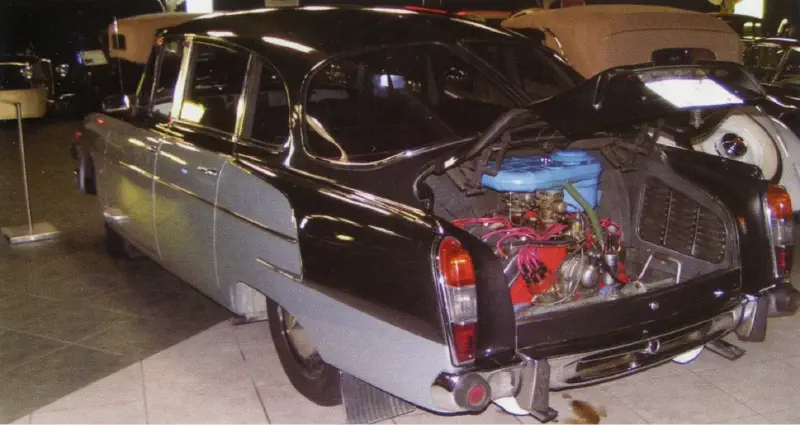
The interior of the 603 was designed for six passengers, featuring two wide benches that could be folded down into beds for four people, allowing for comfortable long-distance travel across the Eastern Bloc. To ensure that state business could continue regardless of the weather, the limousine was equipped with independent parking heating. This system functioned even when the V8 engine was turned off, ensuring that a diplomat waiting for a meeting remained warm in the harsh Prague winter. These comforts were not merely luxuries; they were technical solutions to the unique demands placed on the state’s mobile workforce.
The Aesthetics of Exclusion#
Hierarchy was even baked into the car’s color palette. In a world where consumer choice was already limited, the state imposed a rigid color-coding system. Black, the color of gravitas and authority, was restricted to state officials and dignitaries. The few private citizens who managed to acquire a 603 were limited to grey models, a visual demotion that ensured no private individual could be mistaken for a government notable. This visual stratification ensured that the car’s silhouette was immediately identifiable with the ruling class, turning a piece of machinery into a symbol of political status.
The Mechanics of the “Socialist Limousine”#
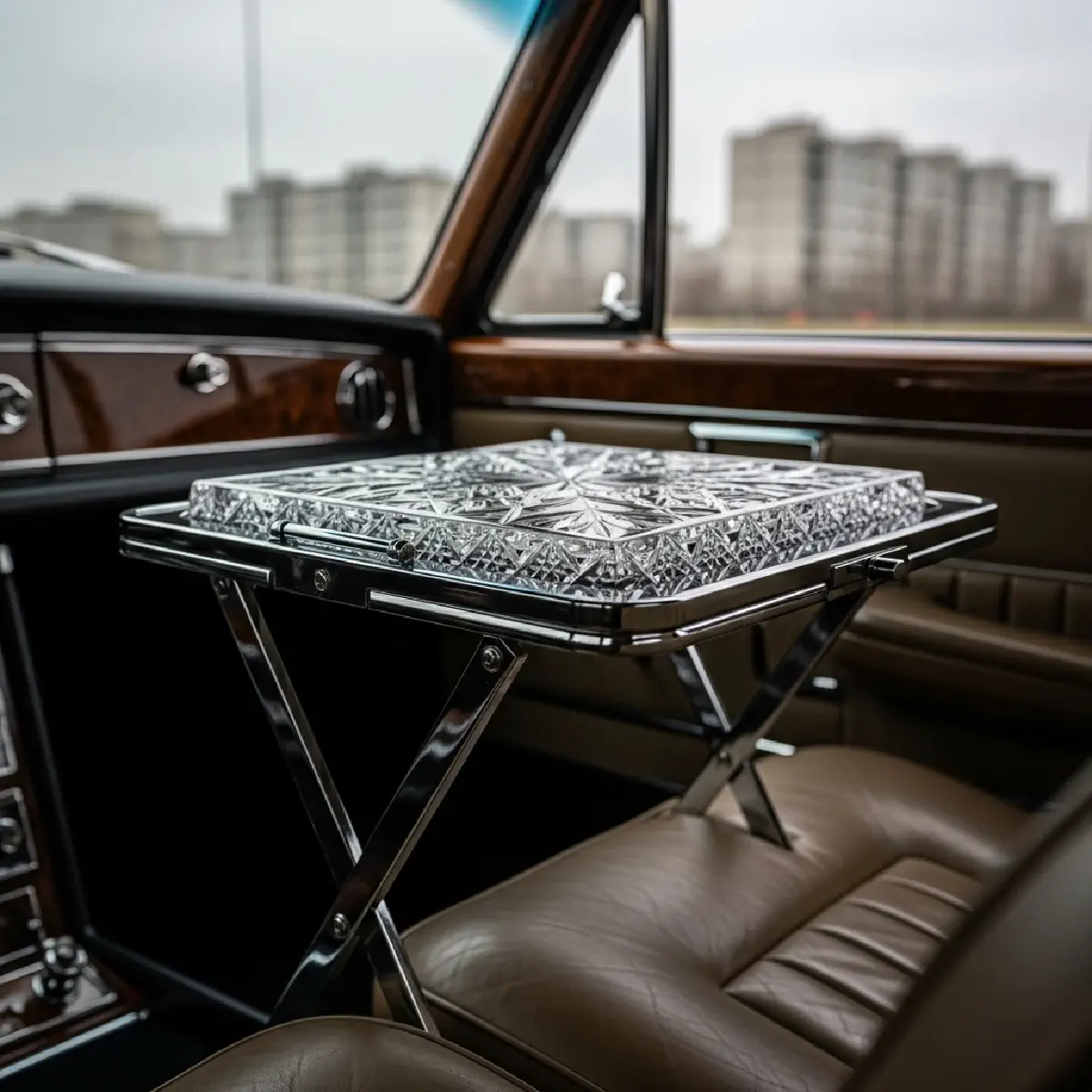
Despite being built behind the Iron Curtain, the 603 was compared favorably to Western luxury cars like the Mercedes S-Class. It featured a 55-liter fuel tank positioned in the front to balance the weight of the rear engine, and a 4-speed gearbox operated by a column-mounted lever that required complex cable linkages to reach the rear of the car. It even included a “VIP” feature in the form of foldable drink tables on the back of the front seats. The suspension was refined enough that, according to the sources, a glass placed on such a table would not tip over even at speed—a claim that highlighted the car’s role as a mobile lounge for the elite.
The Economic Asymmetry of Production#
The economic lifecycle of the Tatra 603 highlights the fundamental distortion of industrial power in a planned economy. The vehicle was a high-cost, low-volume product that served a single, monopolistic client: the state. Between 1955 and 1975, the 20,442 units produced were primarily absorbed by the state apparatus. This resulted in an industrial structure where the factory was shielded from market pressures but was entirely dependent on political favor.
The car’s international reputation also served as a form of “soft power” for the socialist system. It was exported to other socialist nations and even caught the attention of American manufacturers; General Motors reportedly studied the air-cooled engine of the 603, which influenced their own air-cooled six-cylinder engines in the early 1960s. However, this international prestige did nothing to alleviate the domestic scarcity of vehicles for the average citizen. The Tatra 603 remained a “Black Whale” swimming in a sea of public transport and pedestrianism, a physical reminder that in the “classless” society of the Eastern Bloc, some classes were more mobile than others.