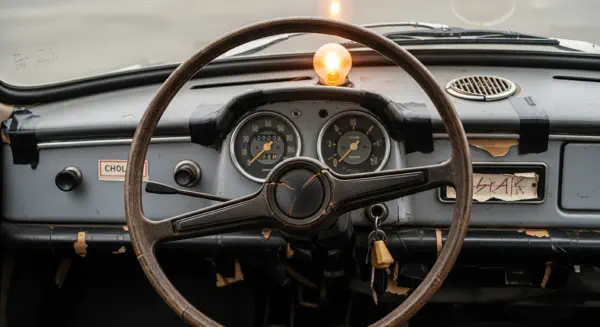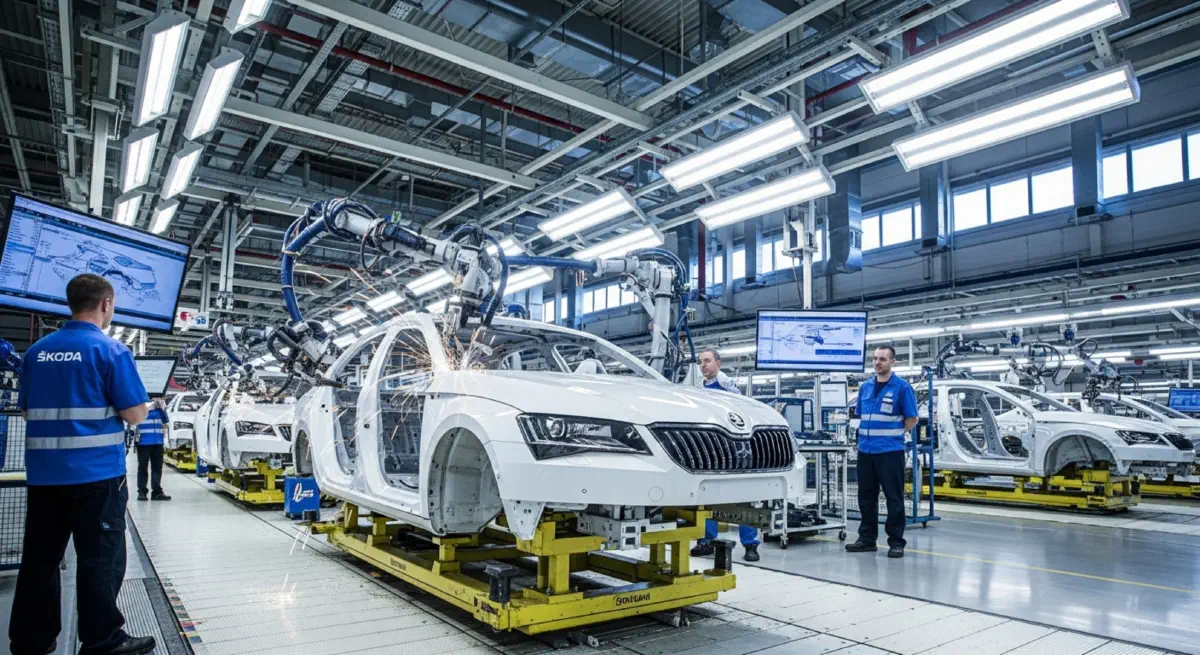
In 1990, the Škoda plant in Mladá Boleslav produced 183,000 vehicles. The following year, with Volkswagen’s acquisition pending, production dipped to 172,000. By 1995, under Volkswagen management, output exceeded 200,000. By 2005, the plant produced over 400,000 vehicles annually—more than double its socialist-era peak. The physical plant had changed, but the deeper transformation was in what the plant produced and for whom. Where Škoda had once built cars for a planned economy serving Czechoslovak citizens, it now built cars for a global market, integrated into Volkswagen’s production network, producing vehicles that shared platforms with models sold worldwide.
This transformation was not unique to Škoda. Across Central and Eastern Europe, the collapse of socialism triggered a restructuring of automotive industries that had been central to Comecon economies. Some manufacturers disappeared. Others, like Škoda and Dacia, were acquired by Western firms. New plants were built by foreign investors. The region transitioned from producing its own ideologically-charged vehicles to becoming the low-cost manufacturing heart of the European automotive industry.
This transition was not a clean break but a complex process of technology transfer, industrial restructuring, and integration into global value chains. The engineering traditions that had defined Eastern Bloc automotive design did not simply vanish. They were absorbed, transformed, and in some cases, repurposed. The story of post-socialist automotive development is not one of Western triumph but of hybridity—the creation of new forms of production that combined Eastern capacities with Western capital, technology, and markets.
The Technology Transfer That Changed a Region#
Foreign direct investment became the “principal vehicle” for upgrading Eastern Europe’s automotive capabilities after 1990. Western, Japanese, and Korean manufacturers poured capital into the region, attracted by low wages, existing industrial capacity, and proximity to Western European markets. This investment brought technology—CAD systems, modern manufacturing processes, global platform architectures—that transformed what Eastern factories could produce.
Research on industrial upgrading in Central Europe documents how host-country firms absorbed design and production technologies through supply-chain linkages and multinational corporation networks. Workers trained on Soviet-era equipment learned to operate robotic assembly lines. Engineers who had designed cars for planned economies learned to work within global product development cycles. Factories that had produced standardized vehicles for captive markets learned to produce components for platforms sold worldwide.
This technology transfer was not evenly distributed. Some firms, like Škoda, were fully integrated into Western corporate structures. Others remained at the periphery of global production networks, performing low-value assembly while higher-value functions—design, engineering, R&D—remained concentrated in Western Europe and Japan. As documented in analyses of automotive value chains, the region’s role consolidated around labor-intensive production, component manufacturing, and increasingly, certain engineering functions, but the core of automotive innovation remained elsewhere.
From Socialist Utility to Global Platforms#
The cars that emerged from post-socialist factories bore little resemblance to their predecessors. The Škoda Fabia, launched in 1999, shared Volkswagen’s PQ24 platform with the VW Polo and SEAT Ibiza. The Dacia Logan, launched in 2004, was designed specifically for emerging markets but built on Renault’s global B‑platform. These vehicles were not socialist cars with Western labels but Western cars built in Eastern factories—products of global platforms designed in Germany, France, or Japan, optimized for global markets, manufactured in the former socialist bloc because costs were lower.
This platform strategy represented a fundamental break with socialist automotive design. Where Eastern Bloc vehicles had been designed for specific national contexts, global platforms were designed for standardization across markets. Where socialist cars had been optimized for durability and repairability, global platforms were optimized for manufacturing efficiency and cost. Where socialist cars had been produced in relatively small volumes for captive markets, global platforms were produced in millions for worldwide distribution.
The transition to global platforms brought significant benefits. Quality improved dramatically. Safety, which had lagged in socialist vehicles, reached Western standards. Model variety expanded. But it also meant the end of a distinct Eastern automotive identity. The cars rolling off Eastern European assembly lines after 2000 were not the successors of the Trabant, Lada, or Wartburg. They were global products made locally—a fundamentally different relationship between factory, region, and vehicle.
The Electric Transition and the New Divide#
As the automotive industry transitions to electric vehicles, Eastern Europe faces a new set of challenges. Research on the EV transition in the region documents that adoption has been slower than in Western Europe. The region continues to produce internal combustion vehicles even as Western markets accelerate toward electrification. Foreign investment in EV production is growing, but the region risks being left behind in the transition to zero-emission mobility.
This lag reflects deeper structural conditions. Eastern Europe’s automotive industry was built around internal combustion technology. Its factories, supply chains, and workforce skills are oriented toward conventional vehicles. Transitioning to EV production requires new investment, new skills, and new supply chains—all of which are concentrated in Western Europe, China, and other regions that moved earlier on electrification.
The result is a new East-West divide in automotive technology. Where the Cold War divide separated socialist from capitalist automotive engineering, the new divide separates regions that are leading the EV transition from those that are following. Eastern Europe’s position as a low-cost manufacturing hub for internal combustion vehicles may become a liability as the industry shifts toward electric powertrains, battery production, and the software-defined vehicle architectures that are reshaping automotive value chains.
The Persistence of Legacy#
Despite the profound transformation of Eastern Europe’s automotive industry, the legacy of socialist automotive design persists. The culture of Marke Eigenbau—the tradition of improvisation and self-reliance—survives in the region’s automotive aftermarket, in the skills of mechanics who learned on Soviet-era vehicles, in the preferences of drivers who value simplicity and repairability. The cars that were built to last for decades have not disappeared. They continue to operate, maintained by enthusiasts who appreciate engineering that was designed to be understood and repaired by its owner.
This legacy also matters for debates about automotive sustainability. As Western manufacturers grapple with the environmental costs of planned obsolescence, the Eastern tradition of designing for longevity and repairability offers an alternative model. The circular economy principles that Western industry is now adopting—design for disassembly, design for remanufacturing, extended producer responsibility—were, in crude form, already practiced in socialist automotive industries not from environmental consciousness but from necessity.
The challenge for Eastern Europe’s automotive industry today is not simply to catch up with Western technology but to define its own role in a transforming industry. The region cannot compete with China on scale or with Western Europe on innovation. But it can leverage its legacy of manufacturing capability, its skilled workforce, and its position within European production networks to carve out a distinctive role. Whether that role will be limited to low-cost assembly or will expand to include higher-value functions—engineering, design, R&D—depends on investment, policy, and the strategic choices of both firms and governments.
The Platform After the Plan#
The transformation of Eastern Europe’s automotive industry from socialist plan to global platform is not complete. It continues to unfold as the industry faces its greatest disruption since the invention of the automobile. The shift to electric vehicles, the rise of software-defined architectures, the restructuring of supply chains—each of these forces is reshaping what Eastern European factories produce and for whom.
The cars that emerge from this transformation will not be successors to the Trabant, Škoda, or Lada. They will be products of global platforms, designed in global design centers, manufactured in factories that bear little resemblance to their socialist predecessors. But the region that produced the Trabant, that learned to innovate under scarcity, that developed a culture of ingenuity and adaptation, brings capabilities to this new era that are not easily replicated. The platform after the plan may yet produce something distinctive—not a return to socialist automotive design, but a new synthesis of Eastern capability and Western technology, forged in the crucible of transformation.