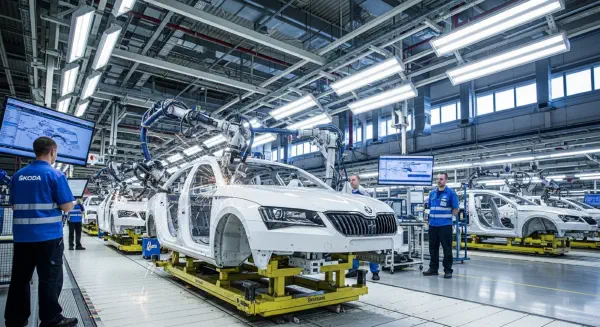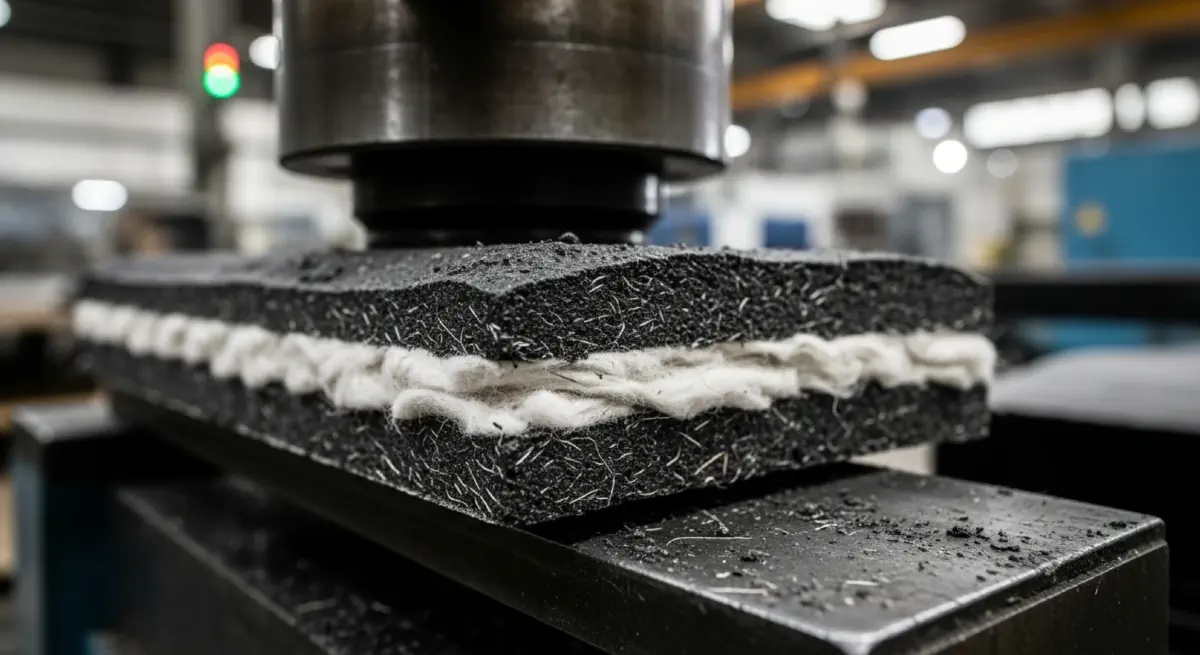
In 1955, East German engineers faced a problem. The GDR needed a mass-produced automobile, but it lacked the steel to build one. The country’s steel production was committed to heavy industry, military equipment, and construction. Consumer goods came last. The solution was Duroplast—a cotton-fiber-reinforced phenolic resin that could be pressed into body panels using the same equipment that produced kitchen countertops.
The material choice was not a failure. It was an ingenious adaptation to scarcity. Duroplast would not rust, a critical advantage in a country where replacement panels were virtually unobtainable. It was light, reducing fuel consumption and simplifying manufacturing. It was repairable—though repairs required specialized skills and materials. And it was, from the perspective of the planned economy, producible within existing industrial capacity. The Trabant’s body was not a compromise but a solution optimized for the constraints of socialist manufacturing.
The story of the Trabant’s materials reveals a deeper truth about Eastern Bloc automotive design. Every component, every material choice, every manufacturing process reflected the economic conditions of its production. The car was not designed in isolation but emerged from a system where scarcity was a design parameter, where durability was necessity, and where the relationship between user and object was fundamentally different than in consumer economies.
The Scarcity Economy#
The GDR’s automotive industry operated under chronic material shortages. Steel was rationed. Rubber was scarce. High-quality plastics were imported at great expense. These constraints shaped every aspect of vehicle design. Engineers learned to do more with less, substituting materials, simplifying components, and designing for longevity because replacement parts were unreliable.
This scarcity produced a distinctive approach to lifecycle design. Western manufacturers designed for planned obsolescence—deliberate engineering choices that ensured vehicles would require replacement after a certain period. Eastern manufacturers, by contrast, designed for indefinite service. The Trabant could be kept running for decades because it was engineered to be kept running. Owners developed what scholars have identified as a culture of Eigen-Sinn—a tradition of improvisation and self-reliance that turned car maintenance into a form of resistance against systemic failure.
The materials of the Trabant reflected this approach. Its engine, while primitive by Western standards, could be rebuilt with basic tools. Its suspension, while crude, could be repaired with welded metal and improvised parts. Its body, while structurally weak in crashes, would never rust away. These were not incidental features but deliberate design choices made in response to the conditions of socialist production and consumption.
Duroplast and the Politics of Materials#
Duroplast deserves particular attention because it reveals how material choices encode political and economic realities. The material was developed in the 1930s and used in German military applications during World War II. After the war, it became a signature material of GDR manufacturing—used not only in Trabants but in furniture, appliances, and industrial equipment. Its continued use was not merely practical but ideological: proof that socialist industry could innovate under constraints, that it could produce consumer goods without capitulating to capitalist consumption patterns.
The material had significant drawbacks. It was flammable—a fact that became tragically apparent in accidents. It could not be recycled easily. It required specialized manufacturing processes that limited production flexibility. But within the constraints of the GDR economy, Duroplast made sense. It used domestic materials (cotton was grown in Central Asia and shipped to East Germany). It employed existing manufacturing capacity. It produced a product that, within its limitations, served its intended purpose.
The decision to continue using Duroplast for three decades reflects the inertia of planned economies. Once a manufacturing process was established, changing it required investment, materials, and political will—all of which were in short supply. The Trabant’s material stagnation was not simply a failure to innovate but a consequence of a system that rewarded stability over improvement, that prioritized production quotas over product refinement, that lacked the competitive pressures that drove Western manufacturers to continuous improvement.
The Culture of Marke Eigenbau#
If the GDR could not provide reliable spare parts, Trabant owners learned to make their own. If the service economy was underdeveloped, owners learned to service their own cars. If materials were scarce, owners learned to improvise. This culture of Marke Eigenbau—literally “brand self-build”—transformed car ownership from consumption into production. The Trabant was not simply a product to be purchased but a platform for ingenuity.
Research on sustainable consumption in the former GDR documents how this culture produced outcomes that Western consumer economies struggled to replicate. Vehicles remained in service for decades. Components were reused, repaired, and repurposed. Waste was minimized not through environmental consciousness but through necessity. The Trabant’s lifecycle was not designed for circularity in the contemporary sense, but it achieved many of the same outcomes: long service life, minimal material throughput, and a culture of care and maintenance that extended product utility.
This culture had its own pathologies. Improvised repairs sometimes created safety hazards. The absence of reliable parts meant that even well-maintained vehicles degraded over time. The ingenuity of owners could not compensate for systemic failures in manufacturing and distribution. But the Marke Eigenbau tradition reveals that the relationship between user and object is not fixed but shaped by economic conditions. In a consumer economy, users are trained to replace. In a scarcity economy, users learn to repair.
Lifecycle Design Before the Term Existed#
Western manufacturers began formalizing lifecycle design in the 1990s and 2000s, responding to environmental regulations and growing awareness of end-of-life vehicle impacts. But Eastern Bloc manufacturers had been practicing a form of lifecycle design for decades—not from environmental consciousness but from economic necessity. When replacement parts are unavailable, when new vehicles are unobtainable, when the only option is to keep existing vehicles running, lifecycle design becomes survival.
The Trabant’s lifecycle was defined by three phases: production, extended service, and eventual disposal. Production was constrained by materials and capacity. Service was characterized by owner maintenance, improvisation, and gradual degradation. Disposal came late—often after decades of use, when the vehicle could no longer be kept running or when reunification made Western vehicles available.
This lifecycle produced outcomes that contemporary environmental engineers would recognize as valuable. The Trabant’s carbon footprint, while poorly documented, was likely lower per vehicle-year of service than many Western cars because of its extended service life and minimal materials footprint. Its repairability meant that components were used to their full potential. Its simplicity meant that end-of-life recycling, while difficult, was less environmentally problematic than the complex material streams of modern vehicles.
The Material Legacy#
When the last Trabant rolled off the line in 1991, the material conditions that produced it had already collapsed. German reunification opened Eastern markets to Western vehicles, and the Trabant quickly became obsolete. But the car’s material legacy persisted. Tens of thousands remain on the road today, maintained by enthusiasts who value their simplicity and historical significance. Duroplast bodies, once a symbol of scarcity, now represent a kind of durability that modern vehicles cannot match.
The Trabant’s material history also offers lessons for contemporary debates about automotive sustainability. As manufacturers struggle to extend vehicle lifecycles, reduce material throughput, and design for repairability, the Trabant’s example—however imperfect—suggests what is possible when constraints force different choices. The car that was made of cotton and resin, that was designed to be repaired by its owner, that served for decades because it had to, may yet prove more relevant to a resource-constrained future than the high-tech, disposable vehicles that replaced it.