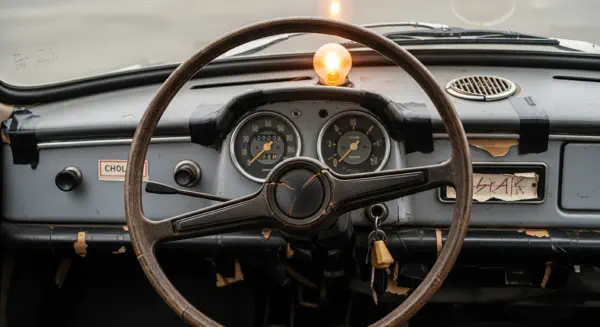
Socialist automotive design was not simply inferior Western design but a distinct engineering tradition optimized for different constraints: The Eastern Bloc’s emphasis on simplicity, repairability, and ruggedness reflected planned economy conditions, material scarcity, and a conception of the automobile as collective utility rather than consumer commodity. What Western observers dismissed as technological backwardness was often successful adaptation to socialist economic structures.
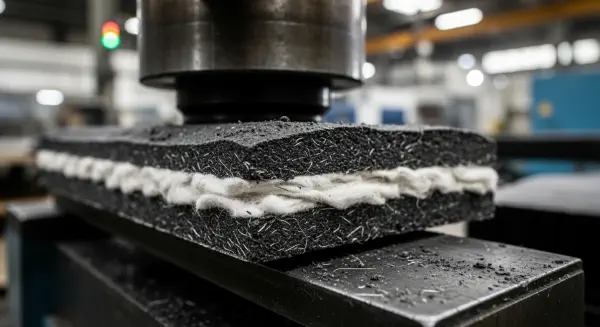
Material scarcity shaped not only what Eastern cars were made of but how they were used and maintained: The Duroplast body of the Trabant, the culture of Marke Eigenbau, and the extended lifecycles of socialist vehicles emerged from necessity but produced outcomes—durability, repairability, minimal material throughput—that contemporary automotive sustainability advocates now seek to replicate.
The divergence between Eastern and Western automotive engineering was conceptual, not merely technical: Soviet-era engineering prioritized off-road performance, operational robustness, and military utility. Western engineering optimized for paved surfaces, consumer preferences, and regulatory requirements. These were not two versions of the same discipline but two disciplines addressing different mobility problems.
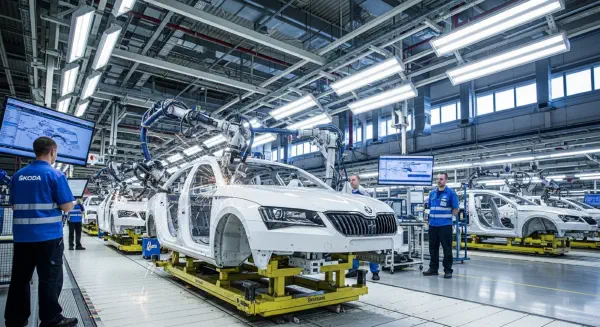
Post-socialist automotive restructuring did not simply replace Eastern engineering with Western technology but created hybrid forms of production: Foreign direct investment brought global platforms, CAD systems, and modern manufacturing processes to Eastern Europe, but the region’s legacy of industrial capability, skilled labor, and adaptation to constraints shaped how technology transfer occurred and what forms it took.
The Eastern automotive legacy offers lessons for contemporary debates about sustainability, repairability, and lifecycle design: As Western manufacturers confront the environmental costs of planned obsolescence and the limits of consumer-driven innovation, the socialist tradition of designing for longevity and user maintenance—however imperfect in execution—suggests alternative approaches to automotive engineering that merit reconsideration.
Fava, V., & Gãtejel, L. (2017). East-West cooperation in the automotive industry: Enterprises, mobility, production. Journal of Transport History, 38(1), 11–19. https://doi.org/10.1177/0022526617698157
Friedreich, S. (2004). Memory achievements - achievement memories. Technical symbols in occupation-biographic legitimisation narratives of former employees of the GDR automobile industry. Zeitschrift für Volkskunde, 100(2), 215–236.
Gorsich, D., Vantsevich, V., Paldan, J., & Moradi, L. (2025). Modelling and simulation fundamentals in design for ground vehicle mobility Part II: Western approach. Journal of Terramechanics, 117, 101023. https://doi.org/10.1016/j.jterra.2024.101023
Miljković, M. (2017). Making automobiles in Yugoslavia: Fiat technology in the Crvena Zastava Factory, 1954-1962. Journal of Transport History, 38(1), 20–37. https://doi.org/10.1177/0022526617702158
Palmås, K. (2023). Design in Marketization: The Invention of Car Safety in Automobile Markets. She Ji: The Journal of Design, Economics, and Innovation, 9(2), 171–191. https://doi.org/10.1016/j.sheji.2023.04.001
Pavlínek, P. (2002). Restructuring the Central and Eastern European automobile industry: Legacies, trends, and effects of foreign direct investment. Post-Soviet Geography and Economics, 43(1), 41–77. https://doi.org/10.1080/10889388.2002.10641193
Pavlínek, P. (2012). The Internationalization of Corporate R&D and the Automotive Industry R&D of East-Central Europe. Economic Geography, 88(3), 279–310. https://doi.org/10.1111/j.1944-8287.2012.01155.x
Pavlínek, P. (2023). Transition of the automotive industry towards electric vehicle production in the east European integrated periphery. Empirica, 50(1), 35–73. https://doi.org/10.1007/s10663-022-09554-9
Pfützner, K. (2017). Designing for socialist need: Industrial design practice in the German Democratic Republic. In Designing for Socialist Need: Industrial Design Practice in the German Democratic Republic (pp. 1–168). Routledge. https://doi.org/10.4324/9781315642833
Rubin, E. (2009). The Trabant: Consumption, Eigen-Sinn, and movement. History Workshop Journal, 68(1), 27–44. https://doi.org/10.1093/hwj/dbp016
Vantsevich, V., & Gorsich, D. (2025). Modeling and simulation fundamentals in design for ground vehicle mobility part I: Eastern approach. Journal of Terramechanics, 117, 101020. https://doi.org/10.1016/j.jterra.2024.101020
Wolf, M., Albinsson, P. A., & Kopf, D. A. (2016). Sustainable Consumption Through Innovative Use: Marke Eigenbau in the Former East Germany. In Developments in Marketing Science: Proceedings of the Academy of Marketing Science (pp. 133–136). Springer. https://doi.org/10.1007/978-3-319-24148-7_23